

First-year students are around seven times more likely to develop meningococcal disease than peers who do not attend university.
Articles on Meningitis
Displaying 1 - 20 of 25 articles

Free MenB jabs are now available at pharmacies for students starting university this autumn. An expert answers key questions.

Teens and young adults are more likely to be asymptomatic carriers of the bacterium that cause meningococcal disease, making university students a high-risk group.

A MenB vaccine may also help curb drug-resistant gonorrhoea, linking two growing health threats and raising new questions about how vaccines are used.

A meningitis outbreak in Kent linked to a genetically unusual strain has raised urgent questions about why it is spreading among young people.
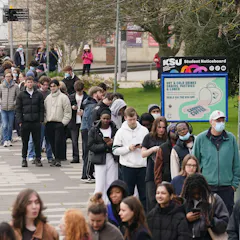
A vaccine has existed since 2013. The UK was first to adopt it. But a decade of students never received it – and are now paying the price.

If you notice a friend exhibiting any concerning signs – especially rapid worsening over hours – take them seriously.

Two people have died in a bacterial meningitis outbreak in the south of England. Here’s what you need to know.
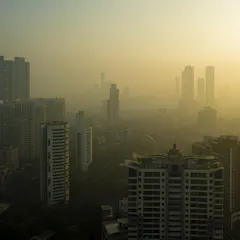
New research reveals that the adverse environmental and health impacts of atmospheric dust in the world’s rapidly growing megacities deserve far more attention.
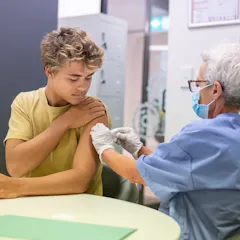
Meningococcal disease is a rare but life-threatening illness caused by the bacteria Neisseria meningitidis.
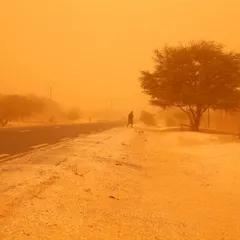
The Harmattan is linked to a range of conditions that affect the skin and mucous membranes of humans and animals.
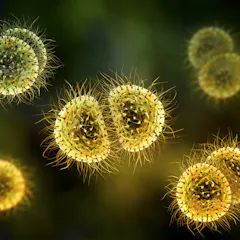
With a new 5-in-1 vaccine, Nigeria hopes to contain the five most important serotypes causing meningitis in the country.

Nigeria’s medical community is mourning the death of public health physician and university administrator, Emeritus Professor Umaru Shehu.
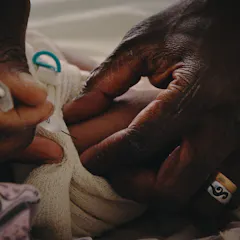
The pandemic has disrupted national immunisation programmes. As a result, the African continent is seeing more outbreaks of vaccine preventable diseases.
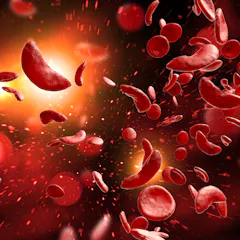
Of the 20 million people living with sickle cell disease globally, more than 66% are in sub-Saharan Africa.
As international borders open, restrictions ease and we mingle with others, we can expect more germs to circulate.
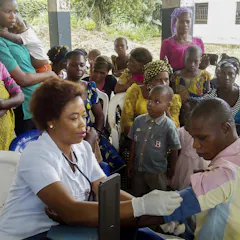
Climate change is anticipated to cause a rise in the incidence of several diseases in sub-Saharan Africa.
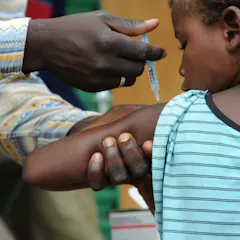
Vaccines that help prevent meningococcal disease don’t give lifetime protection.

Meningococcal is a rare but very serious infection that can lead to blood poisoning and brain infection. But no single vaccine protects against all the strains.

To tackle diseases like meningitis, African governments must find fresh ways to fight for lower cost vaccines.
Top contributors
-

Professor Emeritus, Gombe State University
-
Professeur en épidémiologie, École des hautes études en santé publique (EHESP)
-
Director Of Medicine, The Maitland and Kurri Kurri Hospital, University of Newcastle
-
Assistant Professor, University of British Columbia
-
Assistant Professor in Health Information, London School of Hygiene & Tropical Medicine
-
Professor, The Children's Hospital at Westmead Clinical School and Sydney Infectious Diseases Institute, University of Sydney
-
General Practitioner, PhD Candidate, Bond University
-
Senior lecturer in Haematology, University of Ghana
-
Head of Department for Bioscience, University of East London
-
Ph.D. Geography & Global Health Systems in Africa, Western University
-
National Observatory of Athens
-
chercheur, Institut de recherche pour le développement (IRD)
-
Chercheur au Laboratoire Physique de l'Atmosphère et de l'Océan de l'UCAD, Université Cheikh Anta Diop de Dakar
-
Paediatrician and Infectious Diseases Specialist; Clinical Researcher, University of Sydney
-
Professor, Immunology and Immunotherapy, University of Birmingham