
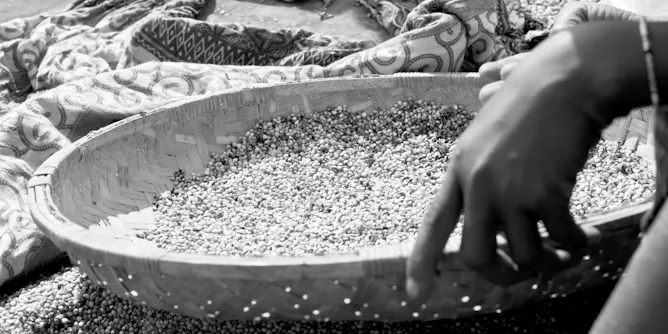
The ex-combatants’ food memories show how they continue trying to make sense of both their past and present experiences of violence.
Articles on Memories
Displaying 21 - 40 of 45 articles
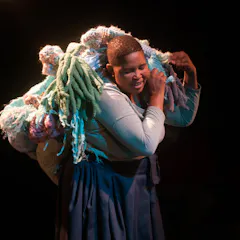
Empatheatre’s latest production is more than a play about three characters who live near the sea. It’s a model for collective consultation on how to save the ocean.

Most histories highlight the shattered storefronts and synagogues set aflame. But it was the systematic ransacking of Jewish homes that extracted the greatest toll.
Music doesn’t get objectively worse over time. So why do older generations scoff at each new top 40 hit?

A new genre of video games lets players explore virtual environments that recreate actual places and real people’s lives and memories.
Remembering past events, experiences or emotions is a big part of being human. But if dwelling on the past is distressing, here’s what you can do to help.
Why is it that some ‘fake news’ gets us remembering things that are not true? It depends on how our memory works, and there are ways we can avoid being duped.
Even our most treasured memories can gradually change over time.

Two neural systems record traumatic memories, meaning they can be remembered in both conscious and unconscious ways.
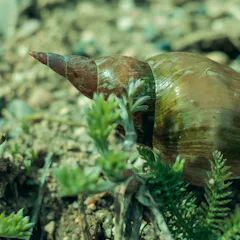
New research reveals how stress could alter our perceptions about which animals are ‘smart’.

If we don’t get enough sleep, can we catch up later? Experts are divided.
How do brains convert experiences into memories? New research explores the chain of events by focusing on what genes shift into gear when neurons are firing.

A new form of therapy gives people with dementia the opportunity to chat with other baseball fans, watch footage of old games and even play wiffle ball.

Most Americans cling to things with sentimental value that we no longer need. Taking pictures of these possessions may make it easier to give them away.
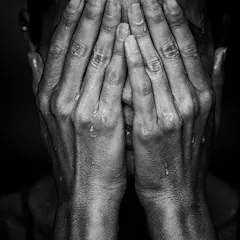
Universities are so busy trying to make ends meet that there’s no time to listen to their communities’ stories. It’s crucial to develop safe spaces where tough conversations can happen.

We may feel like flashbulb memories of dramatic events are more accurate than ordinary memories, but are they really? An experiment begun Sept. 12, 2001 sheds light.

Social media is creating an archive that will shape the way we see our past.
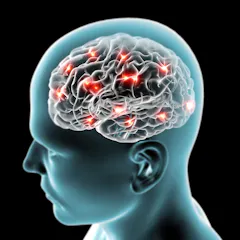
The theory of antimemories could help explain many cognitive problems in the brain such as autism and schizophrenia.

A study has shown that it is possible to lift rats out of depression by reactivating happy memories. But could it work in humans?
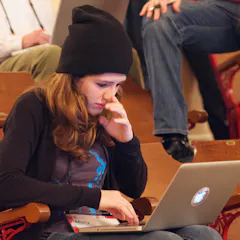
Two people walk into a seminar: one takes photos, video and an audio recording of the presentation, while the other takes hand-written notes. Which person do you think will better recall the information…
Top contributors
-

Professor of Sociology, University of York
-
Associate Professor at Turner Institute for Brain and Mental Health, School of Psychological Sciences, Monash University
-
Professor in Practical Theology, Teaching Fellow at the Center for Teaching and Learning, Coordinator of Master of Divinity Program and Post Graduate Diploma in Christian Ministry, Faculty of Theology, Stellenbosch University
-
DPhil candidate, University of Oxford
-
Professor of Psychology, Lafayette College
-
Associate Professor Dept of Psychology, North Dakota State University
-
Associate professor, University of Sydney
-
Professor of Marketing, The Ohio State University
-
Conjoint Senior Lecturer, School of Medicine and Public Health, University of Newcastle
-
Professor of Psychology, University of Hull
-
Postdoctoral Researcher in Cognitive Neurosciences, The University of Queensland
-
Researcher, Digital Wellbeing, Western Sydney University
-
Marlene and Morton Meyerson Centennial Professor of Business, Department of Marketing and Department of Business, Government and Society, The University of Texas at Austin
-
Professor of Human Development and Family Studies, University of Connecticut
-
Graduate Student in Biomedical Science, Harvard University