
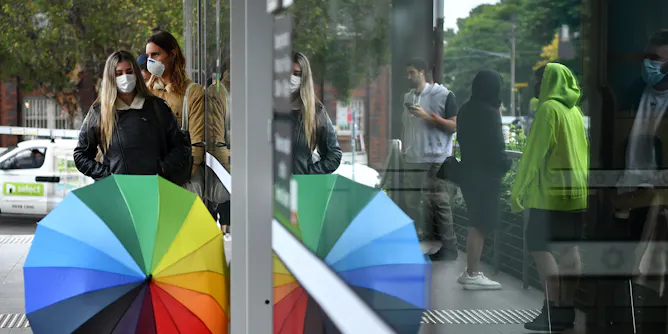
Our data shows 28% workers aged 18-24 lost their jobs due to COVID-19.
Articles on Melbourne lockdown
Displaying 21 - 40 of 41 articles

Yo-yoing lockdowns are costly and to be avoided if at all possible. Here is what we can do to dramatically improve testing and tracing.

Politics with Michelle Grattan: Jodie McVernon on Melbourne’s modelling, a Covid vaccine, and the role of experts in a crisis
Michelle Grattan discusses the latest in coronavirus developments with Professor Jodie McVernon
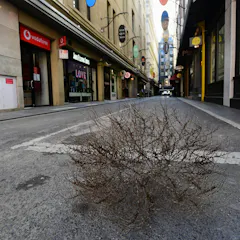
Relaxing restrictions too soon would only cost more jobs in the long run.
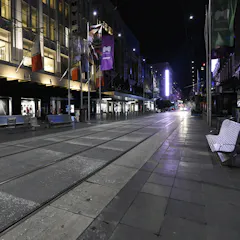
While the focus has been on containing ‘hot spots’ of COVID-19 outbreaks, understanding why some areas have few or no cases could point the way to a staged reopening that starts with these areas.
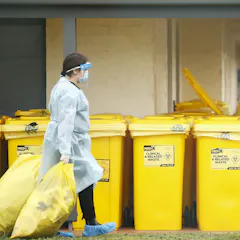
The failure to anticipate the consequence of workers having no paid sick leave is one of the greatest flaws in Australia’s response to the COVID-19 pandemic.
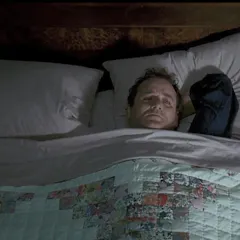
The 1993 cult classic, in which the same day repeats over and over, contains wisdom for those of us living restricted lives.

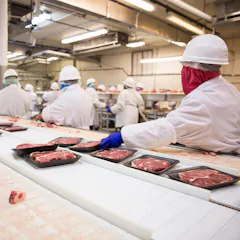
Yes, there will be temporary meat shortages in Victoria, but not for long.
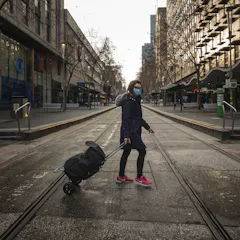
Putting all of Victoria under stage 4 restrictions would give the state its best chance of stopping community transmission, rather than setting it up to play an endless game of COVID-19 whack-a-mole.
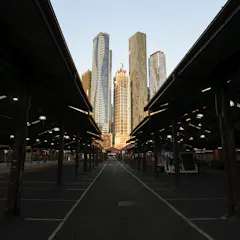
The federal government must provide more support if Victorian businesses and households are to survive the state’s Stage 4 lockdown.

Victoria’s closure of child-care services may be necessary, but it will put pressures on parents and likely drive down women’s workforce participation.

Victoria has been declared a ‘state of disaster’.
Not everyone has a job they can do from home. Mapping the patterns of occupations across Melbourne’s suburbs against COVID-19 cases strongly suggests why some parts of the city are more vulnerable.

The hard lockdowns of whole blocks have been challenging for many residents due to their histories of trauma, their housing conditions and a lack of communication and understanding from authorities.
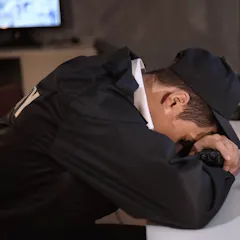
Economics tells us that governments privatising services where quality counts is a bad idea.
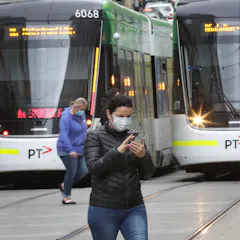
Victoria recorded 484 new cases on a day when COVID-19 should have been firmly on the decline if the latest lockdown was working. It’s time to contemplate even stricter measures for longer-term gain.
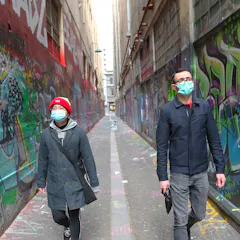
The fines for failing to wear a mask during Melbourne’s lockdown have been criticised as ‘punitive’. But the fact that masks are cheap or free, with huge public health benefits, makes it justifiable.
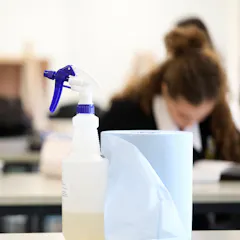
No single measure in isolation prevents disease transmission. It is a matter of reducing the likelihood and enhancing the capacity of the system to deal with events that occur.
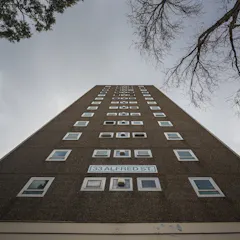
Much of our public housing stock is ageing and substandard. But we can learn from outstanding examples of retrofit projects that have transformed existing blocks into high-quality housing.
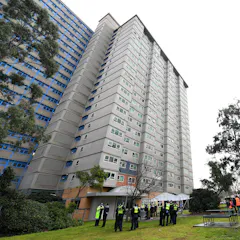
The spread of the virus through households creates costs higher than for isolation in hotels when families are large and living at close quarters as in Melbourne’s public housing towers.
Top contributors
-

Professorial Fellow, University of Canberra
-
Scientia Professor of Economics, UNSW
-
Associate professor, University of Sydney
-
Graduate Researcher, University of Newcastle
-
Professor, NHMRC Emerging Leader & Clinical Psychologist, UNSW
-
Professor of Health Economics, University of Bologna, University of Newcastle
-
Election Analyst (Psephologist) at The Conversation; and Honorary Associate, School of Mathematics and Statistics, The University of Melbourne
-
Democracy Deputy Program Director, Grattan Institute
-
Senior Associate, Grattan Institute
-
Postdoctoral Research Fellow, University of Newcastle
-
Lecturer in Humanitarianism and Development, Deakin University
-
Lecturer in Landscape Architecture, The University of Melbourne
-
Professor of Human Resource Management, RMIT University
-
Professor of Economics, The University of Melbourne
-
Chief executive officer, Grattan Institute