

Sunburn can cause cancer, heat stroke and changes to the immune system. Choosing the right sun protection, even for darker skin, is more complicated than it looks.
Articles on Melanoma
Displaying 21 - 40 of 75 articles
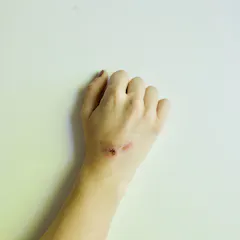
Non-melanoma skin cancers have often been viewed as fairly benign. A new study undermines that view.
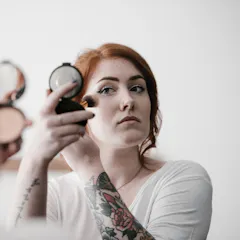
Does SPF in makeup and moisturisers provide effective sun protection?

Widespread screening for skin cancer may not be necessary, but it is important to understand the risks behind UV overexposure and to get checked early if you have concerns.
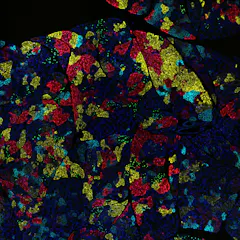
There is no one-size-fits-all approach to treating cancer. Understanding how cancer cells evolve could help researchers develop more effective drugs.
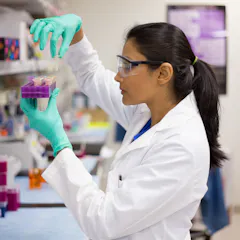
Cancer vaccines are an emerging personalised treatment for cancer. Using the same mRNA technology as COVID vaccines, they stimulate the immune system to destroy cancer cells.

People with deeply-pigmented skin can also get skin cancer. But there is no evidence to suggest that this occurs because of sunburn or exposure to the sun.

Preventive and therapeutic vaccines both train the immune system to fight disease, but they are used in different ways.

One enzyme plays a key role in how tumor cells replicate and divide indefinitely. Identifying the genes that give these cells their immortality could provide new drug targets to treat cancer.

While sunscreen has the potential to reduce skin cancer for light-skinned people, it has never been shown to do the same for Black people. Yet that distinction is lacking in public health messaging.

Newly reported study findings suggest a link between eating more fish and dangerous skin cancers. But the findings are based on observations only and more research is needed.
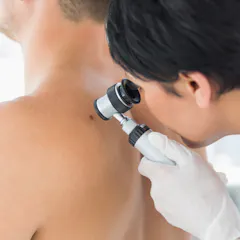
Two in three Australians will have a skin cancer in their lifetime, nearly all of them basal cell carcinomas, squamous cell carcinomas, or melanomas.
If you’ve had a skin cancer check lately, you might have been told to consider adding a daily vitamin B3 pill to your skin safety regime.

In Summer, you may need to be extra sun smart if you’re swallowing certain medications or putting them on your skin.
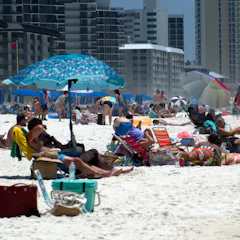
UV radiation can reflect off surfaces like sand or concrete, meaning shade doesn’t always prevent sunburn.
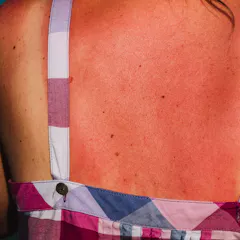
Home remedies like aloe vera and moisturiser might help you “feel” better. But they won’t fix the skin damage in the way antibiotics fix an infection.

Dogs process the sensory world very differently than humans, but love in a way that is entirely familiar.

New research estimates 24% of cancers in men that were detected in 2012 were overdiagnosed, meaning they never would have caused harm if left untreated.

It seems genes have a greater influence than previously thought not only on the number of moles you have but also where they are on your body.

While sunscreen has the potential to reduce skin cancer for light-skinned people, it has never been shown to do the same for Black people.
Top contributors
-

Professor of Dermatology, The University of Queensland
-
Postdoctoral Researcher, Dermatology Research Centre, The University of Queensland
-
Adjunct Professor, School of Psychology, Curtin University and College of Health and Medicine, Australian National University
-
Professor of Biomedical Sciences, Anglia Ruskin University
-
Professor and Group Leader at the Cancer Control Group, QIMR Berghofer
-
Professor in Behavioural Science, The University of Queensland
-
Professor of Cancer Epidemiology, The Daffodil Centre and Melanoma Institute Australia, University of Sydney
-
Research Manager, The University of Queensland
-
Dermatologist and lecturer, Stellenbosch University
-
Senior Research Officer, Blood Cells and Blood Cancer Division, WEHI (Walter and Eliza Hall Institute of Medical Research)
-
Senior Research Officer, Blood Cells and Blood Cancer, WEHI (Walter and Eliza Hall Institute of Medical Research)
-
Chief Specialist Scientist (Public Health), South African Medical Research Council
-
Assistant Professor of Internal Medicine (Division of Dermatology), The University of Texas at Austin
-
Assistant Professor of Systems Biology and Cancer Metabolism, University of California, Merced
-
Professor, Department of Biomedical and Life Sciences, Lancaster University