
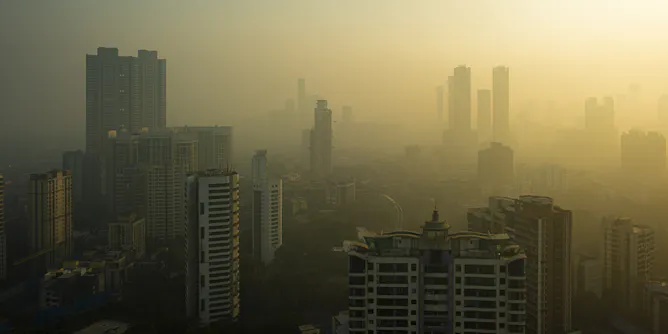
New research reveals that the adverse environmental and health impacts of atmospheric dust in the world’s rapidly growing megacities deserve far more attention.
Articles on Megacities
Displaying 1 - 20 of 22 articles

The world’s coastal deltas are home to hundreds of thousands of people – but they’re now under threat.
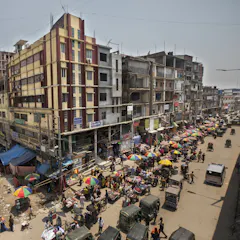
COVID-19 is spreading fast through not only the world’s richest cities but also its poorest, ravaging slum areas where risk factors like overcrowding and poverty accelerate disease transmission.
The knowledge economy creates clear winners and losers in the big cities whose growth it drives. Many Australian and US cities with strong knowledge economies have high levels of social vulnerability.

From Santiago and La Paz to Beirut and Jakarta, many of the cities now gripped by protest share a common problem: They’ve grown too much, too fast.

Megaproject construction has been a major response to globalization in the urban realm.
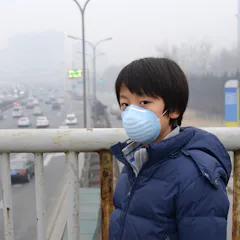
Investigation of the brains of children and young adults who died suddenly in Mexico City revealed amyloid plaques similar to those found in the brains of people with Alzheimer’s disease.

The role and efficacy of the traditional crime-prevention measures in Iraye-Oke are widely acknowledged by people who live in the area.

Other countries are planning new cities using technological innovation to achieve more sustainable development. Such plans aren’t new for Australia, but existing city growth is the focus of attention.

To encourage citizens to drive electric vehicles, governments must develop bold new strategies that bring charging stations home.
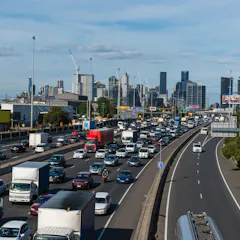
In the 70s, Whitlam tried to build new, big cities. But this was too costly. Now the most viable solution for Australia’s population woes is to make existing cities bigger.

Planners have long tried to determine the ideal city size, and ideas have evolved with changing circumstances. But a good city depends more on the way it’s managed than on how many people it holds.
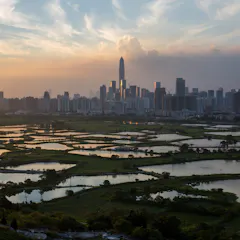
Xiong’an is called China’s No.1 urban project. Orchestrated by President Xi Jinping, the mega-city to be built just over 100 kilometres south of Beijing is also very much a political project.

In an increasingly urban world, trees can make a major difference. One study found that, for every dollar invested in planting, megacities saw a $2.50 return on their investment.

Breast cancer rates in China are rising, and are expected to continue rising for the next three decades.
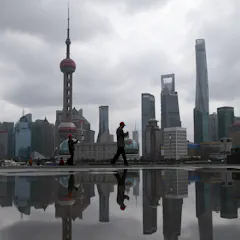
Research shows that technology disrupts economies of scale, turning megacities’ huge populations from strength to liability. To survive, megacities, like companies, must adapt.

Research shows tranquility can help to boost levels of relaxation, reduce stress and even provide pain relief.
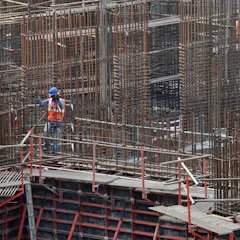
Future population growth is expected to take place almost entirely in cities. We won’t fight climate change without them.

Global cities must guarantee women safe access to public space. But in cities like New Delhi, this access is conditional and bound by moral discourse.
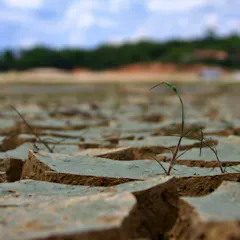
The same persistent weather pattern bringing hot, dry conditions to California is likely connected to a punishing drought in the Sao Paulo area in Brazil.
Top contributors
-

PhD Researcher, University of Bath
-
Associate Research Fellow in RSIS, Nanyang Technological University
-
Senior Fellow in Science, Technology & Economics at RSIS, Nanyang Technological University
-
Professor Sustainability and Urban Governance, RMIT University
-
Professor Emeritus, Social and Cultural Geography, Royal Holloway, University of London
-
Honorary Associate Professor in Planning, University of Queensland, University of Sydney
-
Emeritus Professor of Environmental Acoustics, University of Bradford
-
Professor, Asian Institute of Technology
-
Professor, University of Canberra
-
Professor of Meteorology and Climatology, University of California, Santa Barbara
-
Professor of Strategic Management, Warwick Business School, Warwick Business School, University of Warwick
-
Professor of International Planning, Centre for Urban Research, RMIT University
-
Laureate Professor Emeritus, The Peter Doherty Institute for Infection and Immunity
-
Senior Bioinformatician, University of Leicester
-
Fulbright Scholar, Institute for Governance and Policy Analysis, University of Canberra