

The Commission of Audit’s proposals about GP co-payments are just that, proposals. They are not government policy, nor should they be. Some aspects of the Commission’s recommendations are good. But the…
Articles on Medicare
Displaying 281 - 300 of 303 articles

The former Labor government’s GP Super Clinics Program has come in for a bashing. The Coalition has derided it as “a total waste of money” and News Corp has dubbed it a “dangerous health care experiment…

Like a movie zombie, a policy idea that should have died has arisen from the dead and is likely to feature as a cost-savings measure in next month’s budget. The idea is simple: most GP patients should…

The polls this week suggest half of Australians think the Abbott government should reduce the cost of Medicare. My solution? Claw back some of the A$9 billion the government pays to private hospitals…

Public hospital spending has been the single fastest-growing area of government spending over the past decade. As governments, policymakers and economists put health spending under the microscope, it’s…

Treasurer Joe Hockey and health minister Peter Dutton have been in overdrive this past week lowering expectations for the May budget and reminding Australians that its 30-year-old Medicare system is “unsustainable…

Should the rich pay more for their health care? This question has raised its ugly head again after health minister Peter Dutton announced the Coalition government was considering more user-pays options…
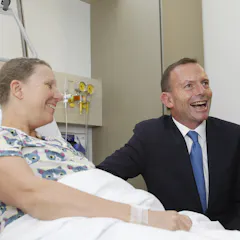
This year is crunch time for Prime Minister Tony Abbott’s health policies. The financing and policy changes from the Rudd-Gillard government are finally taking effect and the National Commission of Audit…

Medicare is Australia’s universal health scheme. It is a Commonwealth government program that guarantees all citizens (and some overseas visitors) access to a wide range of health services at little or…
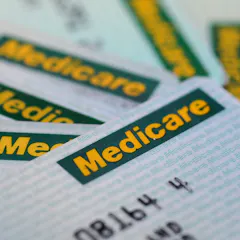
Tomorrow marks an important Australian milestone: 30 years of Medicare and the guarantee of universal access to health care. Before Medicare, it was not that uncommon for people to avoid using health-care…

Prompted by the government’s Commission of Audit, health policy analysts have spent the first weeks of the year vigorously debating ways to rein in Australia’s rising health budget and to make the system…
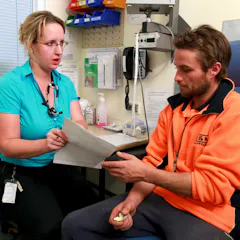
When we think of what defines a medical consultation, we quite reasonably think of the “presenting complaint”: the medical problem which the patient brings to the doctor. In movies, literature, common…

As a GP, when I prescribe a drug, I need to know its likely benefits and risks, and I need to base my decision-making on the best available evidence. I’d like to think the same principle applies to the…

Consensus and evidence suggests a compulsory co-payment of A$6 for a visit to the general practitioner will reduce population health but might save some money. Can we not try a bit harder and think of…

Incremental creep and massive holes in universal health coverage (think dental care) have left many Australians questioning whether there’s any such thing as “free health care”. One recent study estimated…

We have come to see private health insurance as an essential part of the national health funding mix, but it’s actually quite a costly way to fund health care. A well-designed system with a single national…
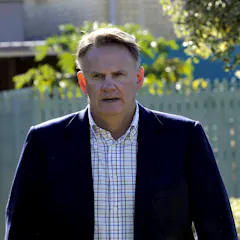
It is a sign of Labor’s crisis that Mark Latham, the party’s former parliamentary leader, has been re-admitted to polite centre-Left company. For his book Not Dead Yet: What Future for Labor?, Latham has…

“The bulk-billing rates are at historic highs now. Visits to GPs are 82% bulk-billed. When Tony Abbott was minister it was 67%.” Health minister Tanya Plibersek, National Press Club Health Debate, 27 August…

In the sixth part of our series Health Rationing, Mark Mackay examines the latest think tank blueprint to rein in Australia’s rising health costs. But he warns that before funding models are adjusted…

A growing number of people globally live with chronic illness. By the time they reach 65, most Australians have at least one chronic condition and 80% have three or more. Pharmaceutical treatment is often…
Top contributors
-

Honorary Enterprise Professor, School of Population and Global Health, and Department of General Practice and Primary Care, The University of Melbourne
-
Professorial Fellow, University of Canberra
-
Jim Gillespie is a Friend of The Conversation.
Associate Professor in Health Policy, Leeder Centre for Health Policy, Economics and Data & Sydney School of Public Health, University of Sydney
-
Program Director, Health and Aged Care, Grattan Institute
-
Adjunct Associate Professor, Menzies Centre for Health Policy and Economics, University of Sydney
-
Associate Professor of Public Health, The Ohio State University
-
Professor of Health Economics, The University of Melbourne
-
Health economist, University of Sydney
-
Professor of Health Economics and Director, Centre for Health Economics Research and Evaluation, University of Technology Sydney
-
Professor of Gerontology, UMass Boston
-
Reader in Health Economics, Centre for Health Economics, University of York
-
Professor of Health Economics and Director, Centre for Health Economics, Monash Business School, Monash University
-
Professor, Public Service Research, UNSW
-
Senior Research Fellow and Lecturer of Gerontology, UMass Boston
-
Associate Professor in Health Economics, Curtin University