

It will take more than shifting Medicare payments from one monolith to another to deliver true innovation.
Articles on Medicare
Displaying 241 - 260 of 303 articles

We start 2016 with big challenges for the health system and uncertainty as to how governments will meet them.

The Coalition tried to justify its failed GP co-payment as an attempt to rein in consumers, who were driving the increase in Medicare costs. Turns out government policy was mostly to blame.

Anyone who has purchased private health insurance or thought about changing policies knows the system is complex and confusing.

If Australia’s new prime minister wishes to lead a successful 21st-century government, he must tackle the rise in chronic disease and use data to constantly improve the system.

Any health reform proposals should start by addressing public hospitals and chronic care. But successful change in these areas requires getting the state-Commonwealth funding and incentives right.
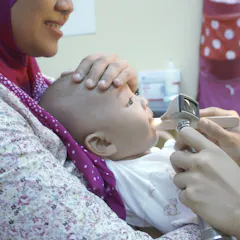
Cutting Medicare rebates for GPs affects us all, whereas in-hospital private patient rebates, which only benefit the better-off, are ripe for the razor gang.
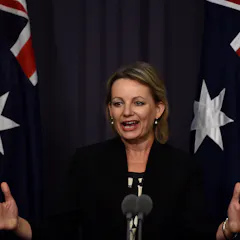
After an extensive round of consultations with health professionals and patients, Health Minister Sussan Ley has announced that yet more work needs to be done to find solutions to Medicare’s problems.
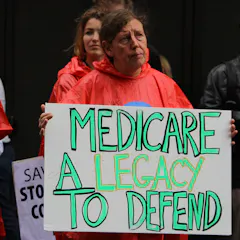
In the final instalment of our series, Lesley Russell asks whether Australians need private health insurance, and what a two-tiered systems means for quality, access and equity.

Any new such financing system would need to carefully balance competition and choice, with affordability of coverage and equal access to quality care.

Private insurance, by its very nature, suppresses price signals and encourages over-servicing and cost escalation.

Some people balk at the cost of private insurance – especially the relatively young and healthy – because they don’t see the value of it when they are already covered under Medicare.
How much do Australians pay for private health insurance?

All Australian residents have access to Medicare, so why do half the population also decide to take out private health insurance?
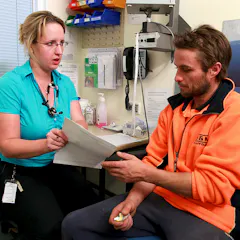
With GPs facing greater economic pressure and the health minister considering legislative change to make it easier for GP to charge them, GP co-payments, like Lazarus, may rise again from the dead.

As well as being responsible for a large share of total costs, people who visit the GP more often are more likely to live in the most disadvantaged areas, and to report being in poor health.

Health Minister Sussan Ley is broadly correct on the numbers – but they are framed in a way that overstates the impression of rising health care expenditure.

The Abbott government “reset” yesterday provides a valuable opportunity to reconsider health policies based on the idea that Australia’s health system is unsustainable. But first it will need to embrace…

The Christmas-New Year silly season gave Australia three health policies. At the start of December, the policy from the 2014 budget was still on life support. But in mid-December, then-health minister…
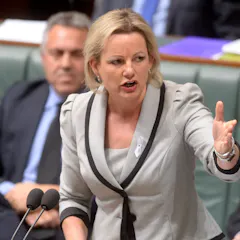
As the 2015 parliamentary year approaches, The Conversation is examining five key policy areas that have a new minister in charge: health, immigration, defence, social services and science. Today we begin…
Top contributors
-

Honorary Enterprise Professor, School of Population and Global Health, and Department of General Practice and Primary Care, The University of Melbourne
-
Professorial Fellow, University of Canberra
-
Jim Gillespie is a Friend of The Conversation.
Associate Professor in Health Policy, Leeder Centre for Health Policy, Economics and Data & Sydney School of Public Health, University of Sydney
-
Program Director, Health and Aged Care, Grattan Institute
-
Adjunct Associate Professor, Menzies Centre for Health Policy and Economics, University of Sydney
-
Associate Professor of Public Health, The Ohio State University
-
Professor of Health Economics, The University of Melbourne
-
Health economist, University of Sydney
-
Professor of Health Economics and Director, Centre for Health Economics Research and Evaluation, University of Technology Sydney
-
Professor of Gerontology, UMass Boston
-
Reader in Health Economics, Centre for Health Economics, University of York
-
Professor of Health Economics and Director, Centre for Health Economics, Monash Business School, Monash University
-
Professor, Public Service Research, UNSW
-
Senior Research Fellow and Lecturer of Gerontology, UMass Boston
-
Associate Professor in Health Economics, Curtin University