

It’s increasingly difficult for investigative journalists to hold governments to account – partly due to anti-terror and security laws making it harder for whistleblowers to act.
Articles on Media ethics
Displaying 61 - 80 of 109 articles

The seemingly disproportionate media attention given to One Nation is the result of a potent news-making brew.

Australian news editors and politicians give their views on the ethical issues arising when reporters return to journalism after time as a political spin doctor.

In the marriage equality debate as in any other, media outlets must balance the right to freedom of speech with the balance of evidence.
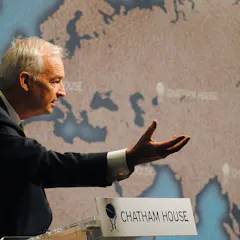
Is impartiality a red herring in the age of blogs and social media?

Facebook Live – and other live-video streaming services – change how we bear witness to events, and challenge how we think about visual information.

Buzzfeed is being damned for publishing unverified and salacious information about the president-elect, raising questions about media ethics in the digital world.

Finding a balance between providing information on public figures like James Hird and minimising harm often is a delicate pickle for journalists.

In a ‘post-truth’ world, presenting both points of view can often be misleading.
Even if fake articles could be curbed and filtered news modified, there’s something built into Facebook’s anatomy that foments partisan rage.
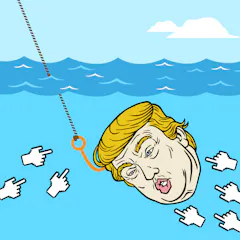
Lies, Twitter bots and sensation reign in the era of for-profit digital media.

An ACMA investigation of Andrew Bolt raises questions of fair and accurate reporting, the clash over facts, fair comment and the right of readers and viewers to be fully informed.

Efforts to avoid stigmatising people from Muslim backgrounds seem to be coming at the unexpected cost of adding stigma to those with mental health issues.
There’s an old saying in journalism: “All news is local”. It means that news, wherever it comes from, needs to engage the interest of its local audience if it is to succeed. But read today’s paper, or…

Terrorism and links to IS – real or purported – need to be very carefully handled by the media for fear of reproducing propaganda.

Four years after Leveson a survey has found that a surprising number of journalists are still confused about ethical standards.

At QUT’s Digital Media Research Centre we are about to complete ARC-funded research on the state of the Australian political news media. A key finding of the work has been the nearly complete withdrawal…

When Gay Talese signed a confidentiality agreement with a motel-owning voyeur, he got access to the voyeur’s journals and secret viewing perch. But he also allowed the spying to continue for over a decade.

Hoping to avoid the pitfalls and tropes of drug genre photography, documentary photographer Aaron Goodman spent a year following three addicts enrolled in a heroin-assisted treatment program.

With social media blurring the line between public and private more than ever, journalists need to think about how, and to what effect, they use advocacy hashtags in their messages.
Top contributors
-

Senior Research Fellow, Centre for Advancing Journalism, The University of Melbourne
-
Associate Professor of Communications, Penn State
-
Caxton Professor of Journalism, University of the Witwatersrand
-
Full Professor in Journalism, Dublin City University
-
Senior Lecturer, Birmingham City University
-
Professor, School of Journalism and Communication, University of Oregon
-
C. Edwin Baker Professor of Media Policy and Political Economy, University of Pennsylvania
-
Senior Lecturer, School of Media, Film and Journalism, Monash University
-
Senior Honorary Research Fellow, Department of Journalism, City St George's, University of London
-
Professor of Political Communication; Director CAJ, The University of Melbourne
-
Associate Professor in Media and Communication, The University of Western Australia
-
Senior Lecturer in Journalism, Northumbria University, Newcastle
-
Research Associate, UCL
-
Professor of Journalism, Monash University
-
Adjunct professor, Queensland University of Technology