
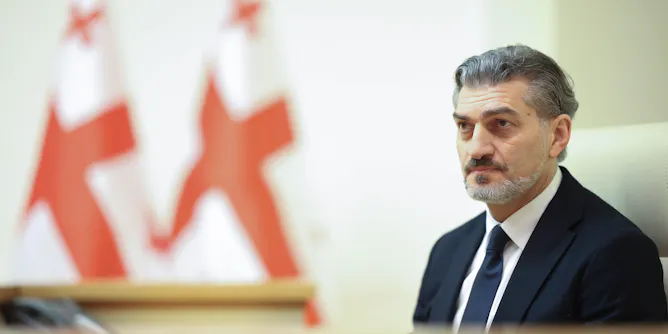
Georgia’s new president was not directly elected after a change to the constitution, and was the only person on the ballot.
Articles on Media censorship
Displaying 1 - 20 of 29 articles
Ex-president Dmitry Medvedev has called journalists who justify Ukraine’s actions ‘active participants’ in a war against Russia.
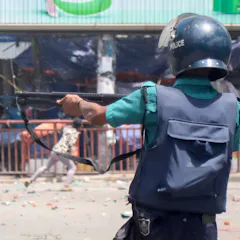
Police brutality has left many protesters dead in Bangladesh, but the authorities are not being held to account.
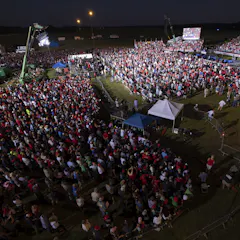
A large proportion of Americans is willing to support leaders who would violate democratic principles.
Criminal libel and seditious libel laws have existed under both military and constitutional rule in Ghana.

It took nearly two years for the Royal Navy to tell the story of the heroic voyage of the crippled submarine HMS Triumph.
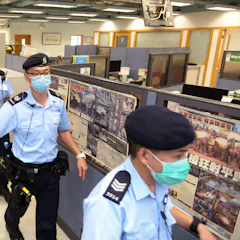
Local journalists are afraid that the new law will be used to prosecute anyone who steps out of line.
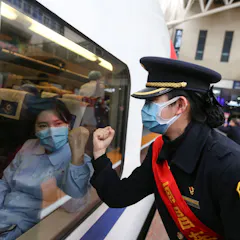
Public criticism of the Chinese government’s handling of coronavirus shows that the Chinese people can overcome both strict censorship and a gaping class divide when they get angry enough.
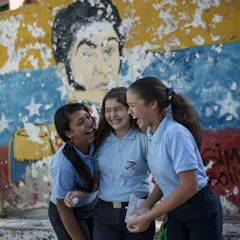
The rise of black comedy to explain Venezuela’s chaos recalls an old saying in the crisis-stricken South American country: ‘Laugh so you don’t cry.’
While they may talk about ‘free speech,’ businesses make decisions about their content based on a very different set of principles.

Recent changes to China’s constitution signal loud and clear that any hope for a path to democracy must be checked with reality.
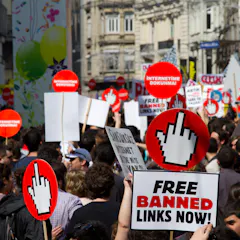
New, extreme levels of censorship in Turkey could lead to waves of digital activism by tech-savvy generations.
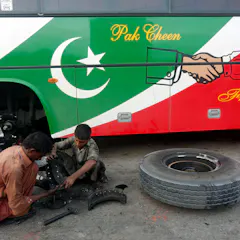
Are Chinese lives the price to pay for doing business in Pakistan?

Making decisions about what people do and don’t read is the traditional role of an editor, no matter what Facebook claims.
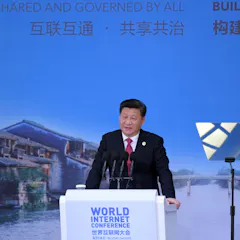
China is used to media being kept on a tight leash, but the party’s latest swoop has an ominous new zeal about it.
In only 30 years, a generations-old system of arranged marriages has been completely upended.
The uneasy relationship between political power and the influence of the news media.
New law is a sign of a more muscular Chinese internet protectionism.
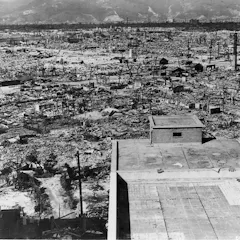
US military censors contained information after the bombings at Hiroshima and Nagasaki, leaving Americans with a limited understanding of the impact of radiation.
India’s government has always been highly sensitive to the way its country is depicted in the British media.
Top contributors
-

Reader in International Journalism, City St George's, University of London
-
Professor of Political Science, USC Dornsife College of Letters, Arts and Sciences
-
PhD Candidate on Media and Communication, University of Westminster
-
Lecturer in Journalism, University of Sussex
-
Senior Research Fellow, Horizon Digital Economy, UnBias, University of Nottingham
-
Boston University
-
Lecturer in Media and Communication, University of Leeds
-
Professor in Political Communication and Journalism, University of Oslo
-
retired, Mansfield University of Pennsylvania
-
Postdoctoral Fellow at the Center for Middle Eastern Studies, Lund University
-
Professor of Global Politics and Cybersecurity, UCL
-
Associate Professor in Chinese and Asian Studies, UNSW
-
Professor of Media Studies, Queensland University of Technology
-
Lecturer European Politics, Leiden University
-
Lecturer and Teacher, Department of Politics and International Relations, Cardiff University