

The Pakistani strike on a drug addiction hospital raises serious concerns about the enforcement of international humanitarian law.
Articles on Médecins Sans Frontières (MSF)
Displaying all articles

The key to the for-profit company’s successful partnership with governments, international agencies and humanitarian, nongovernmental organizations is how it handled its patent.

Long known as a virus confined to rural areas, mpox has reached Kinshasa, the capital of the Democratic Republic of Congo.

Any upsurge in measles is of real concern, but in settings aggravated by poor living conditions and malnutrition, it can be disastrous. It can affect adults, but young children are at particular risk.
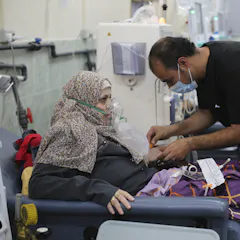
Patients with kidney failure need regular dialysis treatments to survive. However, the equipment, supplies and medical staff needed for dialysis have been largely destroyed by the assault on Gaza.
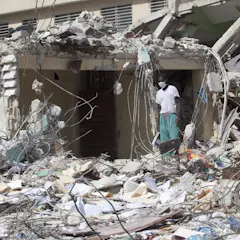
The unique skills of Canadian health-care workers with international disaster experience could be a valuable resource during domestic emergencies.

When humanitarian agencies are obliged to stop operations by political decision or because of huge physical insecurity, the poorest and most vulnerable succumb first through starvation and disease.
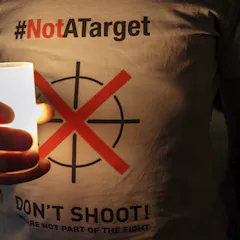
Every aid worker lost in the crossfire of a conflict is a tragedy; when they are deliberately targeted, it is an outrage.
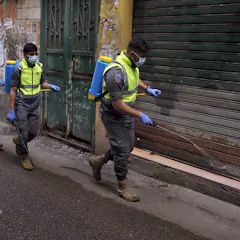
Criminal gangs, insurgents and terrorist groups seek to protect the people in the areas they govern, when a central government’s power is weak or nonexistent.
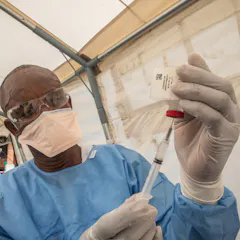
Teams administering the Ebola vaccine in the Democratic Republic of Congo are in a race against time to find and help people exposed.

Why this art form is rather more than just biff, bang pow.
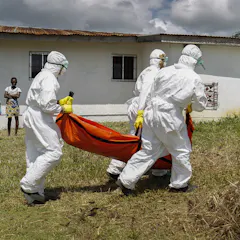
The response to the latest ebola outbreak in the DRC has been rapid, well coordinated and well resourced.
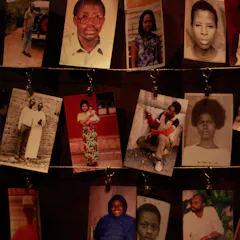
It is shocking to see the extent to which humanitarian workers in Rwanda became regular eyewitnesses to violence, murder and large-scale massacres in 1994.
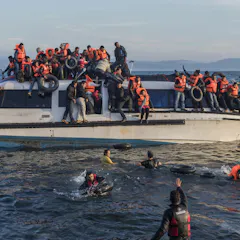
Accused of cooperating with smugglers, NGOs defend migrants’ right to life and point to the inadequate policies of European states.
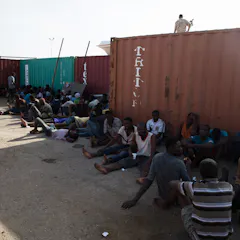
How Europe moved from refugees welcome to refugees unwelcome.
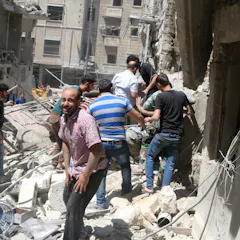
Protecting humanitarian workers requires an understanding of their individual situation, not broad assumptions.
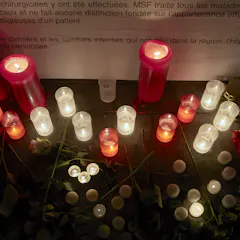
Bombing a hospital and killing doctors and wounded or sick persons may seem to be an obvious war crime. But the reality of both the law and the facts is significantly more complicated.

The federal government’s recent White Paper on developing northern Australia has disturbing echoes of the 1890s, a time when unbridled capitalism and indentured labour developed the North.

Well over 5,300 people have been infected and over 2,600 have died in the current Ebola outbreak in West Africa. But these numbers are thought to be gross underestimates as even the most conservative projections…
Top contributors
-

Professor in the faculty of Medicine, Mbarara University of Science and Technology
-
Professor Emeritus in Global Health & Humanitarian Affairs, University of Manchester
-
Anthropologue politique, coordinatrice de la Plateforme Violence et sortie de la violence, Fondation Maison des Sciences de l'Homme (FMSH)
-
Emergency Operations Centre Manager, National Institute for Communicable Diseases
-
Médecin, Fondation Maison des Sciences de l'Homme (FMSH)
-
Clinical professor, Faculty of Health Sciences, McMaster University
-
Assistant Professor of Political Science, Tel Aviv University
-
Professor of International Migration and Forced Displacement and Director of the Institute for Research into International Migration and Superdiversity, University of Birmingham
-
Doctorante en sociologie, Université Sorbonne Paris Nord
-
Associate professor, University of Sydney
-
Janet Dora Hine Professor, University of Sydney
-
Adjunct Professor, Faculty of Law, L’Université d’Ottawa/University of Ottawa
-
Chargé de cours en gestion de crise, Sciences Po
-
Adjunct Professor, Faculty of Law, L’Université d’Ottawa/University of Ottawa
-
Masters of Public Health student, Bloomberg School of Public Health, Johns Hopkins University