
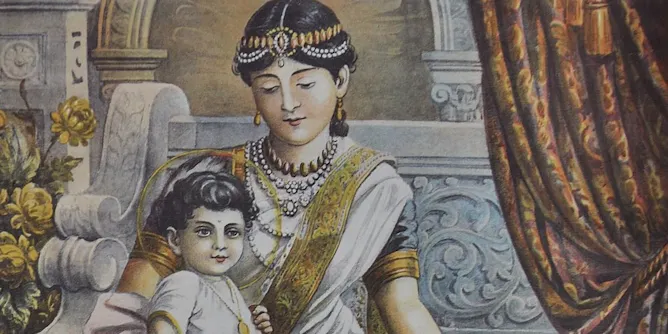
The historical Buddha, Siddhartha Gautama, taught that family ties were obstacles to enlightenment. However, his relationship with his mother remained important for him.
Articles on Maya
Displaying all articles
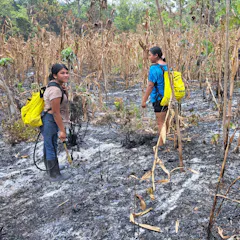
Recent wildfires in Belize shows how we must work together to revitalize Indigenous knowledge systems and plant the seeds of collaborative climate action.

Societal collapse is a complex phenomemon tied to the abilities of a society to meet its population’s basic needs. Understanding past examples of collapse can provide valuable insights.
Structures aligned with solar events served various purposes: science, farming, religion and even politics.
At the heart of the Maya civilisation were sacred sites where ritual sacrifices took place. A new DNA analysis reveals more about this practice and Maya genetic legacy.
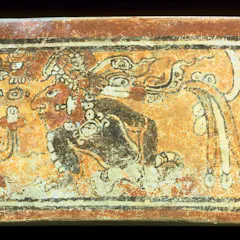
Broken mirrors can be associated with bad luck, but for the ancient Maya, a cracked mirror was often desirable.
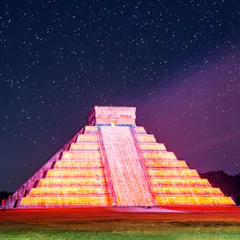
The skies and the gods were inseparable in Maya culture. Astronomers kept careful track of events like eclipses in order to perform the renewal ceremonies to continue the world’s cycles of rebirth.
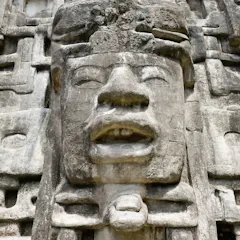
The Maya would have had to obtain mercury from far locations, transporting it by foot hundreds of kilometres across present-day Central America.
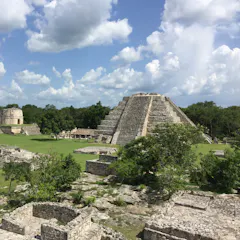
A change in climate may have triggered the decline and collapse of the Mayan city of Mayapán in the 15th century.
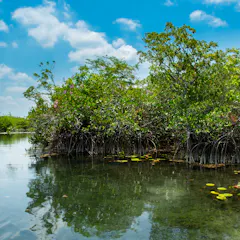
Mangroves grow in saltwater along tropical coastlines, but scientists have found them along a river in Mexico’s Yucatan, more than 100 miles from the sea. Climate change explains their shift.

Archaeologists used to dig primarily at sites that were easy to find thanks to obvious visual clues. But technology – and listening to local people – plays a much bigger role now.
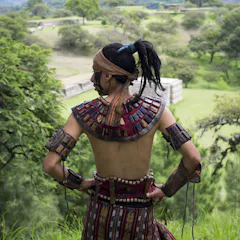
Grisly war trophies made from the heads of vanquished enemies certainly grab attention. But archaeologists are more interested in what they may tell about a tumultuous time of shifting political power.
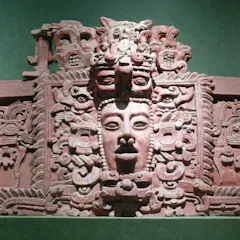
Many people think climate change caused Classic Maya civilization to collapse abruptly around 900 A.D. An archaeologist says that view is too simplistic and misses the bigger point.
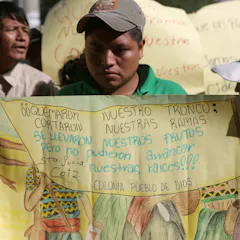
Decades after the end of a civil war that claimed hundreds of thousands of lives, the survivors’ search for justice goes on.
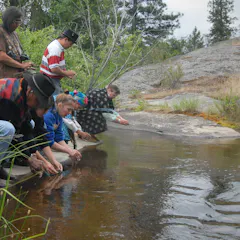
Indigenous people from around the world revere certain traditional foods as sacred. Activists, scholars and chefs are revitalizing these food systems.
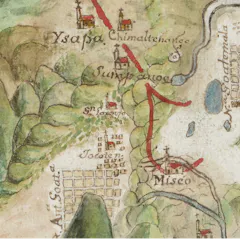
Fuego and other volcanoes are considered sacred in the Maya culture, but forced Spanish colonisers to move their new capital city.
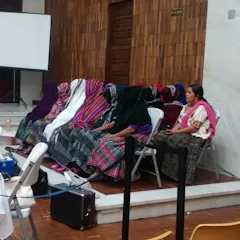
After colonisation, dispossession and decades of military violence, indigenous women in Guatemala are closing in on justice at last.
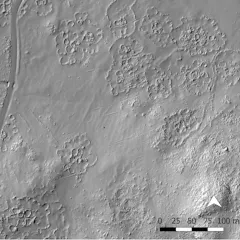
Technology which located Mayan cities has been used to rediscover a southern African city from the 15th century.
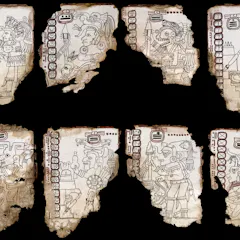
The handful of Maya books through which we know about their civilisation grows one larger as archaeologists confirm Grolier codex as genuine.
Top contributors
-

Professor of Anthropology, Michigan State University
-
Professor of History, University of Illinois Urbana-Champaign
-
Postdoctoral research associate, Max Planck Institute for Evolutionary Anthropology
-
Professor of Human Rights and International Humanitarian Law, Queen's University Belfast
-
Mathematician and Ancient DNA Researcher, Adelaide University
-
Lecturer in History, De Montfort University
-
Professor of Mesoamerican Archaeology, UCL
-
Associate Professor of Anthropology, Michigan State University
-
Professor, University of Cincinnati
-
Senior lecturer, UNSW
-
Associate Professor in Geography, Australian Catholic University
-
Assistant Professor of Anthropology, California State University, Dominguez Hills
-
Professor of Anthropology, Middlebury College
-
Centennial Professor of Geography and the Environment, The University of Texas at Austin
-
Senior Research Fellow in Geography, UCL