
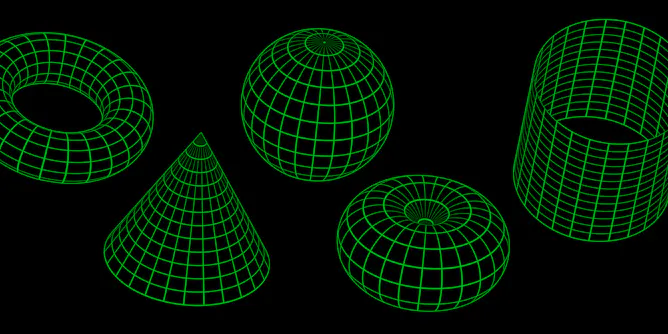
Topologists categorize all the possible shapes in each dimension.
Articles on Mathematics
Displaying 61 - 80 of 641 articles

New analysis shows boys are more confident in tasks involving maps and timetables. Parents can help by telling daughters it’s OK to make mistakes in maths.

Artists and scientists explore how we subconsciously perceive subtle proportions in trees.

In this course, eight professors share their disciplinary perspectives to help students analyze proposed interventions for increasing wildfire risks.

Weather and climate models are both governed by the same physical processes. But that’s where most of the similarities end.

Why ‘sensitive dependence on initial conditions’ makes predicting the future so hard.

Did you know you have a ‘mental number line’, from smallest to largest? Turns out, so do bees.

The solution might lie in improving children’s spatial skills.

Research shows students often start primary school feeling optimistic about maths. This can decline as students progress through school and continue into adulthood.

Building an inclusive STEM workforce requires a long-term commitment from individuals, industry and the government.
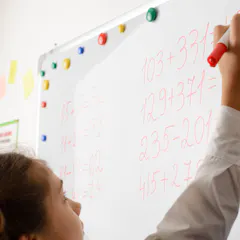
Australia’s results from the latest ‘TIMSS’ test show a concerning gender gap in maths for Year 4 and Year 8 students.

The results from the 2023 ‘Trends in International Mathematics and Science Study’ were released on Wednesday night. Year 8 students, who also did the test, held steady.
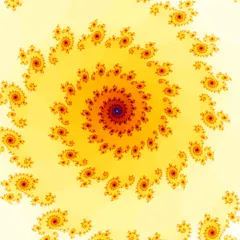
Before the maverick French-American came along, the geometry used by mathematicians was out of step with reality.

Surveys show Americans do not believe the political system is serving them. A mathematician of democracy highlights evidence-based changes that could improve matters without tearing the nation apart.

A new largest known prime number was found last month by an amateur mathematician, continuing a millennia-long quest to understand hidden patterns in the infinite tapestry of numbers.
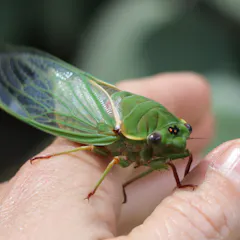
Three groups of cicadas have emerged together this year for the first time since the fall of the Roman Empire. The reason is pure mathematics.

Researchers asked math teachers why certain groups do better at math than others. The teachers had different answers for different groups.

In 1843, William Rowan Hamilton had a four-dimensional flash of insight that still shapes our three-dimensional world.

Students complete research projects in STEM fields, produce academic reports and are offered science modules delivered in university-style lectures.
Microbial communities are essential to life, yet their complexity has long puzzled scientists. Now, a new framework aims to unravel how these intricate ecosystems form.
Top contributors
-

Laureate Professor of Mathematics, University of Newcastle
-
PhD; Lawrence Berkeley Laboratory (retired) and Research Fellow, University of California, Davis
-
Emeritus Professor, University of Nottingham, (currently Vice-Chancellor at MILA University, Malaysia), University of Nottingham
-
Professor of Mathematics, University of Florida
-
Professor of Mathematical Biology and Public Engagement, University of Bath
-
Lecturer in Mathematics Education, University of Sydney
-
Senior Lecturer in Mathematics Education, University of Sydney
-
Research Fellow, School of Biological Sciences, Monash University
-
PhD Candidate, Australian National University
-
Senior Lecturer in Mathematics, Department of Mathematical Sciences, City St George's, University of London
-
Professor of Mathematics, Toronto Metropolitan University
-
Associate Professor, Department of Physiology, Monash University
-
Mathematician, University of Portsmouth
-
Lillian Gilbreth Postdoctoral Fellow, Purdue University
-
Professor of Mathematics and Statistics, University of Maryland, Baltimore County