
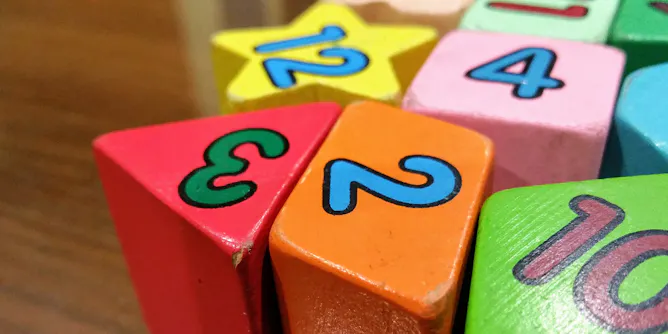
Math achievement gaps begin in kindergarten and persist through Grade 9, highlighting the importance of investing in children’s early development.
Articles on Math education
Displaying 1 - 20 of 31 articles
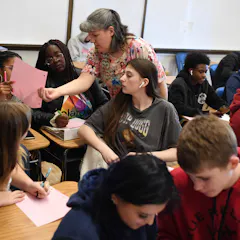
The reasons are not yet fully understood, but researchers consider societal influences that encourage greater compliance among girls as a potential cause.

A researcher offers families advice on playful paths to summer STEM learning for children.

Researchers asked math teachers why certain groups do better at math than others. The teachers had different answers for different groups.
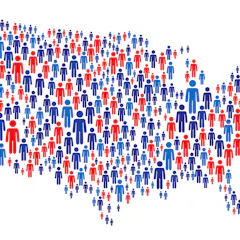
America’s complex system of electoral votes turns out to be a stellar tool for math teachers to use to demonstrate ratios and datasets, as well as concepts of fairness.

Developing students’ mathematical power and confidence is key to creating true equity.

Districts across the country have struggled to improve access and diversity in advanced math classes for years. A new approach offers hope.

A math professor explains how he prepares future teachers to use poetry in their math instruction.

College students can benefit from not taking math courses in their freshman year, new research shows.

Teachers in Ontario elementary schools can learn from how teachers in China approach collaboration as subject area specialists, while Chinese teachers can learn about developing the whole child.

Teachers judged the same math work differently based on whether the work was associated with male or female names.
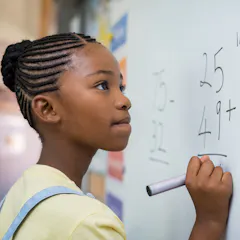
Nearly four decades after President Ronald Reagan proclaimed the first National Math Awareness Week, math readiness and enrollment in college math programs continue to decline.

A former math teacher explains what’s behind the recent drop in math scores for the nation’s fourth and eighth graders.
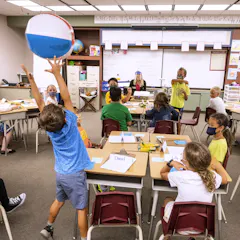
In middle school classes, students from lower-income families tended to be concentrated in just a few classrooms, new research from North Carolina has found.

Student math skills dropped during the pandemic. A business professor believes using sports cards in class could help turn that around.

Early exposure to everyday math at home predicts children’s school mathematics outcomes.

Math educators share four ways parents can use counters, like candies or lego pieces, to lead ‘number talks’ that help kids develop an understanding of how numbers are related.

Parents thrust into the role of math teacher can take simple steps to help their children understand math better and dread it less.

Teachers in training can be taught to teach their students to tackle problems like mathematicians and scientists. But will they stick with that approach once they get their own class?

A Vancouver study found Mandarin-speaking girls were more likely to be eligible for university than Cantonese-speaking boys. High-achieving students were from wealthier families who had tutors.
Top contributors
-

Assistant Professor of Educational Psychology, The University of Texas at San Antonio
-
Associate Professor of Secondary Math Education, Mississippi State University
-
Professor of Economics and Education Policy, New York University
-
Associate Professor of Education, University of Southern California
-
Faculty Member in Teacher Education, University of Nebraska Omaha
-
Professor of Mathematics Education, Indiana University
-
Professor of Education, The University of Melbourne
-
Associate Professor of Management, Oklahoma State University
-
Chancellor's Professor of Medicine, Liberal Arts, and Philanthropy, Indiana University
-
Assistant Professor of Mathematics Education, Penn State
-
PhD student, School and Applied Child Psychology, University of Calgary
-
Full Professor, Faculty of Education, University of Winnipeg
-
Associate Professor of Mathematics Education, University of Connecticut
-
Professor, Queen's University, Ontario
-
Assistant Professor of Mathematics, University of Alabama