
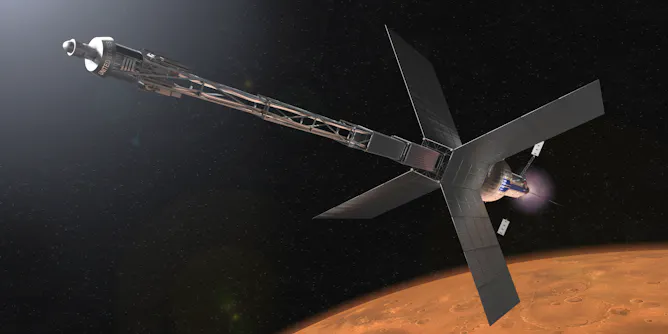
The technology could make it easier to send both humans and cargo to the red planet.
Articles on Mars exploration
Displaying 1 - 20 of 31 articles
Analysis of a rock examined by the Curiosity rover reveals an abundance of organic matter.
Mars may have been hospitable to life early in its history.
Microbial life might survive today underground, in caves or under ice sheets.
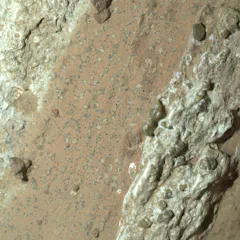
The rock is peppered with spots that could have been formed by microbes four billion years ago.

It turns out that Mars has a similar interior structure to Earth.
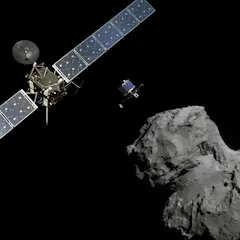
The space agency faces major competition from rising space powers such as China and India.

The recent detection of a gas in a distant plant has been linked to life forms has sparked debate among scientists.
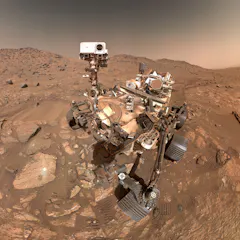
Scientists will have to check whether the samples contain living microbes before they can be safely studied.

Could humans expand out beyond their homeworld and establish settlements on the planet Mars? The idea of settling the red planet has been around for decades. However, it has been seen by sceptics as a…
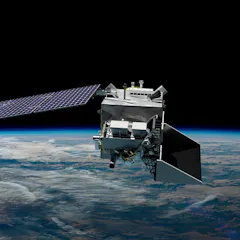
New US legislation could force Nasa to include enhanced cybersecurity for all its spacecraft.
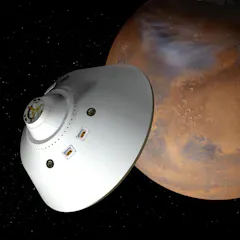
New ideas will be key to making the mission happen after a report criticised its timescale and cost.

The Perseverance rover has arrived at what’s thought to be an ancient shoreline on Mars.

Among the missions being planned is a huge helicopter drone to explore Saturn’s moon Titan.
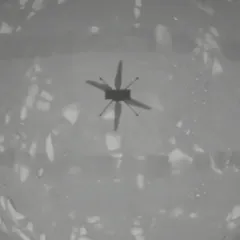
Flying the Ingenuity helicopter on Mars is the equivalent of flying one at about 100,000 feet on Earth. Tricky, considering the highest helicopter flight ever recorded maxed out at 42,000 feet.
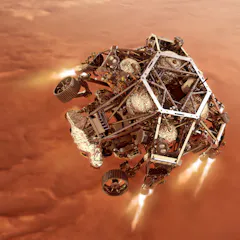
Perseverance follows in the tracks of Curiosity. The latter’s touchdown on Martian soil in 2012 marked the first successful use of several pioneering space technologies.
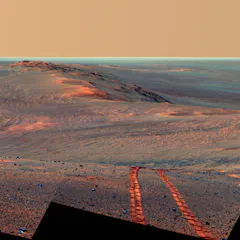
Of the three probes to reach Mars this month, only two will land. But they will add to our growing knowledge of the red planet, and the search for evidence of life.

A new country launches a mission to Mars. A space expert explains what this means for the Middle East and the African continent.

US and international law conflicts about who would be in charge if a private company established a Moon base or colonized Mars.
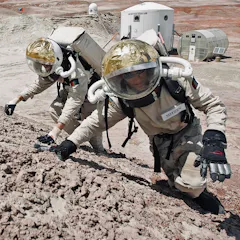
Even on ‘Mars’, humans waste food. And some types of food are more likely to end up in the bin than others.
Top contributors
-

UKSA Mars Science Fellow, Department of Physics, University of Oxford
-
Professor of Planetary Science, University of Leicester
-
Reader in Astrobiology, University of Edinburgh
-
Executive Dean (Engineering), Edith Cowan University
-
Associate Professor in Chemistry, Dublin City University
-
Andrew Dempster is a Friend of The Conversation.
Director, Australian Centre for Space Engineering Research; Professor, School of Electrical Engineering and Telecommunications, UNSW
-
Professor of Space Systems Engineering, University of Bristol
-
Postdoctoral research associate, University of Oxford
-
Research Fellow, ARC Centre of Excellence in Synthetic Biology, Macquarie University
-
Adjunct professor, UNSW
-
Associate Professor - Physics, RMIT University
-
Senior Lecturer, Centre for Hypersonics, School of Mechanical and Mining Engineering, The University of Queensland
-
Senior Teaching Fellow in Space and Cyber, Hunter Centre For Entrepreneurship, University of Strathclyde
-
Research Scientist at Centro de Astrobiología, Spain, and Visiting Scientist in Astronomy, Cornell University
-
Senior Lecturer in Physics, Nottingham Trent University