
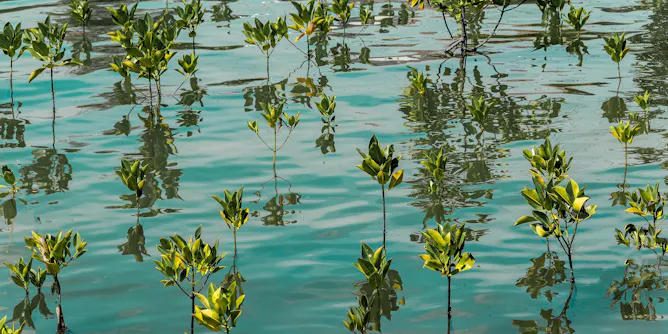
Blue carbon involves more than just counting carbon. It requires governance, finance, policy, and practice. Ultimately, success hinges on people and their skills.
Articles on Marine
Displaying 1 - 20 of 49 articles
If we are serious about ocean recovery, we need to tackle root causes.
Scientists have long debated what the purpose of sleep is.
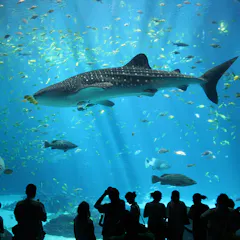
Sharks have had a tough time since the 1970s, when overfishing, habitat loss and a growing trade in their fins began to cut their populations. ‘Jaws’ didn’t help.
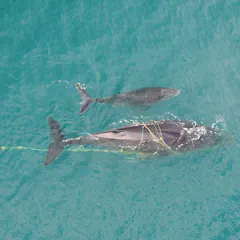
Australian scientists have noticed a rise in the number of whales getting entangled in ropes and fishing lines. Rescuing them is a job for experts.
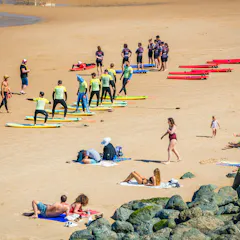
Surf overtourism has led to conflicts over how beaches are used and concerns over social and environmental harms. But there are ways to address these issues.
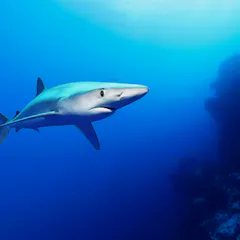
Trophy fishing is a big threat to some of the most threatened species of fish, but there are ways to adapt the sport with marine conservation in mind.
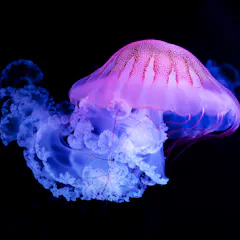
Jellyfish have a reputation to stinging wild swimmers and huge population “blooms”. But it’s a mistake to dismiss these animals as ocean pests.

Coral has been incorporated into traditions, art and even religion in communities around the world.
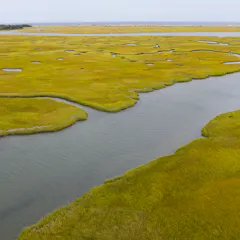
Mangroves and salt marshes pump out methane – but soak up carbon dioxide. Overall, the world’s coasts are a net greenhouse sink – and we must preserve them

As the number of protected areas continues to grow, fisher households in Indonesia are still among the poorest of the poor.

The Nigerian government must do more to combat increasing plastic pollution in the country.
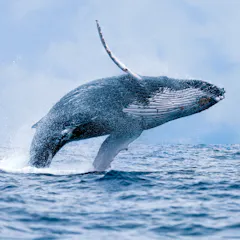
Nations must work with their neighbours to manage and protect species and human rights. An international environmental deal called the Escazú Agreement shows what’s possible.
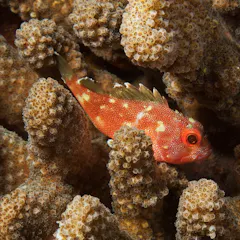
During a 2015 heat wave, scientists watched as a coral reef died before their eyes. By the end of the century, almost all the world’s corals will be gone if climate change continues at this pace.
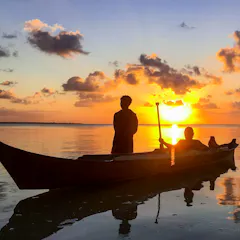
Tourism development should support local communities to increase their skills and knowledge to better equip them to be resilient to crises and economic shocks.
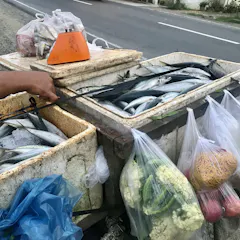
Local, flexible buyers and networks helped support small-scale seafood supply chains coping with COVID-19 disruptions.
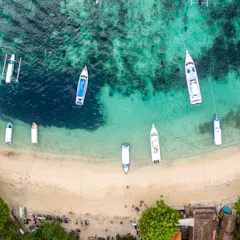
Satellite data reveals increased seaweed production during the COVID-19 pandemic
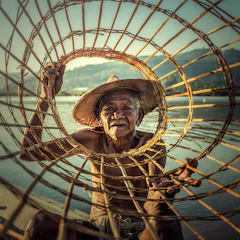
Traditional fishers are one of the most economically vulnerable professions in Indonesia. But, my research found that they are happier than those in other professions.

Although less well known than its cousins, coral reefs and mangroves, seagrass plays a crucial role in climate change mitigation.
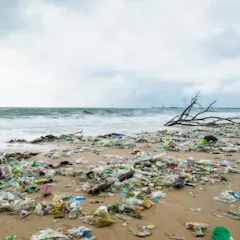
Indonesia is struggling to keep its waste from the oceans. The government has announced ambitious plan to curb plastic waste. However, lack of research to support the policy.
Top contributors
-

Senior Curator of Marine Invertebrates, Museums Victoria Research Institute
-
Associate professor, Macquarie University
-
Lecturer and Marine Reseacher, Universitas Padjadjaran
-
Lecturer in Ornithology, Charles Sturt University
-
Research Fellow, TC Beirne School of Law, The University of Queensland
-
Professor and Deputy Vice-Chancellor (Research), University of Sydney
-
Chair Professor, Swansea University
-
Senior Research Fellow, Antarctic Climate & Ecosystems CRC, University of Tasmania
-
Professorial Research Fellow, Sydney Environment Institute, University of Sydney
-
Professor of Biology and Director, Kewalo Marine Laboratory, University of Hawaii
-
Senior Lecturer in Forensic Bioscience, Liverpool John Moores University
-
Director, Oceans and Atmosphere Flagship, CSIRO
-
Professor in Marine Sciences, Stanford University
-
Associate Professor, Department of Ecology, Environment and Evolution, La Trobe University
-
Chair, National Marine Science Committee and Director, CSIRO National Collections and Marine Infrastructure, CSIRO