

Enzyme proteins can be bred and trained to digest plastics rather than their natural substrates.
Articles on Low-carbon economy
Displaying all articles

We’re well on the road to net zero by 2050. Now a new report from Australia’s independent Climate Change Authority provides pathways for each sector of the economy. Let’s get on with it.
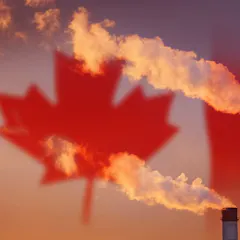
While the introduction of more climate policies across jurisdictions is good, synchronized policy decisions are better.

The quality of asphalt binder — the glue that holds roads together — influences their condition. Binder made from Alberta bitumen is low in waxes and could extend pavement lifespan.

The issues before us are too difficult, too important and too pressing to abandon them to political point-scoring or ideological zealotry.

Reducing greenhouse gases is expensive, but it’s a great investment compared to the damage we can expect to the Canadian economy if the climate warms 5 C by 2100.

A tax credit for companies that invest in carbon capture technology would divert financing away from cheaper and safer climate solutions.

President Joe Biden needed a Plan B, one that Congress could approve, to take to the UN climate conference. But his new strategy is unlikely to meet the country’s emissions reduction goals for 2030.
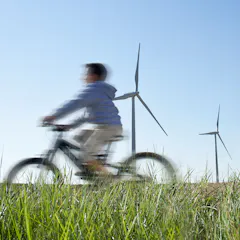
How economic thinking on climate change has evolved since the 2006 Stern Review.
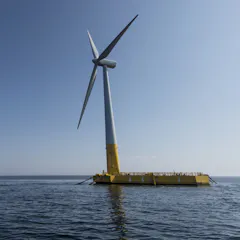
Can Europe’s response to the Covid-19 health crisis put its economy on a greener path? To help answer this question, the recent GEM Energy Barometer polled around 100 energy experts in France.
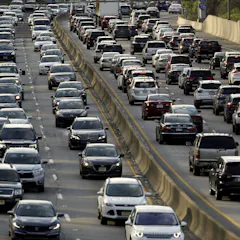
As the effects of climate change become clearer and more ominous, fossil fuel companies face a choice: Defy warnings of catastrophic climate change, or envision their roles in a post-carbon world.
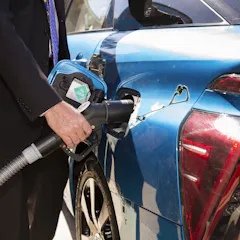
The hydrogen economy has been touted for decades as a way to navigate the clean energy transition. Now a new CSIRO roadmap sets out how hydrogen power can become a major energy player.
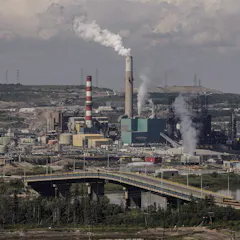
A recent study suggests that divesting in fossil fuels not only allows investors to address their climate change concerns, it also reduces financial risks and increases financial returns.
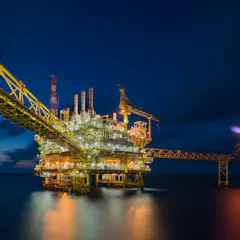
Natural gas is touted as a “bridging fuel” to displace coal while moving to a low-carbon economy. In New Zealand, this is shortsighted and could lead to stranded assets and hold back renewables.
Top contributors
-

Professor, Crawford School of Public Policy and Director, Centre for Climate and Energy Policy, Australian National University
-
Emeritus Professor, Energy and Climate Mitigation, Te Kunenga ki Pūrehuroa – Massey University
-
Project Manager, Monitoring and Impact Measurement, University of Waterloo
-
Research Assistant, Queen's University, Ontario
-
Professeure associée et coordinatrice de la chaire « Energy for Society », GEM
-
Professor of Chemistry, Queen's University, Ontario
-
Associate professor, GEM
-
Associate Professor, School of Public Administration, University of Victoria
-
Special Advisor to the Bennett Institute, University of Cambridge, University of Cambridge
-
Adjunct professor, Environment and Sustainability, University of Saskatchewan
-
Assistant Professor of Political Science, Virginia Tech
-
Manager, CSIRO Futures, CSIRO
-
Assistant Professor, Simon Fraser University
-
Research Assistant, Queen's University, Ontario
-
Assistant Professor, School of Civil Engineering, Southwest Jiaotong University