
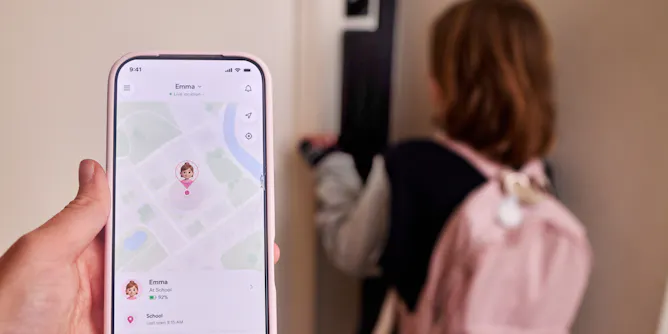
Location tracking means parents can easily check in on their kids while allowing them more freedom. But there are risks too.
Articles on Location data
Displaying 1 - 20 of 21 articles
Geofencing warrants, which round up the location data of everyone in a specific place at a specific time, are now legally subject to Fourth Amendment protections.
Is sharing your data worth what you’re getting out of it? That may be the wrong question to ask when you are thinking about whether to share.
Geofencing warrants round up the location data of everyone in a specific place and time, whether or not they had any connection to a crime – a test of the Fourth Amendment in the digital age.
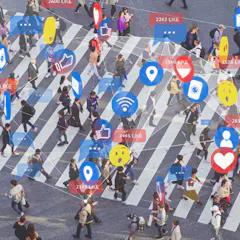
A privacy researcher breaks down how your phone reveals your location, how that data is collected and sold, and how the government gets ahold of it – by simply buying it.

It feels harmless to share a photo of a rare species. But social media can drive great damage to nature, from poaching to baiting to trampling.

Cellphones are constantly collecting location data from global satellites, but there is uncertainty about who is using these data, and for what purposes.
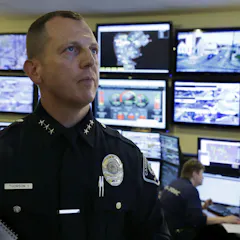
It’s increasingly difficult to move about – both in the physical world and online – without being tracked.
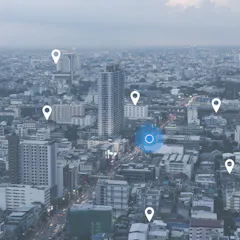
Address data are maintained in silos at different government entities. There is limited coordination and adherence to international standards; good practice is lacking around information management.
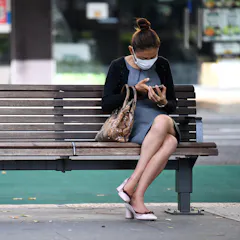
Our mobile phone’s location data could be a valuable tool to help track and trace the spread of the coronavirus outbreak. The government has the legal power to do it, given what’s at stake.
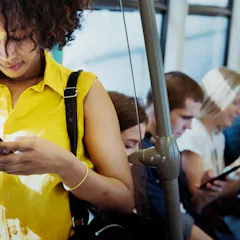
Every device that you use, every company you do business with, every online account you create – they all collect data about you and analyze it to figure out minute details of your life.

Virtual private network companies make lots of promising claims about their services. Most people don’t have the skills to double-check their providers. So this group of researchers did the testing.

Experts describe their research into how smartphones collect and share private personal information with tracking companies and advertisers.

Inaudible sounds are being used to transmit data from our devices. While not new technology, these ultrasonic beacons may be in breach of laws regarding surveillance devices.
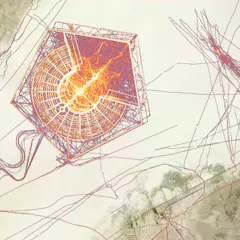
It’s not just fitness trackers – mobile phones can reveal users’ whereabouts too, even with location tracking turned off.

Should police be able to use cellphone records to track suspects – and law-abiding citizens?
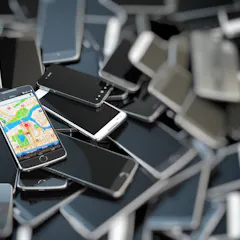
You can learn a lot about the movement of people and animals if you tap into the tracking data from many of today’s mobile phones.
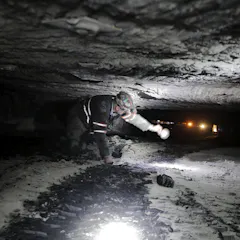
Mine communications are complex, slow and unreliable. The solution to keeping miners safe, and rescuing them when disaster strikes, might just be in their hands already.
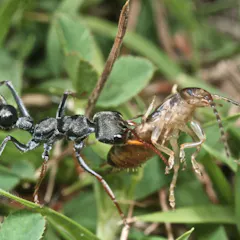
The navigation tactics of certain Australian ants could point the way to helping driverless cars find their way around.
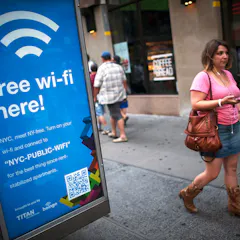
New York City is developing a ‘free’ public Wi-Fi network to be deployed throughout the city, but the poorly appreciated price is our privacy.
Top contributors
-

Professor of Information, University of Wisconsin-Madison
-
Affiliated Faculty Member, Institute for Computational and Data Sciences, Penn State
-
Professor, Graduate School of Business and Law, RMIT University
-
Postdoctoral Research Associate, Florida International University
-
Distinguished Professor of Marine Science, King Abdullah University of Science and Technology
-
Bernard A. Galler Collegiate Professor of Electrical Engineering and Computer Science, University of Michigan
-
Fellow for Cyber-security and Internet Governance, School of International and Public Affairs, Columbia University
-
Associate Professor of Electrical and Computer Engineering and Computer Science , Colorado State University
-
Emeritus Professor of Marine Ecology, Macquarie University
-
Senior Principal Research Scientist, Australian Institute of Marine Science
-
Professor of Film & Media Studies, University of California, Irvine
-
Adjunct Professor, School of Information Technology, Deakin University
-
Professor of Computer and Information Science, Northeastern University
-
Research Assistant Professor, IMDEA Networks Institute, Madrid, Spain; Research Scientist, Networking and Security, International Computer Science Institute based at, University of California, Berkeley
-
Principal Researcher, Council for Scientific and Industrial Research