
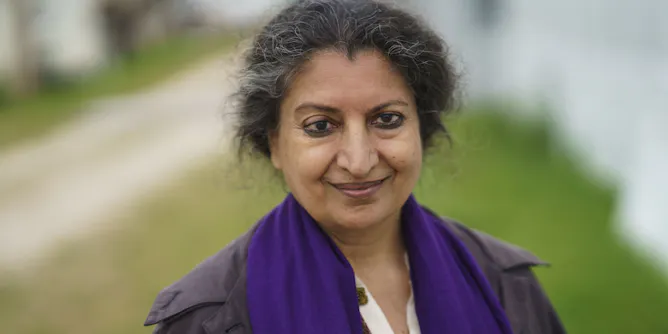
Geetanjali Shree’s writing is an audacious blend of literary Hindi and an array of local dialects.
Articles on Literature in translation
Displaying all articles
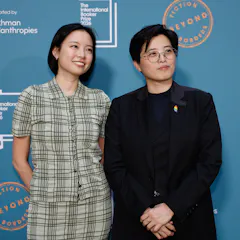
Taiwan is usually discussed in Australia through geopolitics, but Taiwan Travelogue makes it visible as a lived society.

Like Jorge Luis Borges before her, Solvej Balle employs fantasy to philosophise on the nature of reality.
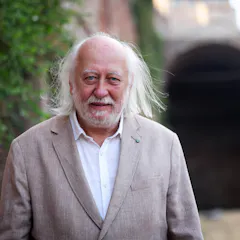
Krasznahorkai’s language is the mad scream of a godless universe at our inexcusable squandering of every good thing given to us by chance.
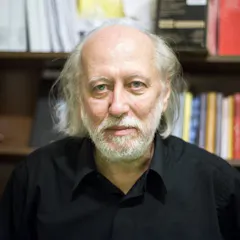
Krasznahorkai is a deeply modernist writer with an unwavering faith in beauty and art.
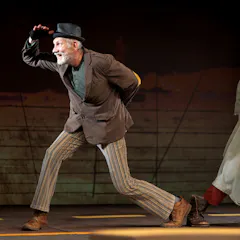
A certain amount of political baggage had to be shaken off before such a feat could be realised – not just in the right words, but in the right spirit.

‘If the book we are reading doesn’t wake us up with a blow on the head, what are we reading it for?’

Céline portrays the vertigo of the human condition with an intensity that still has no equal, eighty years on. But this English version is not quite Céline.

Han Kang’s characters have looked squarely at histories of state-sanctioned murder and carry the wounds of those histories.

The Empusium is a deft new take on the novel of ideas and convalescence.
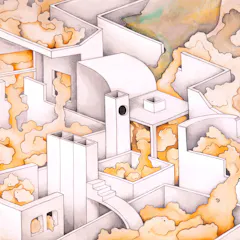
The Japanese author’s new novel features a walled town with no music or books, a speaking shadow, the ghost of a head librarian, and a teenage boy who remembers every book he has read.
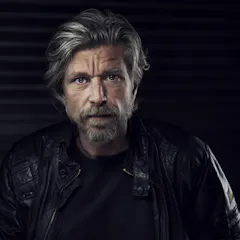
The Wolves of Eternity is remarkable – and deliberately challenging. Ranging across time and space, it muses on thinking trees, Putin’s Moscow, a Norwegian heatwave and the undead.
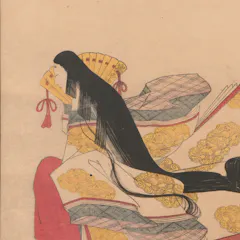
A classic of the Heian period of Japanese literature, the sensual delight of The Pillow Book encourages writers to ‘follow their brush’.

In The Manic, Benjamin Labatut tells the story of the ‘smartest man of the 20th century’.
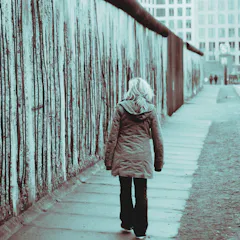
In Kairos, a relationship between a young woman and an older married man captures the difficulties and ambivalences of German reunification.
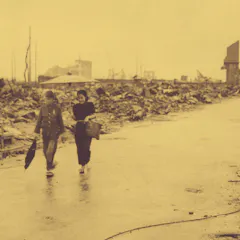
A classic of modern Japanese literature, Black Rain has come to exemplify ‘atomic bomb literature’.
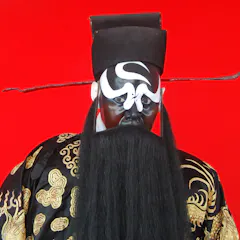
Many think of crime fiction as a predominantly English and American phenomenon, but the genre is thriving internationally, breaking rules and exploring pressing issues.

In her new essay collection, Elena Ferrante tells the compelling story of her reading and writing life, and the battle between form and wildness.
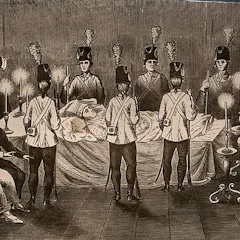
The Nobel Laureate’s new experimental epic is a masterful account of the life of a self-proclaimed Messiah.
Top contributors
-

Senior Lecturer, Global and Language Studies, RMIT University
-
Senior lecturer, English, University of Sydney
-
Professor of Creative Writing, University of Technology Sydney
-
Senior Lecturer, Discipline of English and Writing, University of Sydney
-
Associate Professor, School of Arts, Western Sydney University
-
Senior Lecturer in Creative Writing, University of Sydney
-
Distinguished Professor Emerita of Creative Practice, Faculty of Arts and Design, University of Canberra
-
A.R. Chisholm Professor of French, The University of Melbourne
-
Associate professor, University of the Free State
-
Professor of English, University of Surrey
-
Jury Professor of English and Language and Literature, Adelaide University
-
Professor of Writing and Literature, Deakin University
-
Senior Lecturer, Literary and Cultural Studies, Monash University
-
Associate Professor, University of Newcastle
-
Lecturer in Contemporary Chinese Culture and History, Macquarie University