
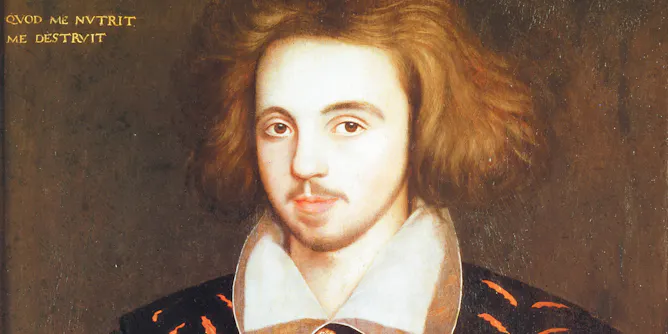
Marlowe’s artistic brilliance was arguably more concentrated, his imagination more original and his ideas more daring than Shakespeare’s.
Articles on Literary criticism
Displaying 1 - 20 of 21 articles
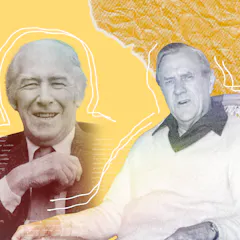
David Brooks, winner of the 2024 Prime Minister’s Literary Award for Poetry, recalls his friendship with AD Hope and recounts falling in love with Patrick White.
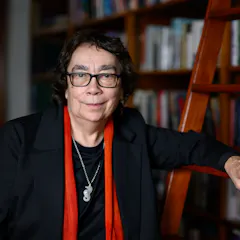
Alexis Wright’s work expresses a sovereign Aboriginal worldview, but owes a debt to a pantheon of authors from around the globe.
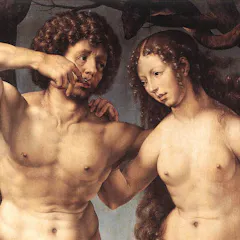
Shame is a feeling we struggle to know what to do with, precisely because we always seem to have too much or too little.
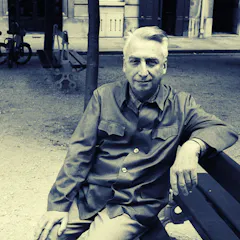
Roland Barthes’ notion that the author is dead has been incredibly influential, though it was not as original or revolutionary as it seemed.
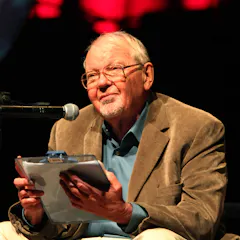
Utopia was, for Jameson, more than a hope deferred or a crazy workbench covered with unfinished social blueprints. It was a habit of thought we cultivate among ourselves.
Reading poetry can be a daunting affair. In Australian Poetry Month, an expert shows us how one poem works – and what it reveals.
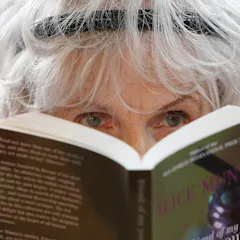
Scholars have an opportunity — if not an obligation — to use our re-readings to reckon with sexual abuse of children and the silence that so often surrounds it.
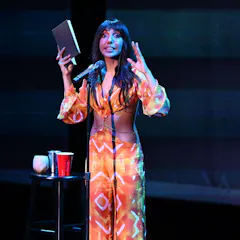
Literary critics and scholars need to take poetry that originated on social media more seriously.
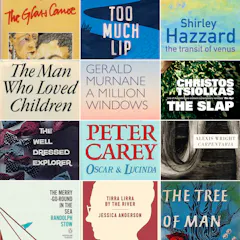
A major new history of the Australian novel is shaped by the recent renaissance in Indigenous writing, but there are some notable omissions.
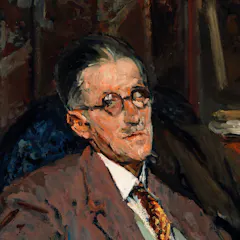
Gabrielle Carey’s last book, about her beloved James Joyce, also includes her own life as a reader, and makes us see things that hurt and delight her.
A new book designed to interest potential and beginning readers also offers plenty of new ideas to interest well-versed Murnanians.
In her latest book, Sarah Krasnostein goes straight for the soul of Peter Carey’s writing.
Four years after his death, Harold Bloom continues to loom large over American literature, but his signature work has been less influential in the field of literary studies.

D.H. Lawrence is a writer who provokes adoration or loathing, depending on one’s taste, politics and patience. How reliable is he as a guide to life?
An expert in the representation of the Holocaust on film explains the responsibility of the reader to educate themselves beyond the depth of a single work of fiction.
In her essay on the work of Tim Winton, Geraldine Brooks is looking for a punch-up with academics and critics.

Miles Franklin Award winning novelist Amanda Lohrey explores the political and the personal in a way that makes her unique among contemporary Australian writers.
How do editors decide what books get reviewed? Spoiler alert: it’s not meritocratic.
Last year saw the first cohort of English literature students who were born in or beyond 2000 – the so-called digital generation. I wanted to know whether the classics still affected their lives.
Top contributors
-

Professor, Chair of Australian Literature, The University of Western Australia
-
Senior Lecturer (English and Drama), Australian National University
-
Dean of Arts and Science and Professor of English, Mount Saint Vincent University
-
Chair of Irish Studies, The University of Melbourne
-
Professor of English, Writing and Society Research Centre, Western Sydney University
-
PhD Candidate, Latin American Studies, Trinity College Dublin
-
Associate Professor, English and Creative Writing, Edith Cowan University
-
Associate Professor of English, Australian National University
-
Senior Lecturer in English, University of Tasmania
-
Professor in Modern and Contemporary Literature, Northumbria University, Newcastle
-
Lecturer, Department of English, Creative Writing and Film, Adelaide University
-
Professor of Film Studies, Bangor University
-
Emeritus Professor, Australian National University
-
Jury Professor of English and Language and Literature, Adelaide University
-
Senior Lecturer in English Literatures, University of Wollongong