
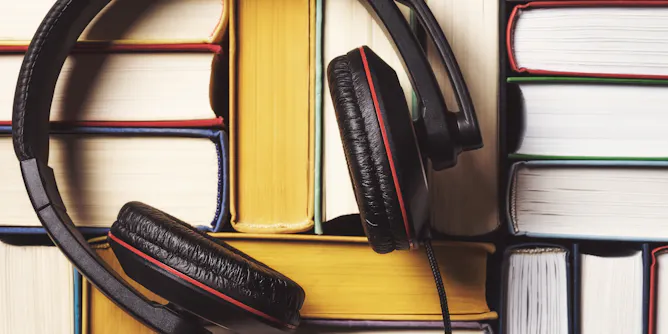
Listening-as-reading is a growing segment of the publishing market. Audiobooks revive ancient ways of storytelling and might get more people excited about books.
Articles on Listening
Displaying 21 - 36 of 36 articles
If you’ve ever cringed after hearing a recording of yourself, you’re not alone.

Conversation analysis explains how ums and uhs facilitate communication
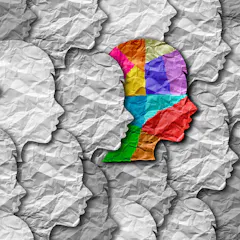
Many people with autism spectrum disorder have dealt with social isolation their entire lives. Their coping strategies could help the rest of the world right now, as a professor with ASD explains.

When you’re stuck at home during social distancing, it’s only natural to feel on edge at times. So how do you listen to a loved one who’s on edge, too?
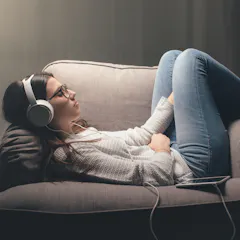
The music we choose to listen to not only allows us to retreat into a place of peace and privacy, but also helps frame our daily routines and interactions with others.

Hit television show The Masked Singer encourages us to hone our listening skills. In fact, the voice gives us clues about emotion and identity every day.
Knowledge is important to produce informed policy, but an understanding of people is also vital in a democracy. And that requires listening – to all sectors of society, not only elites and lobbyists.

Smart speakers can listen out for more than just your voice commands at home. They can hear what’s going on around you and react, security systems can even listen out for gunshots.
The aliens of A Quiet Place track their prey by hearing something outside the norm.
We seem prepared to share our opinions on almost any subject today thanks to social media and other mass communication. But who is really listening?
Universities are so busy trying to make ends meet that there’s no time to listen to their communities’ stories. It’s crucial to develop safe spaces where tough conversations can happen.

The term APD describes several disorders that result in a breakdown in the listening process. It is most common in primary school, affecting more than 5% of children.
Controversial arguments and ideas should be listened to and open to public scrutiny. Only then can we expose those ideas found wanting and lacking any credibility.
When seeing or hearing something poignant, many get the chills. But about one-third of the population doesn’t feel this sensation.
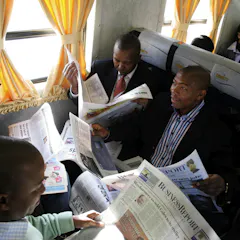
Research in the Eastern Cape, South Africa, shows that many young, black and poor people do not recognise themselves or their communities in the stories they see, hear or read in mainstream media.
Top contributors
-

Professor of Journalism and Media Studies, Rhodes University
-
Public Service Accountability Monitor: Advocacy Impact Programme Head, Rhodes University
-
Professor in Practical Theology, Teaching Fellow at the Center for Teaching and Learning, Coordinator of Master of Divinity Program and Post Graduate Diploma in Christian Ministry, Faculty of Theology, Stellenbosch University
-
Associate Provost & Vice President, American Public University System
-
Lecturer in Health Communication, University of Sydney
-
Senior Lecturer in Philosophy and Education; Curriculum Director, UQ Critical Thinking Project, The University of Queensland
-
Reader in Applied Cognitive Psychology, Cardiff Metropolitan University
-
Professor of Neuroscience, Boston University
-
Assistant Professor of Otolaryngology, UW Medicine, University of Washington
-
Distinguished Professor of Public Communication, University of Technology Sydney
-
Academic Specialist, The University of Melbourne
-
Professor, Human and Behavioural Sciences, Bangor University
-
Associate Professor, Simon Fraser University
-
Simon Fraser University
-
Academic, The University of Melbourne