

Each person is a mosaic of sex-related and postpubertal biological traits that vary in their degree of femaleness and maleness.
Articles on LGBTQ+ issues
Displaying all articles
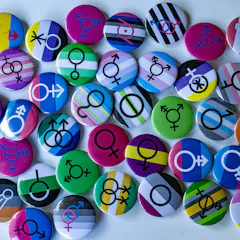
Public support for trans and gender-diverse people is declining, and that decline is being driven by political and media discourse.
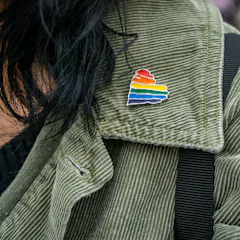
LGBTQIA+ support groups often help students feel safe and included at school. But they can be difficult to set up and sustain.
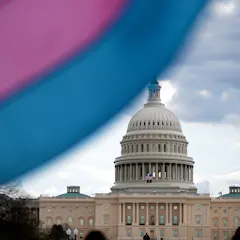
How invented threats, provocative language and repulsive imagery contribute to declining support for transgender people and other marginalized groups.

The boundaries of heterosexuality are bending for women but not for men, who appear to have less room to explore and are bound to a more rigid, traditional concept of masculinity.

School boards have gained attention for taking on controversial issues, such as transgender students participating in sports, but much of their work is administrative.
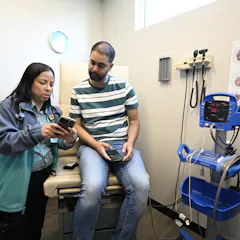
An increasing number of laws aim to roll back LGBTQ+ people’s ability to access health care, leading to cascading effects on their well-being.

Genetic testing is now required to participate in women’s events in the Olympics. But the new policy oversimplifies biological sex and risks discrimination against some female athletes.

For LGBTQ+ people, ‘safety’ does not switch on when their countries’ laws change or a conflict stops.

Research shows that Supreme Court justices affiliated with the group are more consistently conservative than other justices, meaning they seldom deviate from their voting behavior.

The fact that companies have quickly backed away from their support of the 2SLGBTQIA+ community has revealed the conditionality of their support.

In a landmark study of 1,000 LGBTQ young people, we found many experience threats to “fix” them through sexual violence.

The government has decided against including questions about sexuality and gender identity in the 2026 Census. How can it make policy for LGBTQI+ people without such basic data?
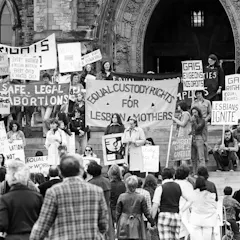
The Lesbian and Gay Liberation in Canada project uses a new online database to record the events, places, people, organizations and publications that have formed Canada’s LGBTQ+ rights movement.

As states and local school boards in some places continue to pass anti-LGBTQ+ rights legislation and policies, hate crimes against young LGBTQ+ people have also increased.
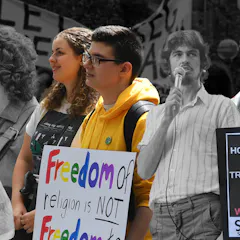
We don’t ban queer teachers in public schools anymore, but it’s still allowed in some religious private schools – which the new Law Reform Commission report wants to address. What can history teach us?

Queer joy is a powerful emotion. It sustains the fight for recognition and equality for LGBTQ+ people, especially in the face of challenges like discrimination.
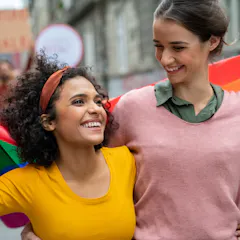
People are coming out at younger ages – but if you’re navigating your sexuality in your 20s and 30s, you aren’t alone.
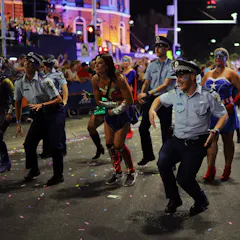
It’s easy to assume the latest opposition to NSW police taking part in the annual festival is a response to recent events. Really, it’s the result of a long, painful history.
Top contributors
-

Professor, Women's and Gender Studies, Mount Royal University
-
Professor in the Faculty of Business & Communication Studies, Mount Royal University
-
Professor of Biological Sciences; Director of the Cellular and Behavioral Neurobiology Graduate Program, University of Oklahoma
-
Associate Professor, Department of Social Work and Women, Gender, & Sexuality Studies, Binghamton University, State University of New York
-
Adjunct professor, Queensland University of Technology
-
Independent Scholar, University of York
-
Professeure à temps partiel au département de communication / Part-time professor in the Communications Department, L’Université d’Ottawa/University of Ottawa
-
Associate Professor, University of Warwick
-
Associate Professor, The University of Melbourne
-
Librarian, Toronto Metropolitan University
-
Associate Professor of Law, Wake Forest University
-
Senior research fellow, University of Technology Sydney
-
Associate Professor and Canada Research Chair in Digital Humanities, L’Université d’Ottawa/University of Ottawa
-
Senior Lecturer in Politics and Sociology, Swinburne University of Technology
-
Senior Lecturer in Criminology, University of Newcastle