
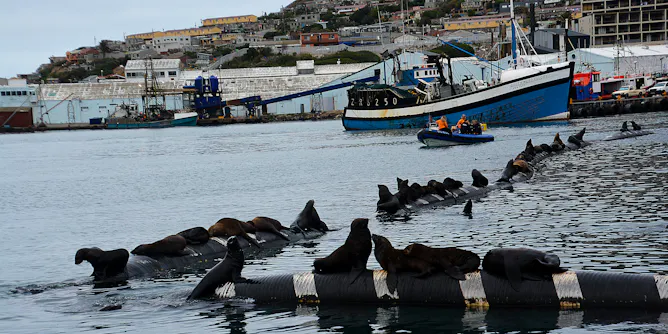
From Cape Town’s kelp forests to debates over hunting and sharks, human relationships with wildlife are reshaping conservation across South Africa.
Articles on Leopards
Displaying all articles

In Borneo’s remote villages, locals earn money by recording wildlife — reshaping conservation and redefining how communities value their forests.
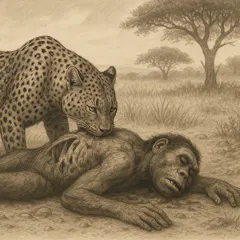
Paleoanthropologists have thought that Homo habilis was the first stone-tool maker and meat-eater in our genus. But new research suggests H. habilis might not have been so advanced.

A 25-year-old local scientist captured rare footage showing how one of the world’s deadliest viruses could jump from bats to humans.
A census of carnivores in Uganda painted a grim picture in some areas, but marked hope for others.

Studying carnivore ‘kill rates’ – typically the number of prey killed over time – can help us better understand the role of apex predators in ecosystems across the globe.

Many of the endangered mammal species are solitary. Understanding this way of life may help to protect them.

Formerly one of the world’s largest markets for tiger bone, new research sheds light on the current situation in South Korea.
CC BY-NC-ND11.7 MB (download)
As humans and wildlife come into closer contact, it is crucial to ensure that there's a relationship that benefits both people and animals.
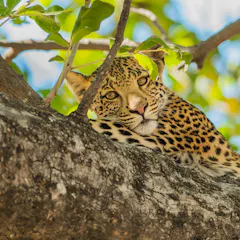
Recent sighting of a leopard in the Campo-Ma’an National Park area of Southern Cameroon shows the importance of conservation efforts.
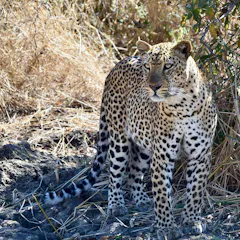
We studied the genomes of African and Asian leopards using specimens from natural history museums.
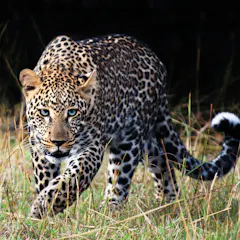
If left unregulated, the unsustainable exploitation of leopards will have severe ecological and evolutionary costs.

A new way for leopard biologists to monitor this elusive and iconic species has been developed.
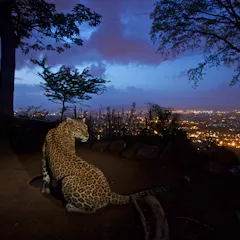
Wild leopards that live in an Indian city park like to dine on stray dogs, which new research says may help reduce the number of potentially deadly dog bites on people.
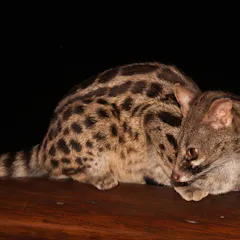
Instead of causing problems for farmers, carnivores could actually be beneficial by controlling rodent pests.
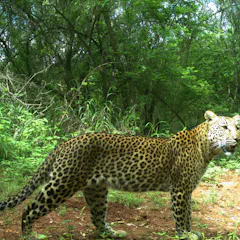
Sound wildlife management is incredibly important, and could enhance the conservation status of large carnivores like the leopard, which has recently been listed as a vulnerable species.
Top contributors
-

Research Fellow at the Centre for Planetary Health and Resilient Conservation Group, Griffith University
-
Postdoctoral Research Fellow in the Department of Zoology, University of Venda, Researcher at IGDORE, and Honorary Research Fellow in the Department of Anthropology, Durham University
-
Assistant Professor of Planetary Health, Maastricht University
-
Postdoctoral associate, Centre national de la recherche scientifique (CNRS); University of the Witwatersrand
-
Associate lecturer, University of Venda
-
Professor of Ecology, Natural Resources Institute, University of Greenwich
-
Lecturer in Zoology, Bangor University
-
Senior Lecturer in Conservation Ecology & Genetics, University of Cape Town
-
Honorary Research Associate, University of Cape Town
-
PhD student, University of Cape Town
-
Associate Lecturer in Biodiversity Conservation and Ecology, UCL
-
Lecturer in Zoology, Bangor University
-
Professor, Biology Graduate Program Director, Biology, Concordia University
-
Director Zambia Lion Project, University of California, Los Angeles
-
Snr research fellow, University of Pretoria