
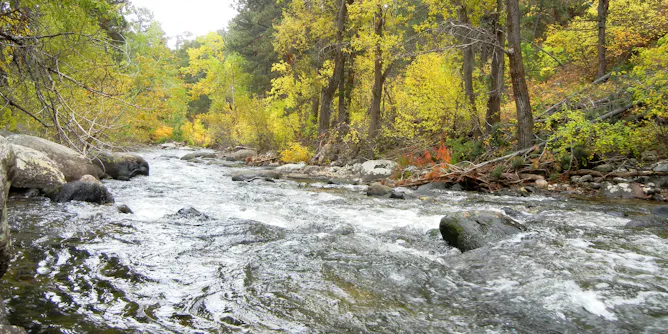
Understanding what happened in these forests 56 million years ago may help humanity recognize similar thresholds before we cross them again, the lead author of a new study writes.
Articles on Leaves
Displaying all articles

In full sun, tropical leaves can become much hotter than the surrounding air. Their ability to cope can be a matter of life or death.
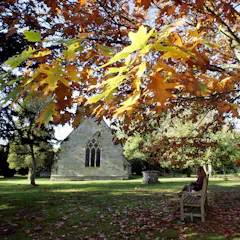
Plus, how trees can be tricked into ‘thinking’ it is another season.

The leaves of evergreen species acquire carbon over the long term and improve nutrient conservation, whereas short-lived leaves favour rapid carbon acquisition.

Trees – and all plants – harvest sunlight to gain the energy they need to live and grow.

Green plants produce a specific gas when under attack to both directly ward off herbivores and pathogens and indirectly lure in herbivore predators.

Humans have figured out how to season their food with virtually every part of plants.
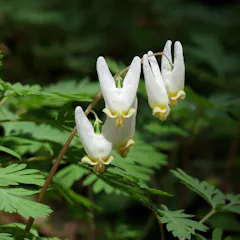
Many beloved wildflowers bloom in early spring, while trees are still bare and the flowers have access to sunlight. Climate change is throwing trees and wildflowers out of sync.
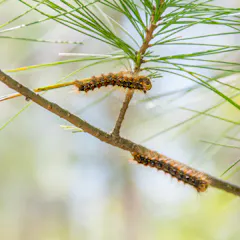
Creating and preserving diverse forests can help us prepare for the next insect outbreak and protect our trees.
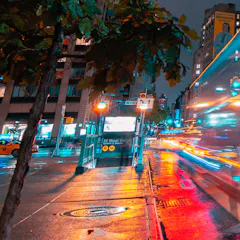
Artificial light is upending trees’ ability to use the natural day-night cycle as a signal of seasonal change.
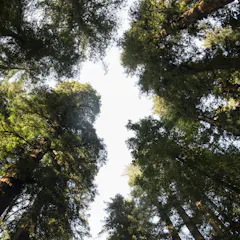
New research shows that coast redwood trees have a surprising adaptation that helps them thrive in both wet and dry environments.
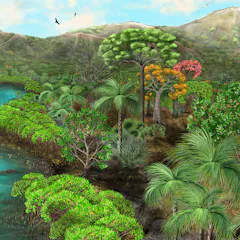
Using remnants of fossilized trees, scientists and an artist figured out what the forest looked like long before humans existed.
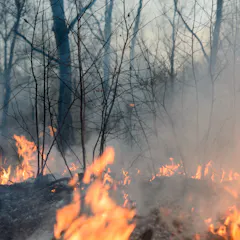
New research found curly leaves on the forest floor create litter beds with more air gaps. And this fuels bigger fires.
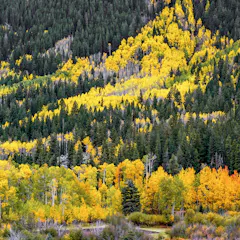
Many deciduous trees put on a dazzling fall foliage display. But coniferous evergreens hold on to their needles and stay green. A biologist breaks down these different survival strategies.
Top contributors
-

Professor of Biology, Bowdoin College
-
Research Scientist, Clark University
-
Senior research fellow, The University of Melbourne
-
Assistant Professor of Environmental Science, Quinnipiac University
-
Paleontologist, National Park Service
-
Assistant Professor of Plant Physiology, Cal Poly Humboldt
-
Policy Research Specialist, Repair Lab, University of Virginia
-
Professor of Biology, Boston University
-
PhD Candidate, The University of Melbourne
-
Postdoctoral Fellow in Biology, University of Pittsburgh
-
Professor, Biology Department, Concordia University
-
Research Fellow in Bushfire Behaviour and Management, The University of Melbourne
-
Vice President of Academic Affairs and Dean of the College, Grinnell College
-
Associate Professor of Environmental Science, Iowa State University
-
Ph.D. Candidate in Biochemistry, University of South Carolina