

The task team established to investigate political killings in KwaZulu-Natal has had little impact on exposing those behind the violence.
Articles on Law and order
Displaying 21 - 40 of 45 articles

Those living in rural areas have more punitive attitudes toward crime and how to control it than city-dwellers, and it’s a major component of the growing urban-rural divide in Canada.

Democracy is not perfect. Sometimes it produces policies that are undemocratic and unjust. In those cases, breaking the law may be justified.
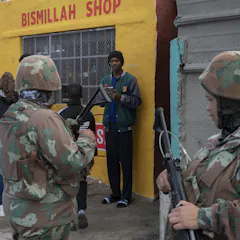
Using the military continuously in internal roles for which it is not structured, funded or trained simply speeds up its decline.
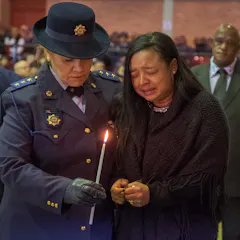
The biggest problem with using the military to fight rime is that soldiers are not trained for law enforcement, but warfare, using maximum force.

At one time, law and order was seen by some as a sure-fire voter winner in elections - but that’s changing after a concerted effort by Victoria’s opposition appeared to backfire badly.

The Verdins principles affect the way offenders with mental health problems are sentenced in a court of law.

The Law and Order Index says South Africans feel less secure than people in Yemen, the DRC and Libya, countries all affected by violent conflict.

Ultimately, most regulatory interventions in nightlife precincts are about imposing particular ideas of social and moral order not only within these spaces but also in the city more broadly.

Romero’s ‘Night of the Living Dead’ and ‘Dawn of the Dead’ will be remembered among the first films to use horror as a form of political critique.

Australia has become less compassionate, more punitive and more ready to blame individuals for their alleged failings since the Royal Commission into Aboriginal Deaths in Custody.

It is claimed ‘tough on crime’ policies reflect public opinion, but a properly informed public, via models such as citizens’ juries, is likely to arrive at different views on prison and its alternatives.

The days of prison, an 18th-century industrial institution, as the justice system’s dominant form of punishment may be numbered. Electronic monitoring of offenders is one promising alternative.

Approaches to crime that rely on punitive methods have proved to be ineffective and counter-productive. Rehabilitation programmes not only prevent crime, but are cost-effective and practical.

Some claim rising crime rates justify jailing more people, others that such policies cut crime. Evidence from around the world shows those claims are wrong and that we should be looking at inequality.

Imprisonment rates in Tasmania have steadily declined over the past decade – the only state or territory where this has happened. That is a result of progressive and effective corrections policies.

The Northern Territory stands out for having one of the highest imprisonment rates in the world - much higher even than in the US - and it’s hard to argue that this does the community much good.

Indigenous people are jailed at a rate 18 times that of non-Aboriginal Western Australian adults, but the overall rate is high too. The great costs of this punitive approach yield few clear benefits.

Queensland’s rates of imprisonment had been falling, but have undergone a sharp reversal - much of it driven by the nation’s highest rates of return by prisoners released into the community.

In a new series on imprisonment trends, issues and policies across Australia, The Conversation asks why are imprisonment rates soaring, to what purpose, and with what financial and human consequences?
Top contributors
-

Criminologist / Senior Lecturer, Stellenbosch University
-
Professor of Sociology in the Department of Sociology and Social Anthropology., Stellenbosch University
-
Associate Professor, School of Social Science, The University of Queensland
-
Lecturer, School of Law, UNSW
-
Associate Professor of Political Science, West Virginia University
-
Professor of Criminology, University of Tasmania
-
Professor, The University of Western Australia
-
Associate professor, Monash University
-
ARC Future Fellow and Professor of Criminology, The University of Melbourne
-
PhD Researcher, Menzies School of Health Research
-
Director, Sir Zelman Cowen Centre, Victoria University
-
Assoc Professor, School of Justice, QUT, Queensland University of Technology
-
Associate Professor in Criminology, The University of Queensland
-
Victoria University
-
Professor, Griffith Criminology Institute, Griffith University