

One of the most high-profile court cases in Australian history has ended in the maximum sentence. Two legal experts explain the process.
Articles on Parole
Displaying 1 - 20 of 34 articles

For the more than 3 million Americans on probation or parole, rules and regulations often serve as hidden traps to reincarceration.
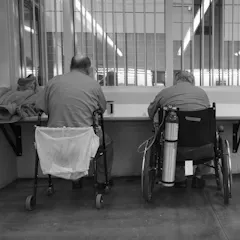
Parolees over 50 tend to have health issues and strained family ties. They’re less likely to reoffend after prison but need more help getting back on their feet.

With a series of high-profile cases in the news, parole is back in the spotlight. Let’s unpack some of the most common misconceptions about what parole really means.

Understaffing and budget cuts mean prisoners often struggle to complete rehab programmes, even when they want to. ACT’s Parole Amendment Bill risks having the opposite of its intended effect.

‘I no longer exist, I have become a construct of their imagination. It is the ultimate act of dehumanisation.’

Research on developing brains has helped bring about a sea change in attitudes toward juvenile life without parole. But many people who committed crimes as minors are still serving such sentences.

The court should have given the public a much clearer understanding of how it came to its decision, and what consideration it had given to public opinion.

The decision is likely to be relied on by courts to order the Department of Correctional Services to grant offenders parole.

‘No body, no parole’ laws may at first appear to be in the public interest. But there’s a lack of evidence they work and a risk they may disproportionately penalise the wrongfully convicted.

Myles Sanderson was given statutory release from prison prior to a stabbing rampage that left 10 people dead. But a legal expert says his case is unrepresentative of how people behave on this form of release.

Our research shows the technology simply isn’t ready yet.
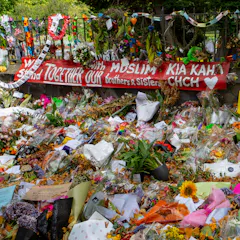
A whole life sentence has never been imposed in New Zealand but it seems likely the prosecution will call for one for the Christchurch gunman.

Some prisoners love and care for each other, but others physically, verbally and emotionally abuse each other. These offences can threaten safety and the good order of the prison.

Under new WA legislation, the state’s attorney-general has the power to order serial killers and mass murders remain in jail, sometimes without judicial review.

The ‘Monster of Worcester’ would have been released 24 years ago in Norway - would that have been better for everyone?

Programs that allow individuals to be supervised in the community instead of in prison are growing in a way that is not sustainable and is contributing to mass incarceration rather than relieving it.

Government and judicial interventions into the decisions of parole boards display a progressive loss of faith in these independent bodies.

As a result of the ruling, more detail of future Parole Board decisions should be available to victims.

Upholding victims’ rights on parole decisions means respectfully enabling their active participation in decisions that affect their personal interests.
Top contributors
-

Professor of Criminology, Australian National University
-
Arie Freiberg is a Friend of The Conversation.
Emeritus Professor of Law, Monash University
-
Associate Professor in Criminology, The University of Queensland
-
Lecturer, RMIT University
-
Professorial Fellow, University of Canberra
-
Emeritus Professor in Law and Criminal Justice, Adelaide University
-
Senior Lecturer - Criminology and Justice Studies, RMIT University
-
Lecturer, Criminology & Justice, RMIT University
-
Associate Dean, Criminology and Justice Studies, RMIT University
-
ARC Future Fellow and Professor of Criminology, The University of Melbourne
-
Victoria University
-
Assistant Professor in Public Law and Human Rights, Durham University
-
Senior Lecturer in Criminology, Monash University
-
Senior Lecturer, Faculty of Law, Queensland University of Technology
-
Senior Lecturer in Criminology, Deakin University