

New research tracking more than 80,000 Queenslanders from birth to adulthood reveals the differences between men and women in patterns of criminal behaviour.
Articles on Law and order
Displaying 1 - 20 of 45 articles
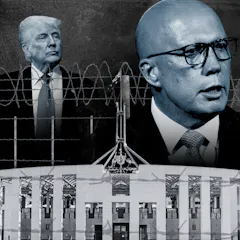
New research reveals community cohesion, robust social supports and media diversity mean its harder in Australia than the US to exploit crime fears to win votes.

Research shows 37 new prisons have been built in Australia since 2000. But the evidence shows increased incarceration doesn’t help reduce crime.

The National-led coalition has a challenging mandate to govern, given voter expectations and surprisingly high levels of satisfaction with the outgoing Labour Party.

In medieval Europe, vigilantism was rampant. Though there were rudimentary efforts to develop legal frameworks, the precepts could be bizarre, with justice sporadic and unevenly applied.

Lowering Indigenous incarceration rates is a key aim of the Closing The Gap targets, but there are more First Nations people behind bars than ever. How did this happen and what can fix it?
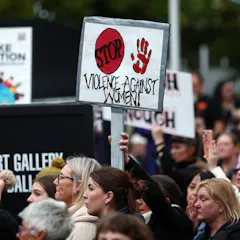
Public focus on, and anger about, the horrifyingly high rates of violence against women is at fever pitch. What have the country’s leaders agreed to, and will it fix the problem?

You might want to think twice before hiring Harvey Specter or Annalise Keating as your lawyer. The more accurate depictions of legal practice on TV might not be where you think.
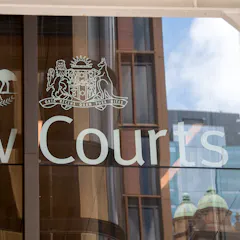
‘No body, no parole’ laws may at first appear to be in the public interest. But there’s a lack of evidence they work and a risk they may disproportionately penalise the wrongfully convicted.
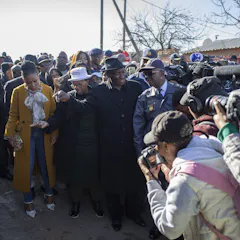
Historically, most mass shootings in South Africa have been associated with three main things: gang conflicts, rivalries in the minibus taxi sector and factional or inter-group feuds.
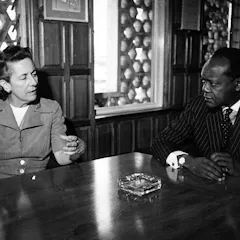
The Kenya that Njonjo sought to create was the ‘greatest living example of democracy, justice and peace’ – but there was no space for the poor.

As the July 2021 unrest and looting graphically showed, crime and lawlessness can debilitate and destroy government efforts to facilitate and support economic growth.

Minneapolis residents voted 56% to 44% against an amendment that would have transformed the city’s police. The reasons they did so are complicated, an expert writes.

An uncomfortable reality is that looting is perceived by the looters to be socially acceptable and is often encouraged and endorsed within social and community networks.

After 1994 efforts were made to embed democracy. The focus was on policy and institution-building. What was missing was ensuring all South Africans were on board.

South Africa can’t possibly remain the same country in the aftermath of this mayhem. There are just too many storms ahead to simply continue unchanged.

The rejection of the bill on its merits means that Gambians will not get to see this version of the 2020 draft constitution in a future referendum.

President Trump’s law-and-order campaign rhetoric has been compared to Richard Nixon’s and George Wallace’s similar themes in 1968. But such appeals go much further back, to the US in the early 1800s.

History should give Trump reasons for optimism. The presidential elections in 1968 and 1988 provide a template for Republican victory on a law-and-order platform in 2020.
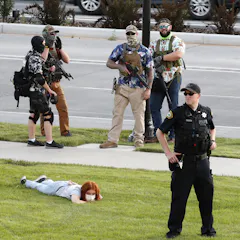
For many Americans, law and order has long been as much a private matter as something for the government to handle.
Top contributors
-

Criminologist / Senior Lecturer, Stellenbosch University
-
Professor of Sociology in the Department of Sociology and Social Anthropology., Stellenbosch University
-
Associate Professor, School of Social Science, The University of Queensland
-
Lecturer, School of Law, UNSW
-
Associate Professor of Political Science, West Virginia University
-
Professor of Criminology, University of Tasmania
-
Professor, The University of Western Australia
-
Associate professor, Monash University
-
ARC Future Fellow and Professor of Criminology, The University of Melbourne
-
PhD Researcher, Menzies School of Health Research
-
Director, Sir Zelman Cowen Centre, Victoria University
-
Assoc Professor, School of Justice, QUT, Queensland University of Technology
-
Associate Professor in Criminology, The University of Queensland
-
Victoria University
-
Professor, Griffith Criminology Institute, Griffith University