
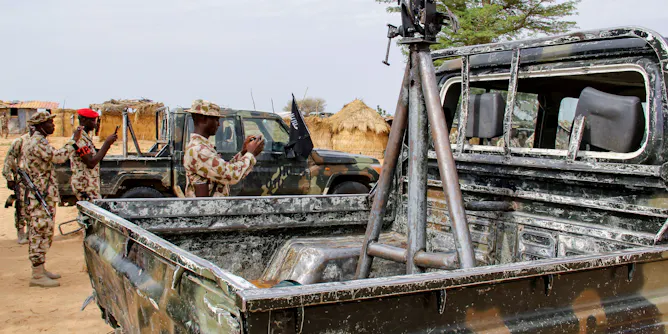
The governments and militaries of the Lake Chad region should prioritise JAS as much as ISWAP in their counter-terrorism efforts.
Articles on Lake Chad
Displaying all articles

Where governance is weak and food supplies are unreliable, climate change causes child wasting and can be a warning sign of conflict to come.
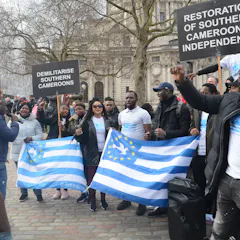
Cameroon’s rebels don’t have the unity, funding or logistics to achieve their aims.
Sexual violence against women and girls in Nigeria’s northeastern region persists because of the Nigerian government’s lax response to cases of sexual offences.
Jihadi groups take advantage of endemic poverty, inequality, high unemployment levels, illiteracy, ethnic divisions, and poor governance to spread their campaign of violence in the Sahel region.

Where natural resources are shared, in addition to the states, regional and international organisations also have a role to play in steering who gets what.

Due to the poor security response of the Nigerian state, insurgency will continue to pose a serious threat to its northeast border communities.
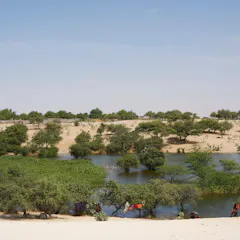
The shrinking of Lake Chad contributes to instability in the countries which sit around its expanse.
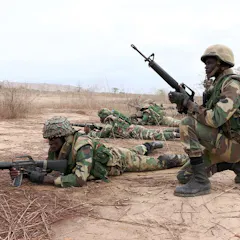
It is time to reconsider the predominant strategy in play on the continent for dealing with terrorism.

Scientists are trying to figure out what risks changes in Lake Chad’s levels pose to people in the region.
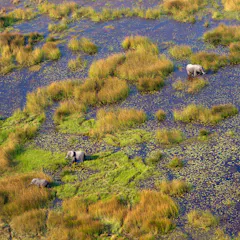
Wetlands are disappearing rapidly - but new data and technologies are revolutionising our knowledge.
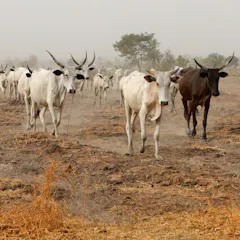
Talk of ethnic and religious conflict between Muslim Fulani herders and local Christian farmers misses the full picture – this is about resources.

The transnational project conceived 30 years ago to replenish the drying waters of Lake Chad finally seems poised to take off. But first, internal politics within member states must be overcome.
Top contributors
-

Researcher, Centre for Peace and Security Studies, Modibbo Adama University of Technology
-
Principal Researcher, CGIAR
-
Senior Lecturer, Fenner School of Environment and Society, Australian National University
-
Associate Professor in Geography, York St John University
-
PhD Candidate, Fenner School of Environment and Society, Australian National University
-
University of Kent
-
Senior Research Fellow and Cluster Coordinator Institute on Comparative Regional Integration Studies (UNU-CRIS) and Adj Prof McMaster University, Canada, United Nations University; McMaster University
-
Professor of Statistics and Probability, Michigan State University
-
Senior Researcher, Institute for Security Studies
-
Principal Researcher – Earth observation for sustainable development, International Water Management Institute
-
University of Pretoria
-
Lecturer, University of Aberdeen
-
Assistant professor, University of Birmingham
-
Lecturer in Political Economy of Violence, Conflict and Development, SOAS, University of London
-
Economist - Climate Security Specialist, CGIAR