

With work at our fingertips at all hours of the day, it can be hard to disconnect. AI assistants may solve the problem – at least, that’s what big tech wants us to think.
Articles on Knowledge workers
Displaying all articles
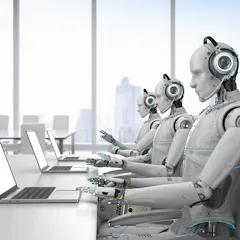
Now that AI systems can generate realistic images and convincing prose, are creative and knowledge workers endangered or poised for productivity gains? A panel of experts says it’s not so clear-cut.

The first national study of Australian working arrangements since the end of work-from-home directives shows remote work is here to stay.

When working from home, women struggled more than men to find time for the sustained effort needed to produce good, publishable research. Lack of thinking time is a problem for all knowledge workers.

The right to disconnect can be the catalyst an organization needs to review its workplace policies. But what’s really needed is a cultural shift that gives workers more control over how they work.

Businesses need to develop their cyber-resiliency by examining their business practices, and stopping, continuing or starting cybersecurity measures.

The knowledge economy creates clear winners and losers in the big cities whose growth it drives. Many Australian and US cities with strong knowledge economies have high levels of social vulnerability.

E-changers are the latest group to move from the big cities to escape high living costs and congestion. But because they remain very productive remote workers some employers are embracing the trend.
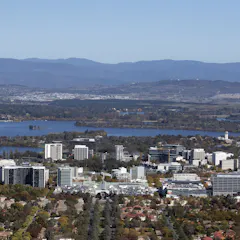
Canberra is growing as fast as anywhere in Australia. It’s driven by a knowledge economy that is transforming the city centre but is also displacing poorer residents.

In this book extract, Iram Siraj explains how to help kids get a leg up in a digital world by teaching them communication and other essential 21st century skills young.

The big ticket resources projects of the past decade have not delivered as hoped for regional Queensland. New approaches are needed.
Top contributors
-

Fulbright Scholar, Institute for Governance and Policy Analysis, University of Canberra
-
Pro Vice-Chancellor (Engagement), University of Southern Queensland
-
Associate Professor of Computer Science, Affiliate Professor of Information Science, University of Colorado Boulder
-
Laurie Carmichael Distinguished Research Fellow at the Centre for Future Work, Melbourne; and Professor Emeritus, Griffith Business School, Griffith University
-
Teaching Assistant Professor, Geography & Geographic Information Science, University of Illinois Urbana-Champaign
-
Professor of Management, Deakin University
-
Marian Baird is a Friend of The Conversation.
Professor of Employment Relations, University of Sydney
-
Adjunct Professor of Human Resource Management, Swinburne University of Technology
-
Professor of Biomedical Informatics, University of Colorado Anschutz
-
Senior Lecturer, Employment Relations, Griffith University
-
Assistant Professor, Professional Communication, Toronto Metropolitan University
-
Professor of AI and Analytics, Co-Director - La Trobe AI Institute, La Trobe University
-
Postdoctoral Research Fellow, Sustainable Urban Precincts Project, RMIT University
-
Senior Lecturer in Management, University of Southern Queensland
-
Professor, School of Management, RMIT University