

Publishing and having access to scientific articles is an expensive business for research institutions. Fortunately, there are content providers out there who deliver rigorous material that’s free of charge.
Articles on Knowledge economy
Displaying 1 - 20 of 22 articles
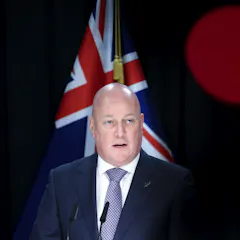
A lack of political consensus on New Zealand’s economic growth strategy, along with a misunderstanding of what actually drives growth, is holding the country back.
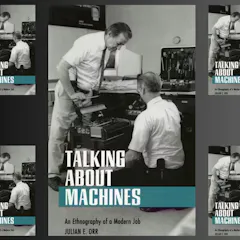
The book warns us about the perils of knowledge management.

Mid-century encyclopaedias claimed the power to decide what counted as knowledge and what didn’t – much as online publishing platforms and social media companies do today.
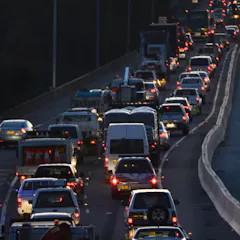
Education fuelled extraordinary growth in Western Sydney’s professional services workforce, but their jobs aren’t local. More than 300,000 commute to work outside the region.

The knowledge economy creates clear winners and losers in the big cities whose growth it drives. Many Australian and US cities with strong knowledge economies have high levels of social vulnerability.

In a resource constrained environment, doctoral supervisors can benefit from professional development courses presented fully online
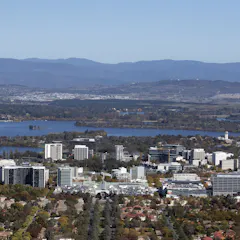
Canberra is growing as fast as anywhere in Australia. It’s driven by a knowledge economy that is transforming the city centre but is also displacing poorer residents.

The Indonesian public sector has some challenges to overcome to be able to design better policies.

The SKA global project could be a driver that contributes to South Africa’ economic growth.

There are several projects and initiatives that offer hope amid all the bad news about African science.

The big ticket resources projects of the past decade have not delivered as hoped for regional Queensland. New approaches are needed.

The printing press, like the internet, has been revolutionary. But technology alone is not enough – access to to it must be open to ensure its benefits are felt.

The changing nature of work means the knowledge capabilities of cities are more important than ever. Here’s what the new Knowledge City Index tells us about 25 Australian cities.

A critical part of attaining universal health coverage is access to published research.
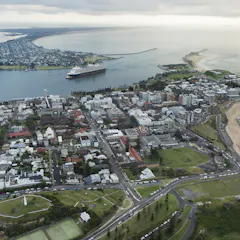
Australia has few places to capture the spill-over of talented workers priced out of the big cities. Some may leave the country altogether – and where talent goes, capital flows.

The rest of society won’t see the benefits of innovation until governments figure out a way to effectively tax the knowledge economy.
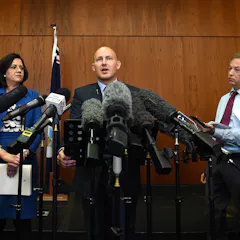
The Palaszczuk government’s first budget for Queensland has promised to drive new investement and jobs in the knowledge based sectors.

Joe Hockey’s second budget has two large deficits: the fiscal one, plus the lack of a coherent and creative plan for Australia. The Abbott government failed to ‘have a go’ at building the future.

Why put a dollar value on science when the benefits to our lives and society are far more valuable?
Top contributors
-

Fulbright Scholar, Institute for Governance and Policy Analysis, University of Canberra
-
Professor, University of Canberra
-
Innovation Fellow and Senior Lecturer, School of Architecture, University of Technology Sydney
-
Director South African National Bioinformatics Institute, University of the Western Cape
-
Lecturer, The University of Queensland
-
Associate Dean and Associate Professor in Social Sciences, University of Canberra
-
Senior lecturer in the Division of Emergency Medicine, University of Cape Town
-
Associate Fellow, University of Cambridge
-
Pro Vice-Chancellor (Engagement), University of Southern Queensland
-
Senior Lecturer: Entrepreneurship Stellenbosch Business School
-
Dean of Business, Government and Law, University of Canberra
-
Associate Professor (hon) at the Centre for Public Awareness of Science, Australian National University
-
Economist, UNSW
-
Honorary Enterprise Professor in the School of Social and Political Sciences, The University of Melbourne
-
Professeur, Planétologie, Université Paris-Saclay