
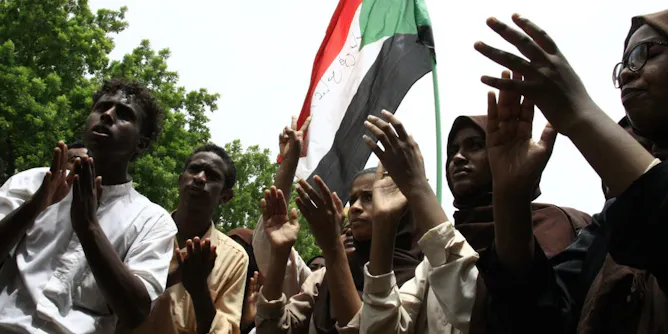
Sudan’s university students have played a key role in liberation struggles.
Articles on Khartoum
Displaying 21 - 40 of 41 articles

The Sudan army’s superiority is in its air force and arsenal of ground forces while the rival paramilitary force relies on nimble mobile units.
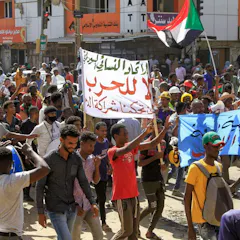
Sudan’s civilian protesters have gained a form of political power that traditional elites have struggled to attain.
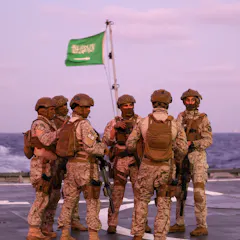
There is a risk that Sudan’s conflict could spill over into neighbouring countries.
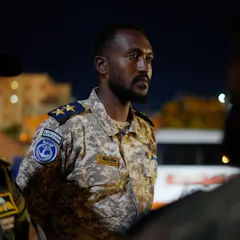
Sudan was formed by conquest, and its politics and, increasingly, its wealth have been controlled by the military ever since.
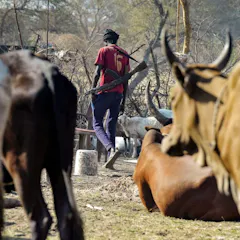
The idea of what it means to be South Sudanese is not universally accepted in the young nation.
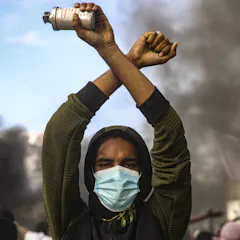
When the military leaders have responded so harshly and have not given in on any demands, why do the protests still continue?
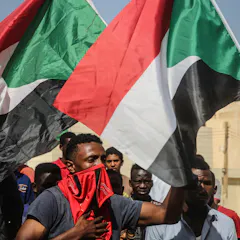
Sudan has needed and will require compromise and principled political goodwill to realise a difficult transition from military rule.
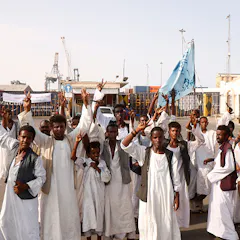
The grievances of those instituting the blockade are justified, to some extent. But the blockade will harm the entire nation instead of only disturbing the ruling elites.

South Africa frequently invokes its celebrated constitution that is based on human rights, but has often failed to live up to its ideals.
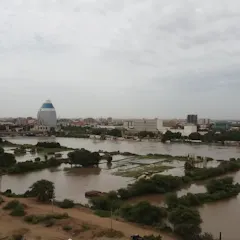
Khartoum, one of Africa’s largest cities, is both blessed and threatened by the dynamics of the Nile Rivers.
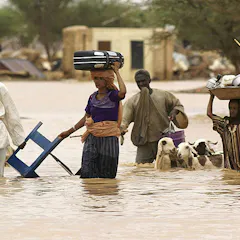
To prevent the humanitarian disasters that follow floods in Sudan, more attention needs to be paid to infrastructure planning.
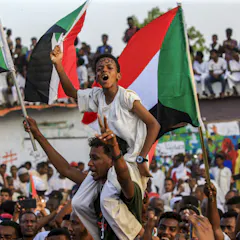
The African Union’s staunch support for al-Bashir, cloaked in criticism of the International Criminal Court, denied justice to the millions affected by the conflict in Sudan.
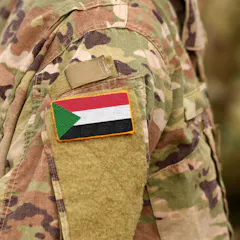
When the establishment retains some leverage over reformers change can be slow, superficial, and short-lived. Sudan appears to be a textbook case of this scenario.

Women in Sudan have been resisting the controls placed on them for some time - by using their smart phones and social media to trade.
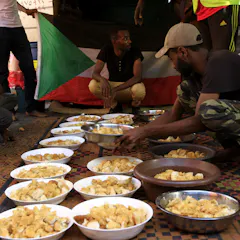
Urban public spaces may be built to represent governments, but often become sites of protest.
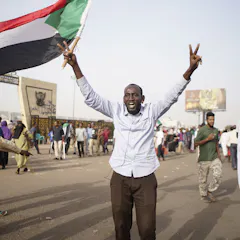
Songs provided motivation and guidance to protesters in Sudan during their uprising against Omar al-Bashir.
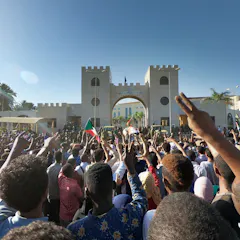
Sudan’s academics have been instrumental in bringing regime change and negotiating transitions.
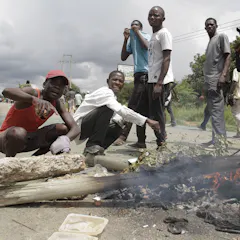
President Emmerson Mnangagwa’s decision to double the price of petrol shows very poor judgement and bad leadership.
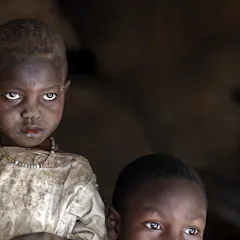
The world has turned its back on the Nuba people of Sudan. Despite the critical need for food, none of the organisations involved in helping people in dire need have attempted to deliver aid to them.
Top contributors
-

Professor of Architecture and SARChI: DST/NRF/SACN Research Chair in Spatial Transformation (Positive Change in the Built Environment), Tshwane University of Technology
-
Associate Professor of Urban & Environmental Design, University of Khartoum
-
Senior Research Fellow and Program Leader for the Sudan Strategy Support Program, International Food Policy Research Institute (IFPRI)
-
Researcher at the Austrian Institute for International Affairs, Österreichisches Institut für Internationale Politik (OIIP)
-
Senior Researcher and Coordinator of the Small Arms Survey's Human Security Baseline Assessment project on Sudan and South Sudan, Graduate Institute – Institut de hautes études internationales et du développement (IHEID)
-
Associate Professor of International Studies, University of Nottingham
-
Professor, Weber State University
-
Lecturer in Political Science, American University School of International Service
-
Lecturer in History, Newcastle University
-
Research Professor, Political Science, Chr. Michelsen Institute
-
Assistant Professor of Architecture, University of Khartoum
-
Assistant Professor, Imam Muhammad ibn Saud Islamic University
-
Lecturer in Criminal and Military law and the Law of Armed Conflict at the Faculty of Military Science, Stellenbosch University
-
Researcher, School of Chemistry, University of the Witwatersrand, University of the Witwatersrand
-
Founding Director of Program on Intrastate Conflict, Harvard Kennedy School