
Publicly available data and collaborations between scientists have led to the discovery of a planet in a triple-star system.
Articles on Kepler
Displaying all articles

From the birth of Jesus Christ to Newton’s discovery of gravity, great conjunctions of Jupiter and Saturn have many notable connections in human history.
How science has been used to predict wind and rain for over 1,000 years.
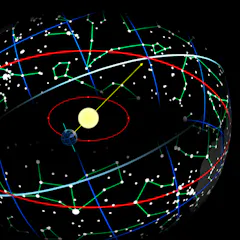
Astronomy and astrology do not agree on the dates of the zodiac constellations.
Why isn’t there an endless variety of planets in the universe? An astrophysicist explains why planets only come in two flavors.
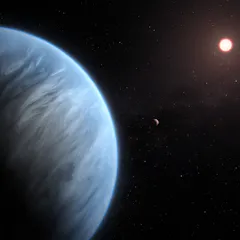
NASA scientists have discovered a new planet orbiting around a nearby star that is in a habitable zone. But does this planet have liquid oceans that can support life?
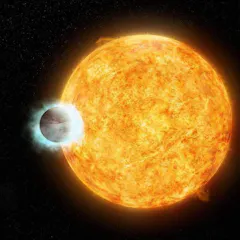
Sometimes it is difficult to take a photograph of an exoplanet because the star illuminating it is too bright. Now there is a new ‘deluminator’ telescope that can block out the extra light.
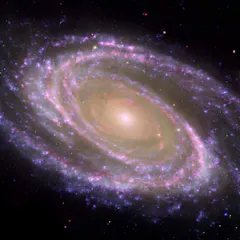
New research does away with dark matter by putting ‘entropy’, a measure of disorder, at the heart of the universe.
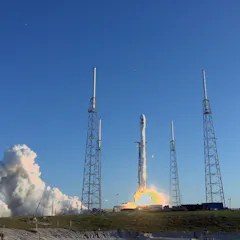
The new planet-hunting telescope TESS was successfully launched today by NASA, and Australia will play a key role in checking out any new worlds it discovers.
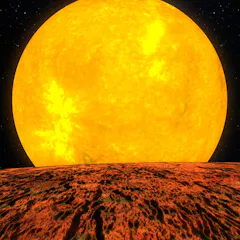
When NASA first started planning the Kepler mission, no one knew if the universe held any planets outside our solar system. Thousands of exoplanets later, the search enters a new phase as Kepler retires.
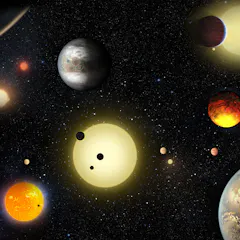
The number of known exoplanets doubled this week to more than 3,200. But why have only a handful of these those new planets caught people’s imagination?
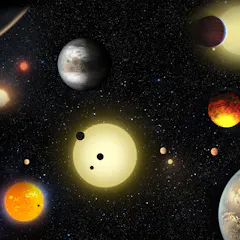
The increasingly rapid pace of exoplanet discoveries must mean it is only a matter of time until astronomers find another Earth.

It’s regarded as a Biblical myth, but what the magi are supposed to have seen is rooted in astronomy.
Top contributors
-

Professor (Astrophysics), University of Southern Queensland
-
Director, NUSTEM, Faculty of Engineering and Environment, Northumbria University, Newcastle
-
Professor of Astrophysics Education, The Open University
-
Visiting Fellow, University of Essex
-
Planetary Astrophysicist, Assistant Professor, Louisiana State University ; Arizona State University
-
Professorial Research Fellow, University of Surrey
-
Associate Professor, Astronomy, University of Regina
-
Professor in Medieval History, University of Reading
-
Observatory Manager and Instructor, Astronomy, University of Saskatchewan
-
Assistant Professor of Physics and Astronomy, University of Nevada, Las Vegas
-
Professor of Physics, UMass Lowell
-
Research Scientist of Planetary Studies, NASA
-
Professor Emeritus of Astronomy, University of Illinois Urbana-Champaign