
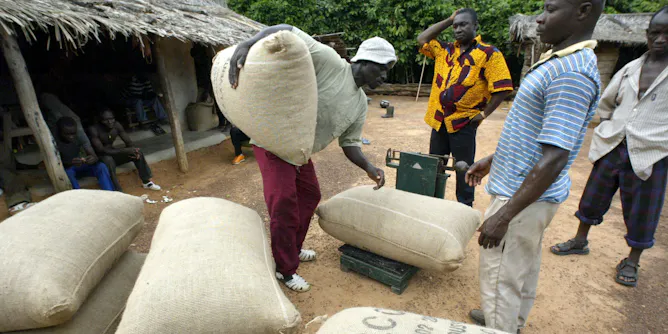
African regulators have not yet met the challenge of protecting farm data.
Articles on Kenya
Displaying 161 - 180 of 1152 articles

The state’s efforts to quell public protests show some worrying similarities to the past.
The lead protagonists, Congolese president Felix Tshisekedi and his Rwandan counterpart Paul Kagame, seem unwilling to reconcile. Personal mediation is required.
Pastoralist communities face barriers like poor infrastructure, illiteracy and government neglect.
Significant transitions in Kenya have occurred through the voices of the masses rather than formal political structures.

Kenya is not an isolated case. Twenty-one countries are receiving IMF support.

Reforms have failed to transform an authoritarian police force into a democratic one.
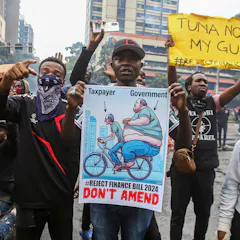
Corruption in Kenya drains resources that could have been used for services like healthcare or education.
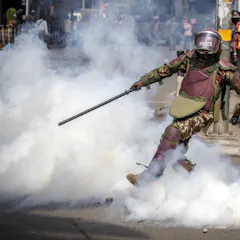
Kenya’s political regimes have used the police to repress opposition and sustain themselves in power.
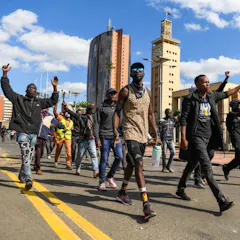
Protests in Kenya reveal that a young, enlightened, urban population can drive a hard bargain with a state that is failing them.
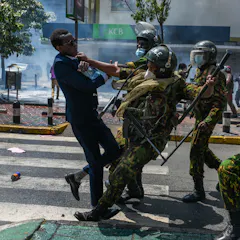
Kenya’s police have a long history of using excessive force.
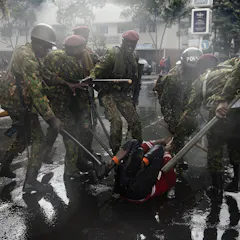
Domestic and international laws obligate the Kenyan state to enable citizens to realise the right to peaceful assembly.
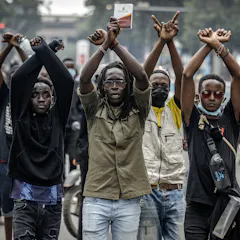
Kenyan activism is witnessing a shift from ethnic-based mobilisation to issue-based activism.
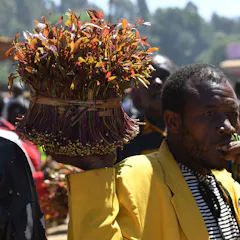
Khat is classified as a cash crop in Kenya, but its detractors say it is a harmful product and some regions have moved to ban it.
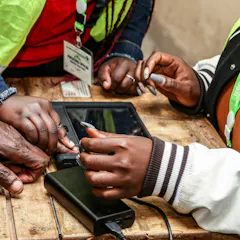
It is too simplistic to say that the use of AI in elections is all good or all bad. The truth is that it can be both.
The question has shifted from whether cyberattacks will occur to when and how they will happen.

Improving school sanitation, reducing household chores, and addressing harassment and bullying could enhance girls’ reading performance relative to boys’.

Fears about witchcraft and terrorism in coastal Kenya have shaped the ways in which various religious groups express themselves.

Giraffes show remarkable genetic differences between populations.
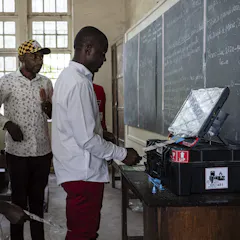
Digital technologies can help more people to participate in building their countries’ democracies.
Top contributors
-

Professor of Democracy, University of Birmingham
-
Research Fellow, Tegemeo Institute, Egerton University
-
Professor, Faculty of Business and Management Sciences, University of Nairobi
-
Professor of Research, Foundations & Higher Education, Northern Arizona University
-
Professor, Weber State University
-
Professor and Chair of Allied Health Studies, Stephen F. Austin State University
-
Senior Research Scientist, African Population and Health Research Center
-
Professor of Comparative Politics, University of Warwick
-
Professor of Media Industries, University of Nottingham
-
Medical Entomologist at the School of Biological Sciences, University of Nairobi
-
Senior Research Scientist, African Population and Health Research Center
-
Research Scientist, African Population and Health Research Center
-
Adjunct Associate Professor, Departnent of Social Sciences, Pwani University
-
Associate Professor, Department of Entomology; African-American Studies, University of Illinois Urbana-Champaign
-
Associate professor, University of California, San Francisco