

If police officers are sent to museums to train observational skills, shouldn’t literary texts be used to teach empathy?
Articles on Justice
Displaying 241 - 260 of 319 articles
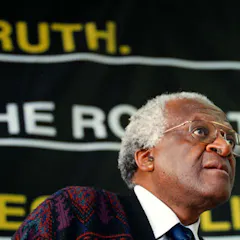
If violent contexts aren’t taken into account, restorative justice does not serve broader society. Instead it serves as a peacemaking process within a paradigm stacked against the poor and vulnerable.

Your memory of an event can be manipulated – and miscarriages of justice can follow.
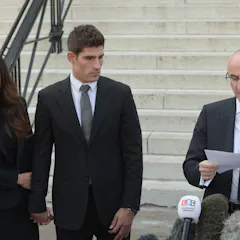
Responses to rape have improved, and they must continue to do so.

The South African government’s decision to withdraw from the ICC should not be seen in isolation. The African Union has called on its member states to withdraw from the court.

A key argument in support of the jury system is that it is a valued form of citizen participation in democracies. But the system has led to human rights abuses in Ghana.

New research hopes to stop police lineups leading to false identification or criminals walking free.

MPs have proposed that restorative justice should eventually become a right in the UK.

Using a robotic video camera to digitally recreate a crime scene could give juries greater insight without the logistical nightmare and potential bias of a physical visit.

Access to justice is still deeply unequal when it comes to low level disputes over bad service or faulty goods.
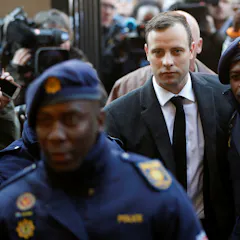
Under South African law, murder carries a minimum sentence of 15 years for first-time offenders. But courts may deviate from this if they find ‘substantial and compelling circumstances’ to do so.

Compared with other attempts to mend deep wounds after wars and conflicts, the Chilcot Report falls depressingly short.

South African law requires surrogate mothers to hand infants to their legal parents without undue delay. But it doesn’t provide leave for these parents to care for their infants. That is set to change.
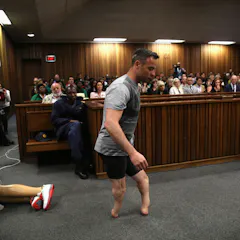
Paralympian Oscar Pistorius was sentenced to six years in prison for killing his girlfriend. It comes after a well-publicised TV interview which some believe was used to influence the judge.

The retirement of Dikgang Moseneke, one of South Africa’s eminent judges and the Constitutional Court’s deputy chief justice, is a moment to reflect on the court’s place in society and his legacy.

Some believe neuroscience should change the way we punish criminals, but courts have been slow to embrace new approaches.

It got top billing in the Queen’s speech but is anyone actually any clearer on what the government’s prison reforms are?

Most Australian women (87%) have experienced some form of street harassment, whether it’s whistles, stares, unwanted comments or being followed by strangers in the street – often before the age of 18.
Indonesia needs a combination of retributive and restorative justice for the reconciliation of the 1965-66 anti-communist killings.

By speaking out about sexual violence and creating safe online spaces to seek support, victim-survivors may also encourage others to report the crime.
Top contributors
-

Adjunct Associate Professor, University of New England
-
Professor of Law, UNSW Law School, UNSW
-
Professor of Criminology, Australian National University
-
Professor of Law, Auckland University of Technology
-
William Nelson Cromwell Professor of Jurisprudence and Political Science, Amherst College
-
Lecturer in Law, Adelaide University
-
Associate Professor in Communication and Public Relations, The University of Queensland
-
Director Leverhulme Research Centre for Forensic Science, University of Dundee
-
Professor of African Language Studies, University of the Western Cape
-
Professor Emeritus of Public Law, University of Cape Town
-
Associate professor, Monash University
-
Assistant Professor, Criminology, Bond University
-
Adjunct Professor, La Trobe University
-
Senior Lecturer in Labour Law, North-West University
-
Postdoctoral research fellow (Forensic Linguistics/ Language and Law), University of the Western Cape