
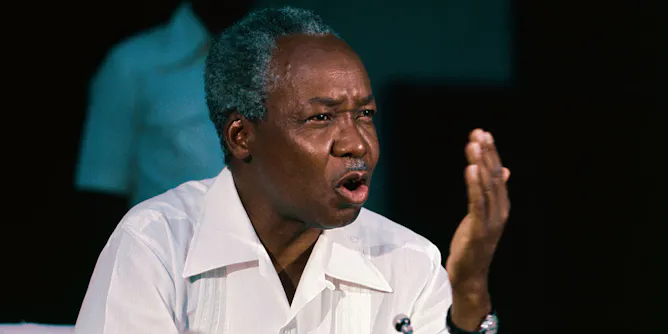
For all of the shortcomings of Nyerere’s regime, his ideas continue to inspire Tanzanians fighting for a more equal and democratic future, over 20 years after his death.
Articles on Julius Nyerere
Displaying 21 - 34 of 34 articles
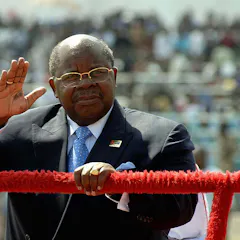
Mkapa’s presidency is particularly significant since it represents the first phase of Tanzanian multi-party democracy.
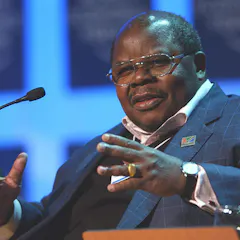
Mkapa, who penned an autobiography, had an impressive record in building state institutions. But his reign was marked by killings and political suppression.

Robert Mugabe’s years of playing one group off against the other to favour himself finally wore too thin in 2017.

Where should we place Mugabe among the pantheon of African nationalists who led their countries to independence?
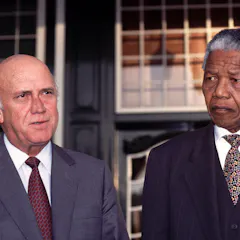
The April 1994 election proved to be a watershed for South Africa.

Some young East Africans believe that there is nothing wrong with corruption – except in Rwanda.
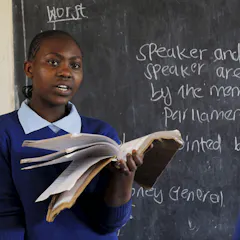
Authors Lutz and Klingholz explore how mass literacy became a revolution that changed the world.
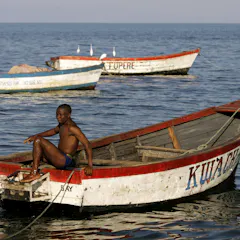
Whatever the limitations of mediation – even a painfully slow one – Malawi stands to gain more from a consensual resolution in the boundary dispute with Tanzania.
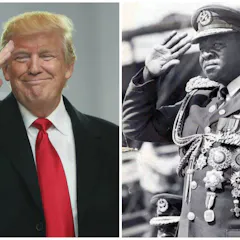
Some may say it’s far fetched to compare a 1970s African dictator with the President of the United States. But the similarities between Idi Amin and Donald Trump are quite startling.

Union Day is celebrated in Tanzania and Zanzibar on April 26 every year, but there is little unity to speak of between the islands and the mainland today

Multiparty democracy came to Tanzania in 1995 but the autocratic rule under the country’s first post-independence leader
Julius Nyerere, seems to be echoed by current President John Magufuli.

There’s no doubt South African universities need to undergo a real shift. But are the country’s current intellectual and academic forces up to the task?
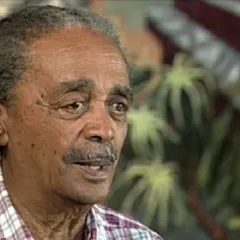
South African-Jamaican intellectual, activist and author Peter Abrahams died in January 2017. He will be revered for his contributions to the anti-colonial struggles in Africa and the Caribbean.
Top contributors
-

Senior Lecturer in Politics and International Relations, University of East London
-
Lecturer, Tumaini University Makumira
-
Professor of Sociology, University of the Witwatersrand
-
Professor and Chair of Epistemologies of the Global South, University of Bareuth, Germany, University of South Africa
-
Associate professor, Howard University
-
Professor of Communications Policy and Digital Media, University of the West Indies, Mona Campus
-
Principal Scientist, Agroecology Policy and Advocacy, World Agroforestry (ICRAF), Center for International Forestry Research – World Agroforestry (CIFOR-ICRAF)
-
Professor Emeritus, University of Agder
-
Researcher, United States International University
-
Associate Professor of Political Science, University of Connecticut
-
Canada150 Research Chair in Gender and African Politics and Visiting Professor, WiSER Wits University, Carleton University
-
Senior Researcher, Institute of Political Science, University of Duisburg-Essen
-
Associate Professor of History and Africana Studies, Lafayette College
-
Professor of Public Administration , University of Dodoma
-
Education economist, Stellenbosch University