
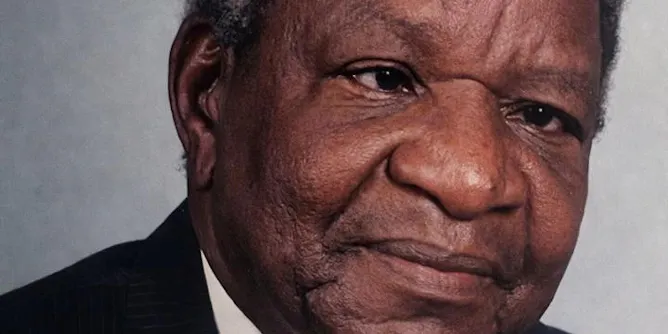
Edwin Mtei, Tanzania’s first central bank governor, showed that people can hold different views without enmity.
Articles on Ujamaa
Displaying all articles
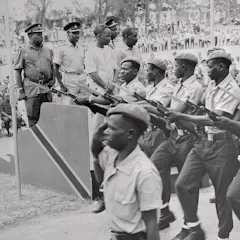
The early history of the Tanzanian army was shaped by interwoven domestic and international politics.

The yardstick of progress is broken. It’s time to stop using wealth alone to measure how Africa is doing.
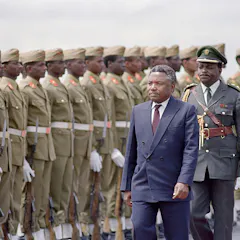
Ali Hassan Mwinyi successfully drove economic and political reforms in Tanzania, all in the shadow of his predecessor, Julius Nyerere.
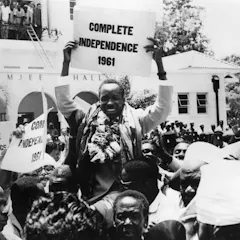
Over two millennia, Swahili has built bridges among people across Africa and into the diaspora.
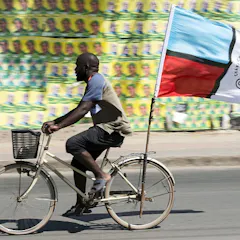
Peace on its own is not enough to meet the unfulfilled promise of prosperity and economic advancement.
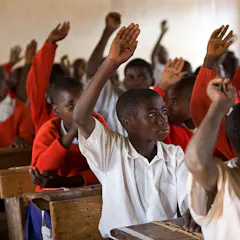
To achieve quality and inclusive education, Tanzania should prioritise disadvantaged and marginalised children in schools.
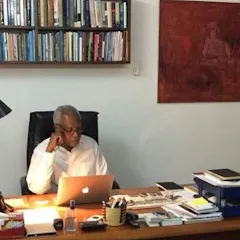
Despite a succession of different challenges, Bgoya’s approach has been consistent.

Kaunda will be remembered as a giant of 20th century African nationalism – a leader who gave refuge to revolutionary movements, a relatively benign autocrat and an international diplomat.
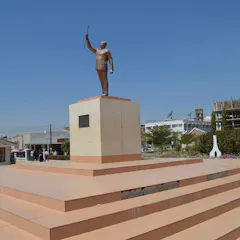
While sometimes intolerant of criticism, Nyerere tended to respond with argument rather than force.

Some young East Africans believe that there is nothing wrong with corruption – except in Rwanda.
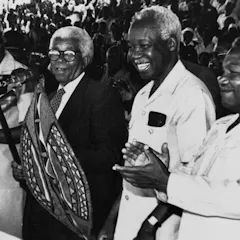
A balance sheet of positives and negatives for Tanzania’s president Magufuli is perhaps the most striking similarity with the legacy of Nyerere as the country marks another independence anniversary.

Union Day is celebrated in Tanzania and Zanzibar on April 26 every year, but there is little unity to speak of between the islands and the mainland today

Multiparty democracy came to Tanzania in 1995 but the autocratic rule under the country’s first post-independence leader
Julius Nyerere, seems to be echoed by current President John Magufuli.
Top contributors
-

Senior Lecturer in Politics and International Relations, University of East London
-
Principal Scientist, Agroecology Policy and Advocacy, World Agroforestry (ICRAF), Center for International Forestry Research – World Agroforestry (CIFOR-ICRAF)
-
Ohio University
-
Ohio University
-
Lecturer, Culture and Media department, Birkbeck, University of London
-
Associate Professor, Department of History, University of the Witwatersrand, Johannesburg, University of the Witwatersrand
-
Researcher, United States International University
-
Post-Doctoral Research Fellow, SARChI in Higher Education and Human Development Research Group, University of the Free State
-
Associate Professor of International Studies, University of Nottingham
-
Lecturer, Tumaini University Makumira
-
Professor of Practice in Diplomacy, Dept of Politics and International Studies, SOAS, University of London
-
Professor, Harvard University
-
Associate Professor of Psychology, Regent University
-
Associate Professor, Department of History, Michigan State University