

The Tanzanian case shows that foreign policy can also be a way of managing domestic coalitions.
Articles on John Pombe Magufuli
Displaying 1 - 20 of 24 articles
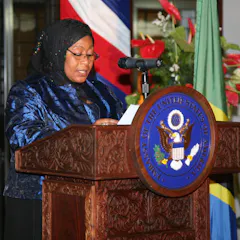
President Samia Hassan is relying on repressive tactics to eliminate her most significant competitors from the 2025 presidential race.

Tundu Lissu’s persistence in tackling democratic backsliding in Tanzania has made him a formidable force.
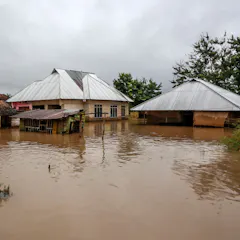
Recent flooding in Tanzania prompted debate about the role of a new megadam. This matters as climate change models predict flooding could increase.
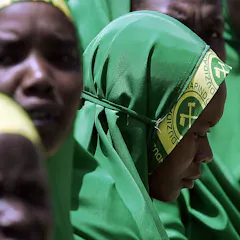
CCM and Chadema’s commitments to gender equity start and end with the establishment in each party of a women’s wing.
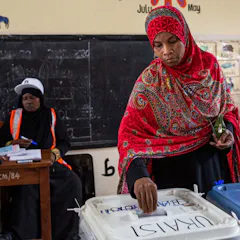
Electoral reforms are urgent for Tanzania because local elections are scheduled for December 2024.

Current reforms in Tanzania lack popular participation and legal safeguards.
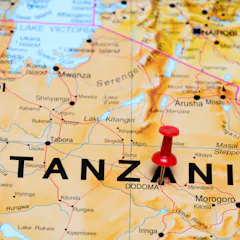
Dodoma will need to address social issues such as increased accommodation and recreational facilities as population grows

Tanzania’s six-year ban on political rallies shows how the president’s power can override the constitution.

The Tanzanian president’s reform drive has endeared her to the populace but will also embolden opposition to her political ambitions.

Local realities shape the transport system, making it less directly applicable as a model elsewhere.
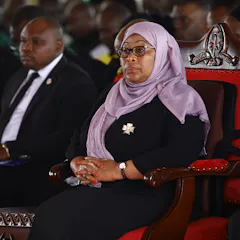
President Samia Hassan may have been an ‘accidental president’ but Tanzania’s leader has set out to showcase her own political strategy.
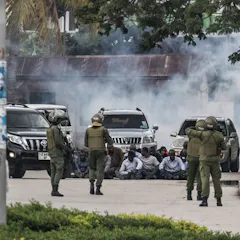
The emerging partisan politics and the polarisation it creates is a new threat for Tanzania.
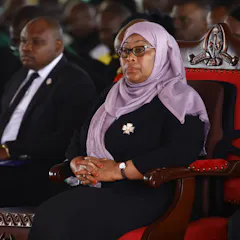
Hassan may prove the right sort of politician to usher in a new era of bipartisan politics, less populist and authoritarian and more collegial.

Hassan, like Magufuli before her, has taken office without her own political base and will also have to contend with revived factional manoeuvring.
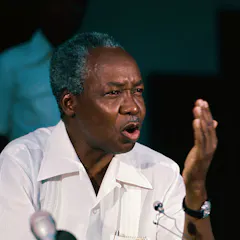
For all of the shortcomings of Nyerere’s regime, his ideas continue to inspire Tanzanians fighting for a more equal and democratic future, over 20 years after his death.
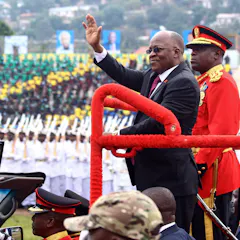
His COVID-19 response has thrown the negative aspects of his presidency into sharp relief.
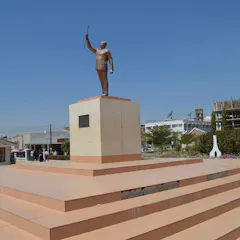
While sometimes intolerant of criticism, Nyerere tended to respond with argument rather than force.
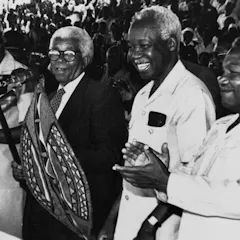
A balance sheet of positives and negatives for Tanzania’s president Magufuli is perhaps the most striking similarity with the legacy of Nyerere as the country marks another independence anniversary.

Until Acacia was served with $190 billion tax bill, it seemed as though Tanzania’s president wanted a new settlement with the mining companies. Now it looks as though he wants new mining companies.
Top contributors
-

Lecturer, Tumaini University Makumira
-
PhD Candidate, Department of Political Science and Public Administration, University of Nairobi
-
Researcher, United States International University
-
Assistant professor, University of Sussex
-
Senior Lecturer in Politics and International Relations, University of East London
-
Assistant Professor of Political Science, Marist College
-
Senior Researcher, Institute of Political Science, University of Duisburg-Essen
-
Post-doctoral researcher, Johannes Gutenberg University of Mainz
-
Lecturer in International Development, The Open University
-
Professor of Practice in Diplomacy, Dept of Politics and International Studies, SOAS, University of London
-
Professor of Public Administration , University of Dodoma
-
Junior Research Fellow in Politics, University of Oxford
-
Postdoctoral researcher, Institute for Society and Globalisation, Roskilde University
-
Lecturer, King's College London
-
Lecturer, Faculty of Law, The Open University of Tanzania