

Many Australian students specialise before they’ve had a good general education. American undergraduates do get that, and perhaps Australia has gone too far down the path of early specialisation.
Articles on Job-ready graduates
Displaying 21 - 40 of 43 articles

The budget splashed out extra money for almost every sector deemed important to economic recovery (or politically sensitive). But with universities in a state of financial crisis, they missed out.

Tuesday’s budget shows a reversion back to the previous policy of keeping total higher education funding broadly stable.

Lockdowns, job loss and university courses struck down: 2020 was a difficult year for Australia’s artists. But there was light through the darkness.

The way in which Australians think about leadership in the education sector has changed throughout the pandemic. It’s seen as a public good, with ethics and accountability gaining in importance.

Three key policy errors in the legislation mean the Morrison government is unlikely to achieve the stated goals of its package.

Out of the crises of the 1890s and 1940s Australia created quality, enduring legacies in post-school education. We now have a chance to upgrade these legacies to aid economic and social renewal.

Demand is high for teachers with expertise in STEM subjects like maths. But students also deserve expert English, history, civics or geography teachers. Maybe your favourite teacher did an arts degree.

The early and mid-career researchers who bear most of the teaching and research workload are exhausted and underpaid. Many won’t survive the funding squeeze, but Australia can’t afford to lose them.

Students who fail units are highly likely to fail again without targeted assistance. But when universities intervene early to support these students, their rate of failure has been nearly halved.

Although the government has identified a real problem, its heavy-handed regulation would create unnecessary red tape for universities and exclude students who should get a second chance.

Doubling the cost of degrees in the humanities and social sciences has a disproportionate impact on women because they account for two-thirds of the students.
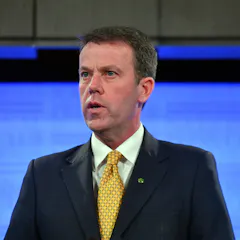
More than 70 of Australia’s Laureate professors have signed a letter to the minister for education, Dan Tehan, outlining the flaws in the proposed university reforms.

From December 2017 (when the government put a cap on demand-driven funding) to 2024 (when the Job-ready graduates package is fully implemented) — the government will save nearly A$1 billion annually.
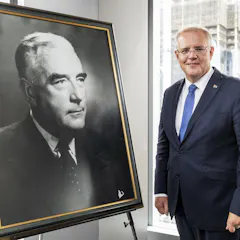
Developments in the 80s set the parameters for much of the political discourse around the humanities since.

Experts predict today’s graduates will have several different careers throughout their working life. The government’s university changes seem ignorant of this.

Teachers have never been more appreciated than during COVID-19. But neither expressions of support, nor cheaper degrees will overcome the four big structural challenges facing the profession.

Travel bans, a recession and the government’s university reform package will leave an estimated $4.7 billion gap in research funding that needs filling to maintain our current output.

Research shows predictions for the jobs of the future are unreliable, and the government’s funding changes don’t match what their own data shows about future earnings.

The reduced rate of funding to universities (of up to 17%), per place, for national priority courses sends perverse messages to universities.
Top contributors
-

Professor of Higher Education Policy, Monash University
-
Professor of History, School of Humanities, Creative Industries and Social Sciences, University of Newcastle
-
Honorary Principal Fellow, Melbourne Centre for the Study of Higher Education, The University of Melbourne
-
Adjunct Professor, Department of Leadership, Higher and Adult Education, OISE, University of Toronto
-
Honorary Senior Fellow, Centre for the Study of Higher Education, The University of Melbourne
-
Professor Emeritus and Former Deputy Vice Chancellor, The University of Melbourne
-
Professor, Linguistics, Australian National University
-
Professor, Centre for Research in Assessment and Digital Learning, Deakin University
-
Professor in Information Systems, The University of Queensland
-
Senior Lecturer, Graduate School of Business and Law, RMIT University
-
Professor of Accounting, University of Richmond
-
Honorary Research Fellow, History, The University of Queensland
-
Laurie Carmichael Distinguished Research Fellow at the Centre for Future Work, Melbourne; and Professor Emeritus, Griffith Business School, Griffith University
-
Senior Education Manager, Business, Economics and Law Faculty (Employability), The University of Queensland
-
Dr Rosemary Sainty is a Friend of The Conversation.
Academic, UTS Business School, University of Technology Sydney