

Artificial intelligence is not having widespread effects on the labor market today.
Articles on Job losses
Displaying 1 - 20 of 34 articles
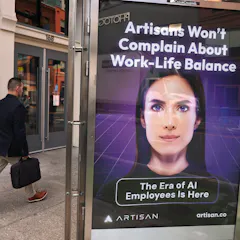
For too many companies, the adoption of artificial intelligence has become an AI hunger game that spreads fear rather than engagement.

The make-up of the workforce is changing, with rapid growth in blue-collar jobs offsetting a decline in white-collar work.

U.S. tariffs disrupted Canada’s manufacturing sector in 2025, but their labour-market effects didn’t impact immigrant and Canadian-born workers the same.

What happened to Tokoroa in 2025 underscored the fragility of NZ’s manufacturing base – and the consequences for local communities when decisions are made elsewhere.

During a year of extraordinary uncertainty, workers built resilient networks within and across boundaries and distance. An anthropologist explains how these clusters and long-distance ties help people cope, organize and adapt.

Wealthier South Africans, particularly those in urban areas, are more optimistic about emerging technologies than those in low-income and rural areas.

Power outages in South Africa pose a threat to employment.

The video streaming industry has reached a tipping point.

A new pan-European research project shows that it’s correct in some areas but completely wrong in others.
With a recession seeming imminent, many Canadians are rightfully concerned about the state of their finances. Here are some ways you can be prepared for one.

While the official figures are lower than earlier estimates of job losses, they also show certain types of employees – casual, non-academic and younger staff – bore the brunt of the staff cuts.

Preliminary research suggests cultural and social services retain or attract employees hard hit by plant closures in other communities. Preserving them may help cities withstand future crises.

Changes to National Employment Standards have done little for casual staff hoping for conversion to ongoing positions. A comprehensive review of university work and employment is long overdue.

While 18 universities suffered medium to high financial impacts, the incomes of eight increased or were stable. Overall revenue fell 5% – less than feared – but 35,000 staff lost their jobs.

Many Balinese believe COVID-19 cannot be fought with health measures alone, and requires ritual offerings and prayer. But collective ritual places people at more risk.
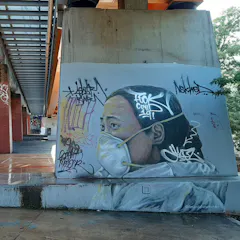
The inner suburbs are home to large numbers of workers in jobs vulnerable to the pandemic. If they’re forced to seek cheaper housing in outer suburbs, the urban divide will widen.

We protect the savings of non-resident people in Australia but we leave them without any benefits if they lose their job here.
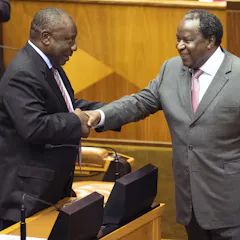
The budget is one of the key tools that government has to effect meaningful change.

The national broadcaster has announced more cuts to its services, including 250 job losses and the axing of the major 7:45am news bulletin. It is the latest in a long line of blows to the ABC.
Top contributors
-

Professor of Business Economics, University of Birmingham
-
Assistant Professor of Anthropology and Demography, Penn State
-
Professor, University of Cape Town
-
Teaching Fellow, Queen Mary University of London
-
Professor of Industrial Strategy & Regional Development, Co-Director Centre for Governance, Regions and Industrial Strategy (CGRIS), University of Bath
-
Adjunct Professor, QUT Business School, and Director of Corporate Transition, Queensland University of Technology
-
Professor: Organisational behaviour, human capital management, leadership development, Stellenbosch University
-
Senior Lecturer in Management Practice, Queen Mary University of London
-
Senior Research Fellow, City Futures Research Centre, UNSW
-
Honorary Fellow, LH Martin Institute, The University of Melbourne
-
Associate Professor, Marketing & International Business, Auckland University of Technology
-
Senior Lecturer in Social Anthropology, Te Kunenga ki Pūrehuroa – Massey University
-
Senior Lecturer in Human Resource Management, University of Waikato
-
Professor, Urban Economics, Université du Québec à Montréal (UQAM)
-
PhD Candidate in American History, University of Oxford