
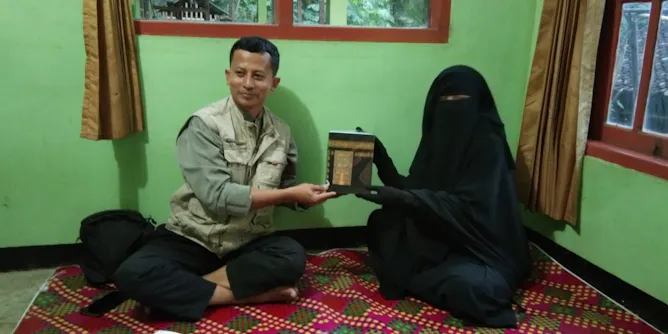
The US gives money to help Indonesia and other countries fight terrorism. But research shows that this money might not be effective, unless it directly reaches former extremists.
Articles on Islamist terrorism
Displaying 21 - 40 of 106 articles
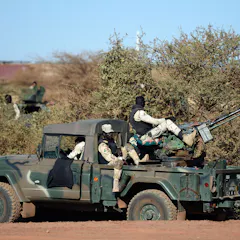
A new wave of military coups could put the dividends of democracy out of reach in a region troubled by the effects of jihadism.
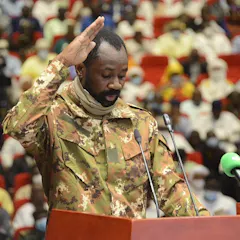
Rising tensions in West Africa heighten as the military junta in Mali engages Wagner, a Russian private military company while defying ECOWAS.

From the archive: a researcher on the complex dynamics surrounding Kenyan women’s involvement in Al-Shabaab. Listen to The Conversation Weekly podcast.
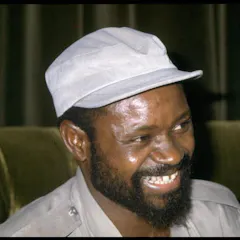
Frelimo, which governs Mozambique, has squandered the enormous political capital it enjoyed at independence. It now remains in power through violence, intimidation, harassment, and threats.
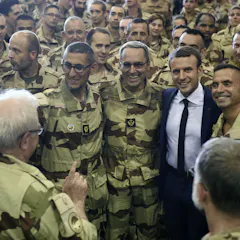
French policymakers understand that sharing the burdens of military operations with global partners can help boost flagging support at home.

The Southern African Development Community does not have a remarkable record of military interventions in civil conflicts in the region.

Intervention in Cabo Delgado is a potentially dangerous move with far-reaching consequences for SADC if its efforts fail, or it becomes a protracted intervention.

The quest for significance and respect is a universal part of human nature. It has the potential to inspire great works – but lately, it has been much in evidence tearing society apart.

The Sept. 11 bombings killed almost 3,000 Americans. But if you exclude that unique event for the last two decades of terrorist activity, a different picture of US vulnerability appears.

Should South Africa’s military get involved, it would be venturing into a highly violent and complex landscape, requiring a counter-terrorism type of operations.
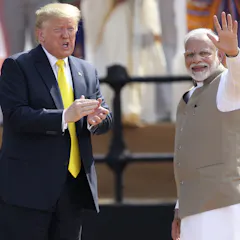
A shared commitment to democracy was always key to the India-US relationship – until Trump. A foreign policy expert explains what’s on the agenda for Trump’s trip to India and what’s missing.
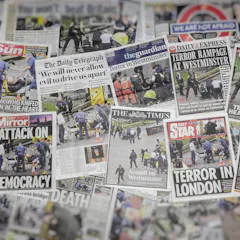
Viewing Muslims as ‘other’ just makes the problem worse – but research has some solutions.
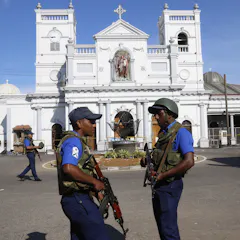
By inciting religious hatred, the recent attacks in Sri Lanka appear to have more in common with Al-Qaeda than past ethno-religious violence, which has sought specific political change.

Speculation and conspiracy theories abound about the Mozambican insurgents leaving a trail of violence in resource rich Cabo Delgado.

Despite the publication of promising new statistics on referrals to the Prevent counter-terrorism programme, the strategy remains a blunt instrument.
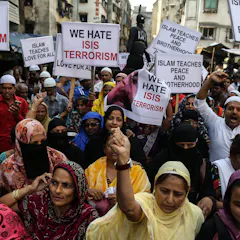
Sensationalist media coverage serves the Islamic State’s objective by pitting Muslims and non-Muslims against one another.
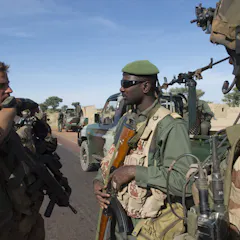
The build-up of foreign armed forces does not bode well for the citizens of Niger.

Weakening the institutional as well as the symbolic functioning of the rule of law has the consequence of introducing new “risks”, and thus creating more insecurity.
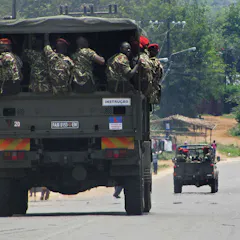
A guerrilla movement in Mozambique could upend the government’s plans for stability and prosperity.
Top contributors
-

Lecturer in Political Economy of Violence, Conflict and Development, SOAS, University of London
-
Professor of Political Science, Department of Political Studies and Governance, University of the Free State
-
Professor of Middle Eastern Studies and Public Policy and Director of the Interdisciplinary Studies Institute, UMass Amherst
-
Visiting Fellow, Brookings Doha Center and Professor of Politics, Queen's University Belfast
-
Professor of International Security, University of Birmingham
-
Chair in Global Islamic Politics, Alfred Deakin Institute for Citizenship and Globalisation, Deakin University
-
Professor of International Relations at UCL | Associate Fellow on the Middle East at Chatham House, UCL
-
Professor in the Department of Government, University of Essex
-
Professor of Peace Studies, University of Bradford
-
Professor of African history, Queen's University Belfast
-
Professor in The Division of Global Affairs and The Department of Political Science, Rutgers University - Newark
-
Associate professor, Griffith University
-
Lecturer in Journalism, City St George's, University of London
-
PhD, University of Leicester
-
Senior lecturer in International Relations and Programme Director for the Centre for Research and Evidence on Security Threats, University of Birmingham