
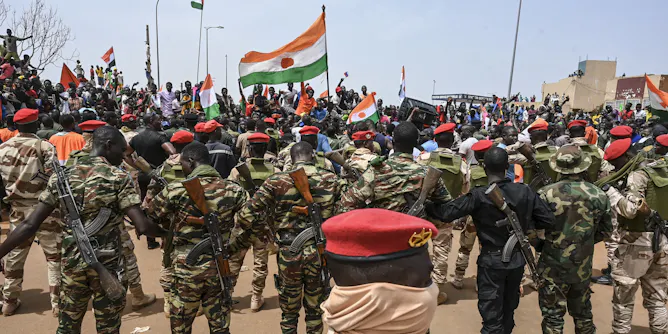
Military leaders in Mali, Burkina Faso and Niger came to power promising to defeat the insurgencies plaguing their countries. Instead, insecurity has worsened.
Articles on Insurgency
Displaying 1 - 20 of 92 articles

Chad’s language policy has inherent potential for conflict.
Located in the same Sahel region and threatened by similar jihadist insurgents, Nigeria has some lessons to learn from Mali.
Military regimes have shifted from presenting themselves as temporary ‘corrective’ interventions to becoming personalised systems of rule.
Mali’s security situation requires resolution of Tuareg grievances, restoration of trust in the state, and political inclusion.
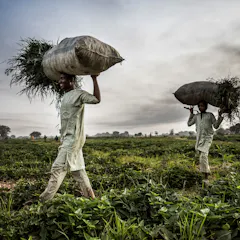
When conflict leads to abandoned fields, lost livestock, or altered investment decisions, it undermines food security and development.
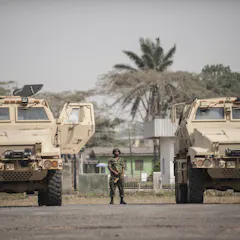
The deployment of US soldiers in Nigeria could have negative consequences.
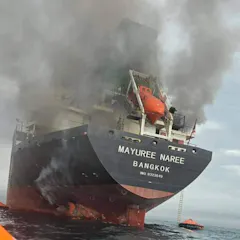
As Vietnam, Iraq and Afghanistan show, the US can’t win wars against insurgent tactics. So, Iran just has to survive longer than the US political will to fight.
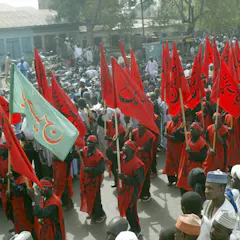
Although the theatre of the war is far away from Nigeria geographically, the impact is being felt in the country.

Total national defence seeks to force an adversary to weigh the long-term costs of invasion and occupation.
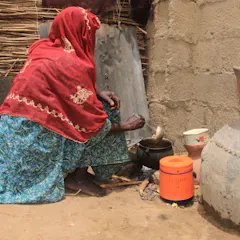
Poverty is the common thread across the places experiencing terrorism in Nigeria.
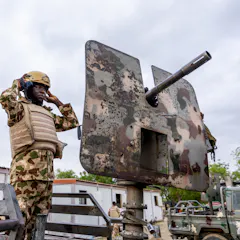
The recent killing of Nigeria’s Brigadier General Musa Uba shows ISWAP is a growing threat.
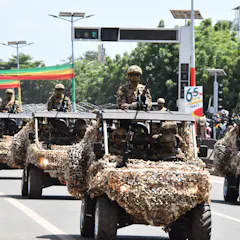
Bamako is under immense pressure, but not under an effective siege.
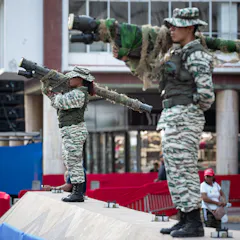
Venezuela hopes the prospect of ‘another Iraq’ in Latin America serves as a deterrent against US intervention.
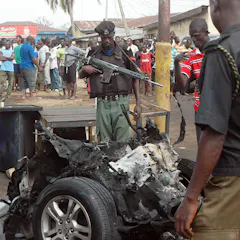
Given its strength and capabilities, the extremist group JNIM poses an existential threat to Nigeria.

Despite the number of fatalities from terrorism in Nigeria, it is difficult to delineate the killings based on religious affiliations.

The blockade of southern Mali is designed to weaken the military government, incite the public and possibly consolidate control.
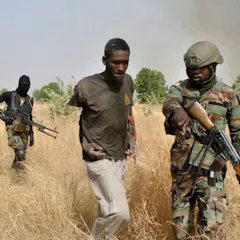
Nigeria has a policy of de-radicalisation of former Boko Haram fighters, but overlooks the voices of soldiers who have to carry out the policy.
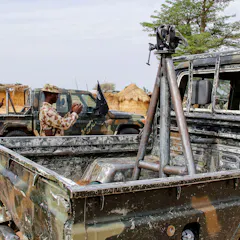
The governments and militaries of the Lake Chad region should prioritise JAS as much as ISWAP in their counter-terrorism efforts.
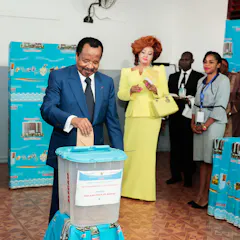
Paul Biya’s 42-year reign provided political stability. A new term of office or possible transition risks instability, including more armed conflict.
Top contributors
-

Reader (Associate Professor) Department of Political Science, Federal University of Lafia, Nigeria, Federal University Lafia
-
Associate professor in Politics and International Relations, Leeds Beckett University
-
Lecturer in Political Economy of Violence, Conflict and Development, SOAS, University of London
-
Research Fellow, Obafemi Awolowo University, Regional Coordinator, Institute for Security Studies
-
Researcher, Centre for Peace and Security Studies, Modibbo Adama University of Technology
-
Leverhulme Early Career Research Fellow, Aston University
-
Lecturer, University of Northampton
-
Postdoctoral Research Fellow, Department of Political Sciences, University of Pretoria
-
Nonresident Research Fellow, Rice University
-
Senior Lecturer, Department of Urban and Regional Planning, Olabisi Onabanjo University
-
Lecturer, University of Aberdeen
-
Post-Doctoral Research Fellow, Institute of Security and Global Affairs, Leiden University
-
Lecturer in Visual Anthropology
-
Public Health Physician/ Implementation Scientist, Dalhousie University
-
Senior lecturer, Stellenbosch University