
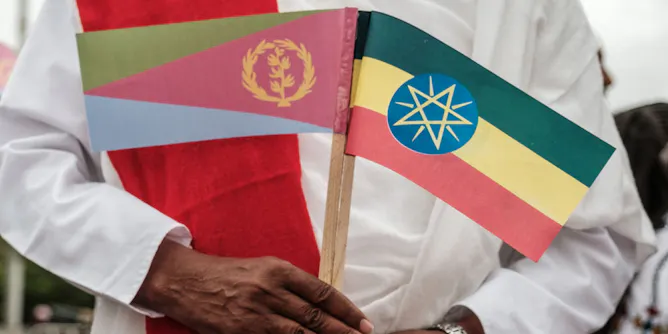
Despite the peace agreement in 2018 between the countries, critical fault lines persist.
Articles on Isaias Afwerki
Displaying all articles
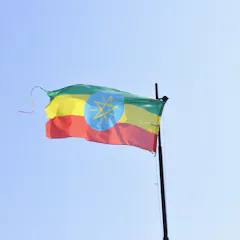
Parties to the conflict in Ethiopia’s Tigray region have agreed to end hostilities after two years. Here is a selection of previously published articles on its devastating consequences.
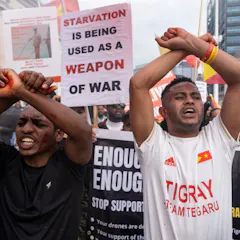
Leaders at the centre of the Ethio-Tigray war don’t believe in equal partnership. In their political cultures, winners take all.
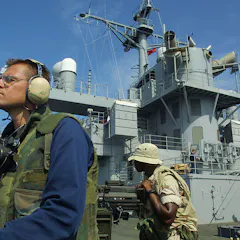
The decision to redeploy in Somalia represents a renewed emphasis on the old rivalry with Russia.
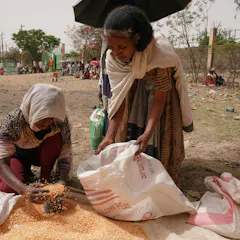
The origins of Ethiopia’s food crisis can be traced to a bitter feud between Eritrean and Tigrayan liberation fighters.
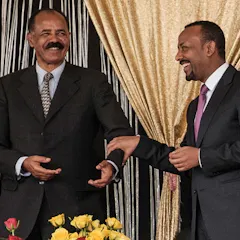
The war in Tigray appears to have boosted Eritrea’s efforts at regional pre-eminence. But it could backfire.
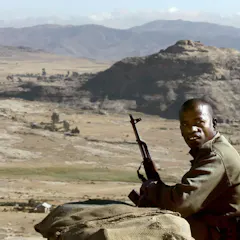
Conflict between Eritrea and Tigray has long represented a destabilising fault line for Ethiopia as well as for the wider region.
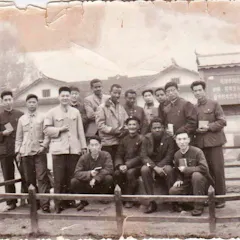
He’s a brooding, taciturn figure, who has dominated Eritrean politics since the 1970s, and there are few signs of an effective challenge to his rule.
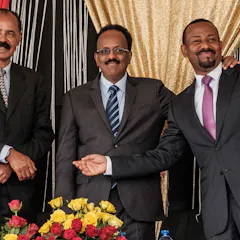
The proposed cooperation promises to address transnational problems within the three countries but it might alienate the rest of East Africa.
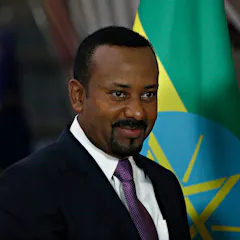
Abiy Ahmed was awarded the prize for efforts to achieve peace and international cooperation, and in particular his decisive initiative to resolve the border conflict with neighbouring Eritrea.
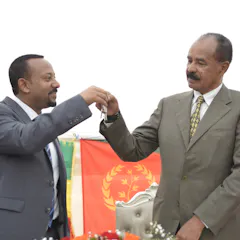
It’s unclear how relations between Addis Ababa and Asmara will develop but the warmth has largely gone.
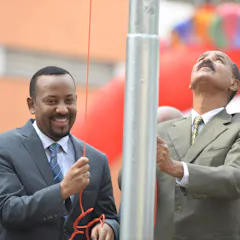
The lifting of UN Sanctions is unlikely to end internal and external pressure for reform and greater democracy in Eritrea.
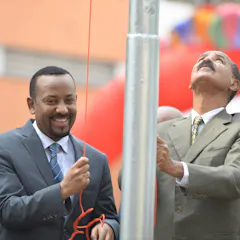
It would be a mistake to ridicule what’s been achieved in the Horn of Africa, but obstacles remain.
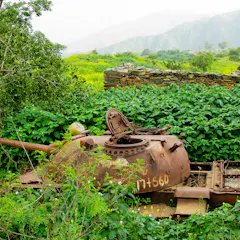
The Eritrean ports of Massawa and Assab will hum with life once more as trade flows through them.

Relations between Ethiopia and Eritrea have improved thanks to efforts made by Ethiopia’s new premier.
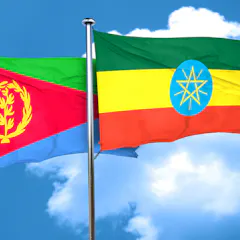
Few believed they would see an end to two decades of hostility between Eritrea and Ethiopia.
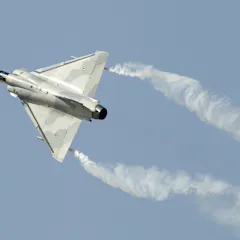
The growing Arab military, political and religious influence is only the latest example of an external force taking hold in the Horn of Africa.
Top contributors
-

Senior Research Fellow, Horn of Africa and Southern Africa, Institute of Commonwealth Studies, School of Advanced Study, University of London
-
Professor of African History, St Cross College, University of Oxford
-
Senior Lecturer of Political Science, Georgia Gwinnett College
-
Professor of Sociology and Global and Africana Studies, University of Tennessee
-
University of Freiburg
-
Associate Researcher, University of Hamburg
-
Postdoctoral Research Fellow, Deakin University
-
Senior Fellow, World Peace Foundation, Fletcher School of Law and Diplomacy at Tufts, Tufts University
-
Research Associate, University of Freiburg
-
Visiting Lecturer, University of Roehampton
-
Professor of International Relations, Norwegian University of Life Sciences
-
NHMRC Research Fellow (Public Health), Flinders University
-
Surgeon, Ayder Hospital, Mekelle University