
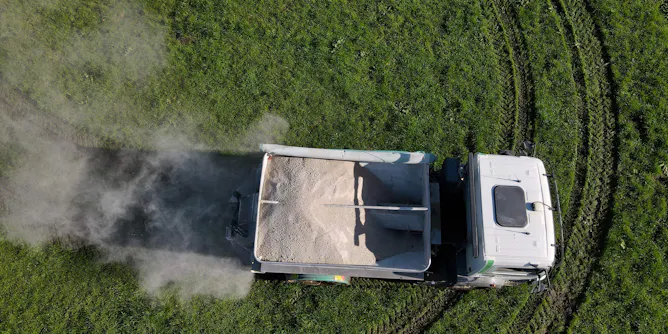
There have been repeated calls for a food security strategy in NZ, but little progress. Will a global fertiliser shock now prompt leaders to act?
Articles on Iran war
Displaying 61 - 80 of 91 articles
A lack of trust, failure to agree to the grounds on which discussion is taking place and Israel’s de facto veto provide insurmountable barriers.
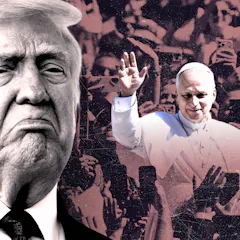
Pope Leo XIV does not claim to direct political outcomes. He claims the right, and the duty, to judge them.

Pope Leo responded firmly to Trump’s scathing criticism. A deeper dive into our archives explains how the exchange might well show a recurring dynamic.

Rising oil and fertilizer costs linked to Middle East tensions could affect food prices, but the effects will vary across products and may take time to fully emerge.
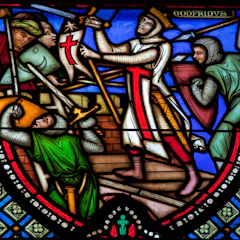
Long-standing Christian narratives about Islam continue to inform political language, argues a sociologist of Islam.
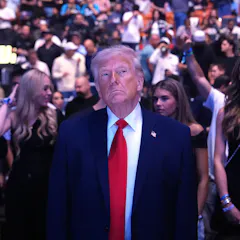
With peace talks breaking down, the US president has said the US will blockade the Strait of Hormuz, which will have a further dire impact on international fuel supply.

A decade of shifting regional alliances, continuous conflict and outside interventions have narrowed the path for diplomacy.
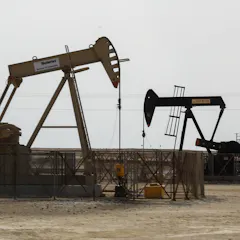
For sheer abundance and ease of production of oil and natural gas, it simply doesn’t get any better than the Persian Gulf region.
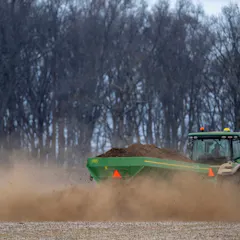
Fertilizer is more expensive and in shorter supply. Without the right amounts of fertilizer at specific times, yields drop, food prices increase and food shortages result.
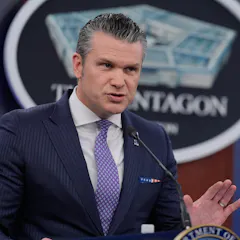
Hegseth is a member of the CREC, whose beliefs are rooted in a 20th-century movement called Christian Reconstructionism. The movement calls for the implementation of biblical law.

Helium, a critical material, could be in short-supply due to Qatar’s suspension of gas production.
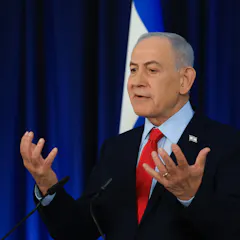
The war in the Middle East is a huge political book for the Israeli prime minister in an election year – but it may come at a great cost.
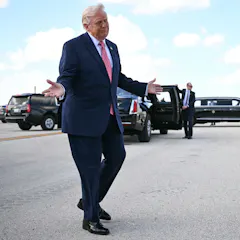
Throughout history, powerful militaries have been thwarted by smaller adversaries with more determination.
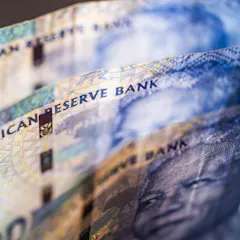
The sad truth is that African countries cannot avoid being harmed by the current Gulf war. But they can make efforts to emerge from the crisis in a better place.
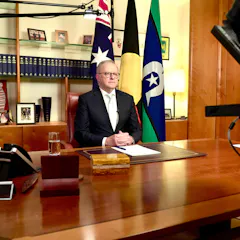
In the first national address since 2020, he encouraged Australians to “do their part”.
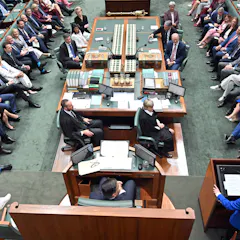
As it stands, the power to commit Australian troops to war is with the executive government. But many think it should be done with parliamentary vote.

Albanese will speak tonight after Chalmers announced policies to support small business.

As the war in Iran escalates across the region, urgent questions about civilian harm, accountability and the limits of international law become harder to answer.

Opposition to the Iran war is very strong in Australia, but so far the government has not been damaged by it in the polls.
Top contributors
-

Professorial Fellow, University of Canberra
-
Election Analyst (Psephologist) at The Conversation; and Honorary Associate, School of Mathematics and Statistics, The University of Melbourne
-
Assistant Professor of International Relations, American University
-
Associate Professor of Psychology, Kennesaw State University
-
Visiting Adjunct Professor, African Energy Leadership Centre, Wits Business School, University of the Witwatersrand
-
Professor of Political Science, Boise State University
-
Fellow for the Middle East at the Baker Institute, Rice University
-
Professor of Political Science, Kansas State University
-
Professor of Political Science, University at Buffalo
-
Lecturer in Media and Communications, University of Sydney
-
Professor & Director, Jeff Bleich Centre for Democracy and Disruptive Technologies, Flinders University
-
Associate Professor of Journalism, Penn State
-
Senior Lecturer in Urban Planning, University of Auckland, Waipapa Taumata Rau
-
Visiting Lecturer in Economics, Wellesley College
-
Sessional Academic and Researcher in Media and Communications, University of Sydney