
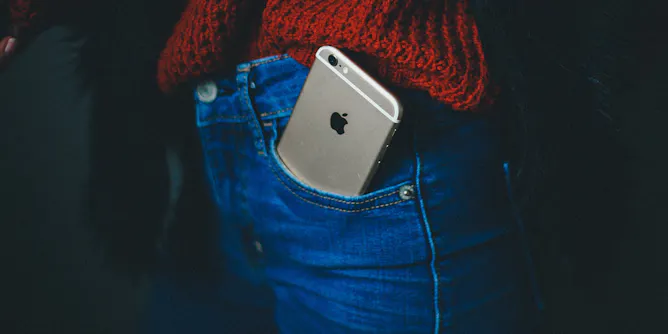
Clinically speaking, you can’t become addicted to a device, but you can develop behavioural addictions to smartphone functions.
Articles on iPhones
Displaying 61 - 80 of 142 articles

We disapprove of distraction and consider attention as being valuable. What if they were, in fact, morally charged words, referring to the same behavior? Here’s what early Christian monks thought.
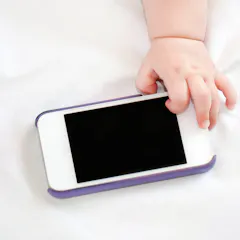
The problem isn’t kids owning smartphones. But when daily use exceeds two hours a day, mental health issues start to crop up.
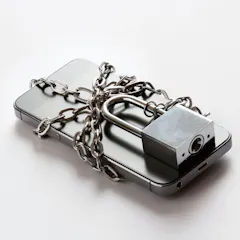
Scholars dig in to the debate on whether police should be able to defeat or circumvent encryption systems.
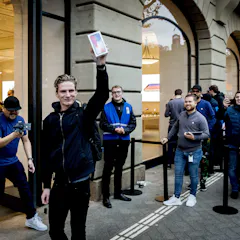
Why do so many people queue overnight (or longer) for an over-priced, at best incrementally-changed gadget?
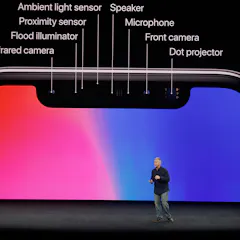
Apple’s latest iPhone sold out within minutes of its launch, but questions still remain about whether that pace of demand will continue and, if so, whether the company’s supply chain will be able to keep up.
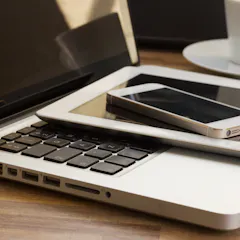
There are a few reasons why smartphones, tablets and PCs start to seem less snappy over time.

Why we love our phones so much might be related to our basic yearnings as human beings, explains a scholar, who is also a pastor.
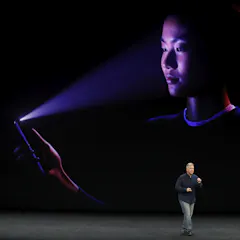
While security researchers are yet to perform a thorough analysis of iOS 11 and Face ID, past issues with the hardware and software of the iPhone point to areas of potential concern.
The tech giant has doubled down on its strategy of exclusivity, but does it risk weakening its position in emerging markets?

Some consumers were alarmed that airlines were charging thousands of dollars to get out of the hurricane’s path. That’s actually business as usual for more and more companies.
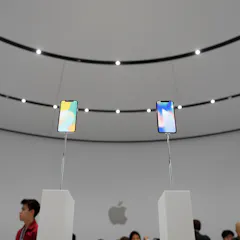
The guarantees in Australian Consumer Law trump your new phone contract’s fine print.
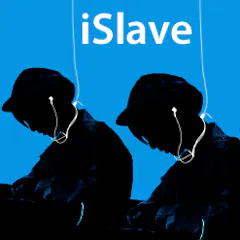
The first ten years of the iPhone has been a bloody decade of labour abuse, especially in Chinese factories such as those run by Foxconn, the world’s largest electronics manufacturer.
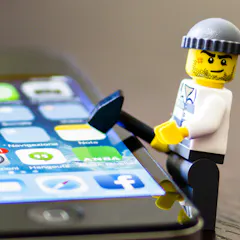
Some of the iPhone’s innovations have made users less secure.
The president said he’s considering ending trade with any country that does business with North Korea. Here’s why that will never happen.
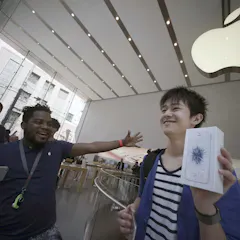
Firms like Apple are known to inspire cult-like devotion among consumers. But it’s often less about the quality of the product and more about the emotional connection they create with their customers.
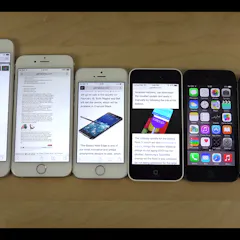
Apple’s design decisions don’t please everyone, but in the iPhone the company created something truly revolutionary that has lasted.
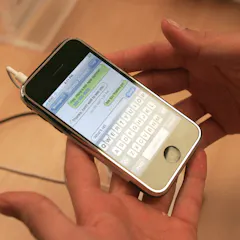
The iPhone changed the game not because of the technical details of the device, but rather as a result of its creators’ imagination and courage.
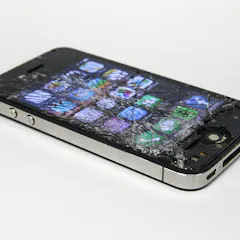
How has the first generation of kids to grow up with the iPhone been affected?

The iPhone mobile revolution put powerful computers in our pockets, but took away our rights to control them. Is that worth celebrating?
Top contributors
-

Director of UWA Centre for Software Practice, The University of Western Australia
-
Associate Professor, Informatics and Operations, Kingston University
-
Professor of Psychology, San Diego State University
-
Professor of Cyber Security Practice, Edith Cowan University
-
Senior Lecturer in Networking, The Open University
-
Harvard University
-
Associate professor, University of the Sunshine Coast
-
Senior Lecturer, University of Southern Queensland
-
Professor of Finance, International Institute for Management Development (IMD)
-
Lecturer in Software Engineering, Monash University
-
Professor & Director, Hub for Apple Platform Innovation (HAPI), School of Computing Technologies, RMIT University
-
Research Associate, University of California, Berkeley
-
Professor, Information and Communications Technology, CQUniversity Australia
-
Professor of Information Studies, Syracuse University
-
Research Professor of Business, University of California, Irvine