
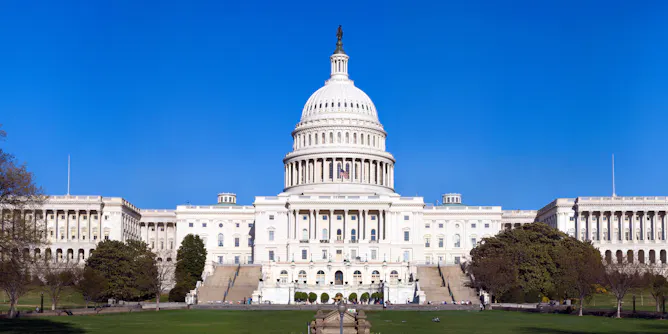
As the issue of an open and free internet again comes up for public debate, Congress could participate – and help regulators devise a workable set of policies.
Articles on Internet access
Displaying 41 - 60 of 73 articles

The rapid penetration of internet technologies in Africa provides hope for e-commerce’s continued growth. Potential online stores need to understand what draws or pushes customers away.

There are other more pressing problems when it comes to internet regulation.
The 2017 Australian Digital Inclusion Index shows that internet access and digital ability have improved since 2014, but the affordability of online services has declined.
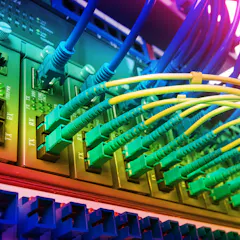
President Trump has touted infrastructure investment as a way to boost the U.S. economy. At the moment, he’s missing a key opportunity – expanding broadband internet service.
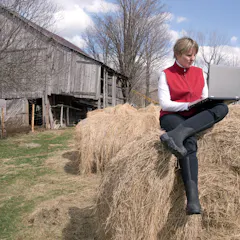
Giving rural residents the option of using broadband access isn’t enough to boost their community involvement. To really improve civic engagement, rural dwellers need to use the internet.

If we are serious about rehabilitating prisoners and reducing reoffending, then education and integration back into the community are vital. Today, internet access is essential to achieve that.

A new player is shaking up the Indian mobile market. But will it be enough?

The Federal Communications Commission has broad power to support fast, affordable internet service reaching every home in the U.S. What are its limits – and its possibilities?

It is not too late to change the current direction of Australia’s NBN from one that just meets today’s demands, to one that we need for the future.

If you like binge-watching Netflix, streaming audio or online gaming, then you should be celebrating this week. And if your business depends on reaching a wide audience online, you should join in.

Only 55 percent of people living in rural areas have access to the speeds that currently qualify as broadband, while 94 percent of the urban population does.
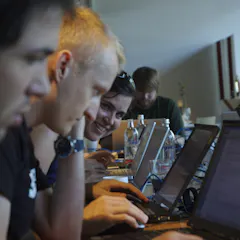
Online activism now means creating alternative ways to work, communicate and protest.

The Democrats’ policy platforms address the fundamental issue of Internet haves and have-nots in the U.S. But research suggests just hooking people up to broadband won’t solve the problem.

Australia’s connection to the internet continues to grow but there are still 1.3 million households not online.
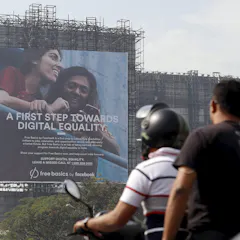
Free Basics may be free to the user, but it’ll cost India’s economy in the long run.
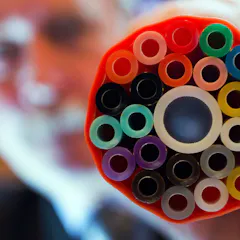
Whatever BT, Virgin Media and other telecoms firms may say, the only future-proof network is a fibre-optic from door-to-door.
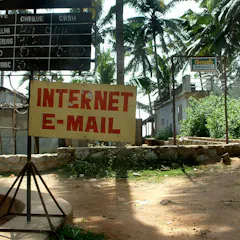
While the internet penetration rate in the developed world sits at 81%, two-thirds of the developing world are still without access.
Those who want the world to get online and those that can make it happen may be coming from very different places.

Satellites, microwaves, radio towers - how many more options must be tried before the government just shells out for fibre to the home?
Top contributors
-

Distinguished Professor of Media and Communications; Director, ARC Centre of Excellence for Automated Decision-Making and Society, RMIT University
-
Professor and Neustadt Chair, Department of Agricultural Economics, Oklahoma State University
-
Research Fellow, Cranfield University
-
Associate Professor, School of Engineering, RMIT University
-
Lecturer in Media and Communication, Director of Distance Learning, University of Leicester
-
Professor of Cyber Security Practice, Edith Cowan University
-
Associate Professor, Oxford Internet Institute, University of Oxford
-
Associate Professor of Public Affairs and Administration, Rutgers University - Newark
-
Research Fellow, Centre for Social Impact, Swinburne University of Technology
-
Director, Telecommunications and Information Policy Institute; Professor of Communication, The University of Texas at Austin
-
Lecturer in Government and International Relations, University of Sydney
-
Professor in Communications Engineering, University of Aberdeen
-
Assistant researcher, University of Sydney
-
Professor of Public Policy and Economics, University of Maryland, Baltimore County
-
Pioneers Chair in Telecommunications & Professor of Telecommunications, Penn State