
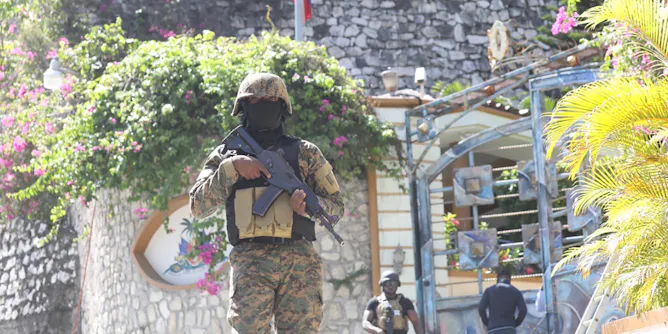
Expert background on Haiti, where President Jovenel Moïse’s July 7 killing is the latest in the Caribbean nation’s long list of struggles.
Articles on International Monetary Fund
Displaying 21 - 40 of 60 articles

The inefficient vaccine allocation rules currently in place must be replaced by new cooperative institutional structures and more concrete steps by the Group of Twenty (G20) countries.

The development strategy based on foreign investment in natural resources projects has not delivered economic growth or security. What’s needed is an inclusive vision based on local realities.

Despite evidence that cash payments can help improve well-being, they have limitations as well, according to a development economist.
Medium-term expenditure frameworks can be useful only when they are based on comprehensive medium-term development plans.

The IMF wants government intervention on climate change. It’s now abundantly clear Australia’s climate policies are at odds with even the most conservative approach to economic management.
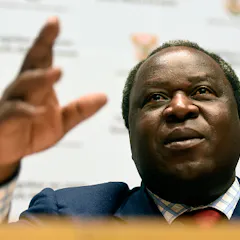
The IMF loan does not impose any conditions over and above what is in South African law on how the funds can be used; it only seems to expect the country to implement policies already announced.
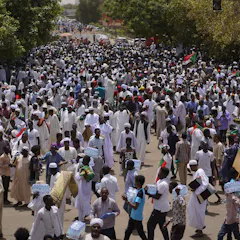
The immediate cause of the economic crisis that brought many thousands of Sudanese onto the streets and continued beyond al-Bashir’s downfall lay in the structure of the economy itself.
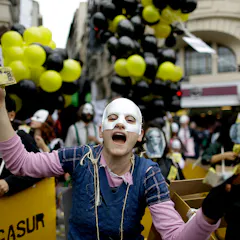
A deep recession, a severe drought and a plunging currency have led to the biggest bailout in IMF history. The government hopes it can avoid the meltdowns that followed past crises.
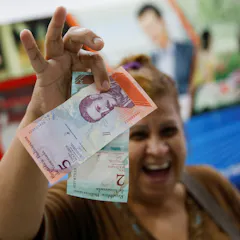
Venezuela recently devalued its bolivar by 95 percent to tame rabid hyperinflation that has been sending prices on everyday goods through the roof. If history is a guide, it won’t work.
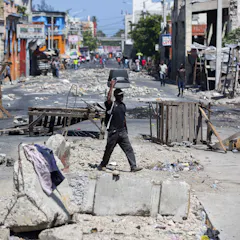
After weeks of protest in Haiti, sparked by a sudden rise in fuel prices, at least seven are dead and the prime minister is out. Foreign creditors pushed for the price hike as an austerity measure.
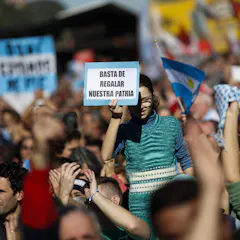
Some US$4.6 trillion has been made available to stave off financial crises across the world. The problem is that much of this funding is now spoken for, and the list of stricken nations is growing.
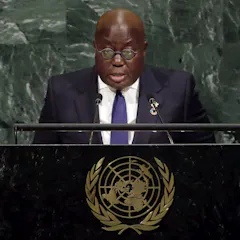
Ghanaians respond positively to financial appeals from churches compared to how they respond to paying taxes. Here’s how, and why, Ghana’s government should learn from religious groups.

The governor of South Africa’s Reserve Bank has been appointed to chair an important IMF committee. Countries in sub-Saharan Africa stand to benefit.
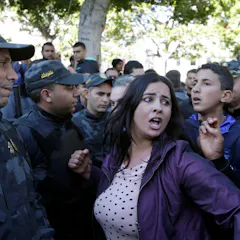
Seven years after ousting Zine el-Abidine Ben Ali, Tunisians are back on the streets protesting the government’s new Finance Act.
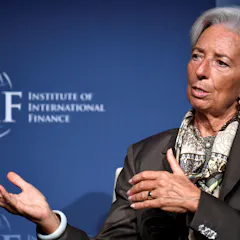
South Africa will be well advised to start preparing itself for an International Monetary Fund programme as the country faces a deepening economic crisis.
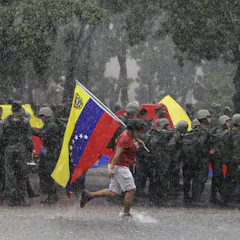
China, Russia and the International Monetary Fund are among those contemplating a Venezuela bailout. But help for this debt-stricken nation seems far from assured.
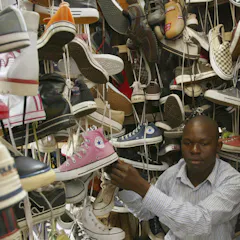
Uganda’s economy has seen many changes since independence. Trends in recent years are positive, although some key challenges remain.

The idea that South Africa must look towards the International Monetary Fund to rescue itself from the prevailing crisis must be dismissed.
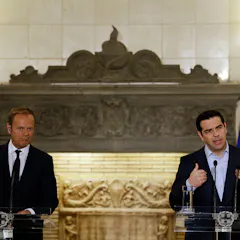
Europe is experiencing a wave of optimism that its seven-year Greek drama may be finally coming to a close. Only one way to do that: Share Greece’s pain.
Top contributors
-

Professor/Senior Research Fellow, Centre for Advancement of Scholarship, University of Pretoria
-
Reader in International Relations, Royal Holloway, University of London
-
Professor of Economics, University of the Western Cape
-
Senior lecturer, Canberra School of Government, University of Canberra
-
Professor of Democracy, University of Birmingham
-
Senior Research Fellow, World Institute for Development Economics Research (UNU-WIDER), United Nations University
-
Assistant Professor of Anthropology, Florida State University
-
Senior Lecturer in Economics | Freelance Consultant, Sheffield Hallam University
-
Professor of Politics & Co-Director, Aston Centre for Europe, Aston University
-
Associate Professor, The University of Western Australia
-
Professorial Fellow, University of Canberra
-
Head: Wits School of Governance, University of the Witwatersrand
-
Research fellow in politics and sociology, University of Oxford
-
PhD Research Fellow – Finance, University of Greater Manchester
-
Research Fellow in International Development, University of East Anglia