
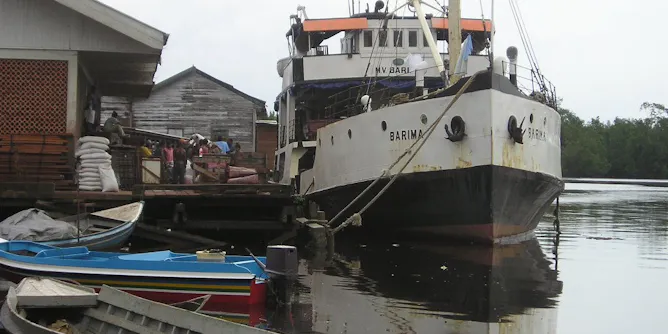
Frequent travellers of a Guyanese ferry that sunk in July allege routine overloading, unsecured cargo and engine failures.
Articles on International Maritime Organization
Displaying all articles
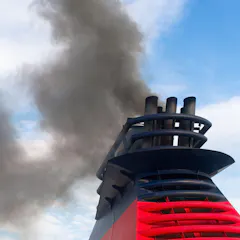
The UN has agreed to charge ships for the greenhouse gases they emit – but the price is far too low.
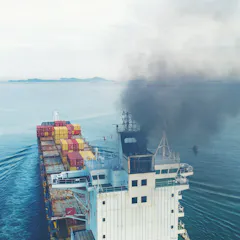
But some countries are more on board than others.
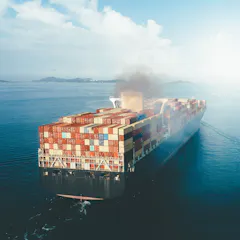
From sails, to route optimisation and alternative fules, Daniel Precioso and Alice Larkin talk to The Conversation Weekly podcast about strategies to reduce emissions from global shipping.
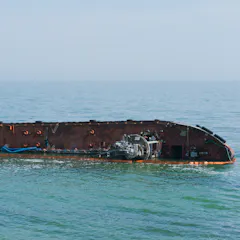
Countless thousands of lives are lost at sea every year. New safety efforts could benefit from learning from historic and successful initiatives to reduce fatal accidents in the UK’s docks.
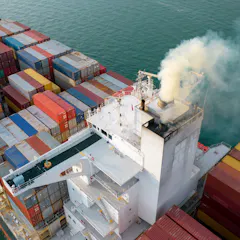
Shipping companies are turning the tanker too slowly to decarbonise on time.
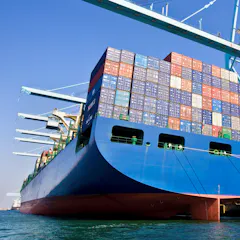
International shipping is a big contributor to climate change, and it doesn’t change quickly, but its companies are starting to invest in cleaner fuels.
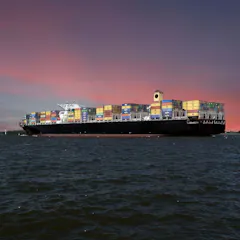
The global shipping sector delivers 90% of global trade and has a carbon footprint the size of Germany’s.
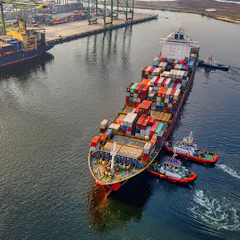
If shipping were a country, it would rank between Japan and Germany as the sixth-largest contributor to global carbon dioxide emissions.

In early 2020, stranded cruise ships became a stark symbol of the COVID-19 global pandemic. Now it’s seafarers stranded on cargo ships.
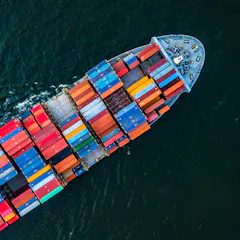
It’s high time the international shipping industry radically curbed its emissions. The industry must set a net-zero target and adopt a realistic plan to meet it.
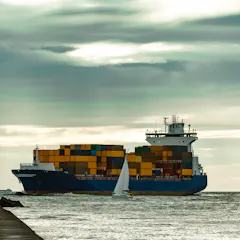
Shipping companies are expected to halve their greenhouse gas emissions by 2050.
Top contributors
-

Senior Lecturer in Culture & Climate, The University of Melbourne
-
Research Associate, Shipping and Climate Change, University of Manchester
-
Professor of Climate Science and Energy Policy, University of Manchester
-
Assistant Professor in Circular Supply Chains, University of Bradford
-
Associate Professor of Business, University of Tennessee
-
Professor and Department Chair, Naval Architecture and Marine Engineering, University of Michigan
-
Post Doctoral Senior Research Associate, Centre for Port Cities and Maritime Cultures, University of Portsmouth
-
Post-Doc Researcher in Applied Mathematics, IE University
-
Host, The Conversation Weekly Podcast, The Conversation
-
Reader in Energy and Transport, UCL
-
Visiting Academic in Decarbonisation, University of Manchester
-
Professor, Department of Forest Resources Management, University of British Columbia
-
Professor, School for Resource and Environmental Studies, Dalhousie University
-
Lecturer in Sustainable Freight Transport and Logistics, University of Leeds