
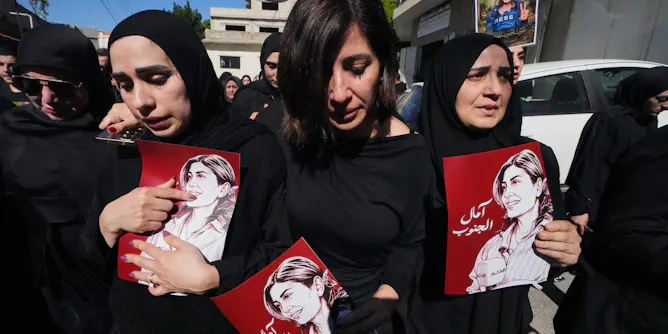
This is driven by an absence of legal accountability for attacks on civilians, aid workers and journalists in both Lebanon and Gaza.
Articles on International humanitarian law
Displaying 1 - 20 of 44 articles

This development reverses decades of global movement towards abolition of the death penalty, while normalising executions in an occupied territory.
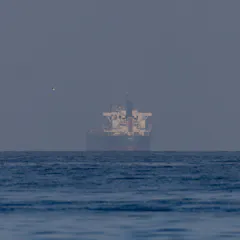
The government must weigh complex moral, legal and political questions before committing to any military involvement in defending the Strait of Hormuz.

Afghanistan says at least 400 people were killed in a Pakistani strike on a hospital on Monday – the latest in a deadly year for medical staff and patients worldwide.
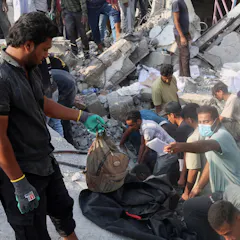
Daily compliance of international law remains the norm. Violations do occur – sometimes brazenly – but they are exceptions.
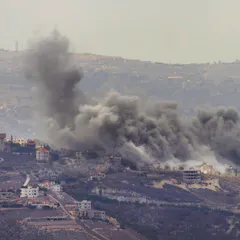
Ongoing conflict, particularly in a three-month period in late 2024, caused widespread environmental destruction and the spread of toxic materials.

International law isn’t dead. Far from it. But impunity urgently needs to be addressed.

The rush for ‘climate visas’ to escape Tuvalu shows the extraordinary need for schemes that enable people to migrate in a warmer world.

The Australia–Tuvalu Falepili Union, as it is known, is the world’s first bilateral agreement to create a special visa like this in the context of climate change.

Many in Africa, including governments and non-state parties to conflicts, don’t trust international law. They consider it intrusive.
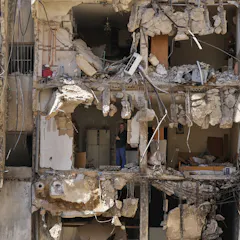
The law of armed conflict is straightforward – combatants must only target military objectives, not civilians.
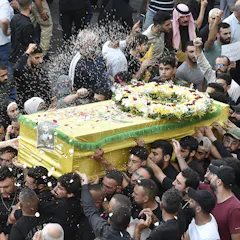
The rules of war are quite clear that these attacks were neither discriminate nor proportionate.

On the 75th anniversary of the Geneva Conventions, the world still witnesses brutal and illegal violations of the rules of war. Only greater collective responsibility will improve the situation.
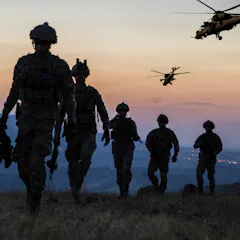
New Zealand has been quick to voluntarily report on its compliance with international humanitarian law. Turning those words into deeds remains the challenge in a violent and insecure world.
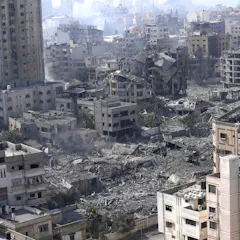
The age of AI warfare has arrived – and it’s not looking good.
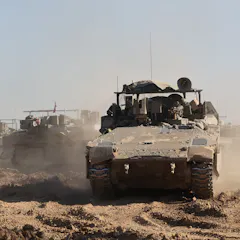
The UK government has received advice that Israel is breaking international law in its assault on Gaza, so has an obligation to stop supplying it with arms.

The International Court of Justice stopped short of calling for a ceasefire in Gaza. New Zealand now needs to refine its foreign policy to play a constructive role in what happens next.
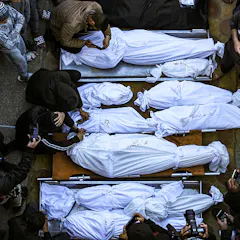
There is precedent showing the ICJ may grant provisional measures within a month or two of the hearing, preventing Israel from causing further harm in Gaza.
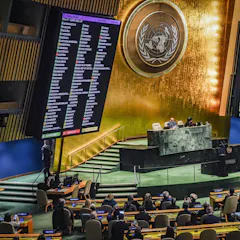
In war time, the type of conflict determines what formal rules of war apply. But how to determine the nature of the conflict?

Mass forced movement of people has been used in conflicts to serve three goals: population control, territorial expansion and as a sorting mechanism. All three could be in play in Gaza.
Top contributors
-

Professor of Law, University of Waikato
-
Associate Professor (Law), Edith Cowan University
-
Professor of Law, American University
-
Senior Lecturer in International Law, Cranfield University
-
Scientia Professor and ARC Laureate Fellow, Kaldor Centre for International Refugee Law, UNSW
-
Senior Lecturer in Law and Co-Director New Zealand Centre for Public Law, Te Herenga Waka — Victoria University of Wellington
-
Associate Professor in International Relations, University of Canterbury
-
Professor of Economic Development & Peacebuilding, University of San Diego
-
Reader in International Relations, University of Westminster
-
Professeure associée, directrice de la Clinique de droit international d’Assas, Université Paris-Panthéon-Assas
-
Associate Professor of International Relations, University of Southern Denmark
-
Associate Professor, Department of Peace, Human Rights & Cultural Relations, American University School of International Service
-
PhD Candidate, International Studies, RMIT University
-
Professor, Centre for Human Rights in the Faculty of Law, University of Pretoria
-
Course Co-ordinator, International Law Clinical Program, ANU College of Law, Australian National University