

Australia’s major competitors in the international education market are already rebounding from the pandemic and have issued record numbers of student visas.
Articles on International education
Displaying 21 - 40 of 66 articles
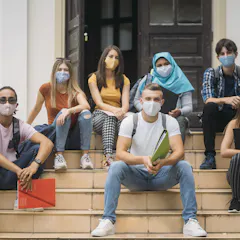
The US has experienced a record decline in the number of international students. How long will the trend continue? An international education scholar weighs in.

International education is a huge source of income for the sector and the broader economy, but students are concentrated in a limited number of institutions and most come from a few source countries.
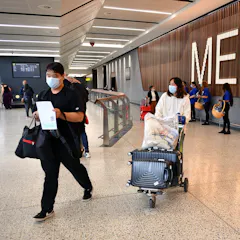
The federal government has for months been unclear about when international students could return to Australia. And there are still many uncertainties about the latest announcement.

Hopes are rising that international students will be back in Australia early in 2022, but that doesn’t mean the education sector will be able to shrug off the impacts of their absence any time soon.

Events have overtaken state plans for limited numbers of international students to return. With NSW dropping quarantine for fully vaccinated arrivals, flight capacity is the final obstacle.

Indian students in Australia haven’t had the experience they hoped and paid for. Campuses closed, they lost work and they watched helplessly from afar as COVID-19 ravaged their home country.

A draft strategy for the English-language teaching sector released in 2020 was put on hold. In revisiting the strategy, we emphasise the advantages that Australia’s multilingualism offers learners.

Contributing to global knowledge, from the lens of local experience, can lead to solutions to universal problems such as inequality and climate change.

Universities must move swiftly to attend to students’ needs when borders reopen if Australia is to regain market share in the face of fierce global competition.
International student demand for places in Australia has fallen by a third over the course of the pandemic, while for our key competitors demand has remained stable or even increased.

Tuesday’s budget shows a reversion back to the previous policy of keeping total higher education funding broadly stable.
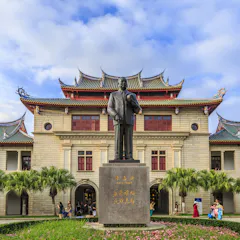
Once seen as mainly as a source of international students, China has for a decade been strategically repositioning itself as a provider of international education.

International students have been admirably persistent in studying online for more than a year. But as other countries open their doors, Australia risks losing them if it fails to show they are wanted.
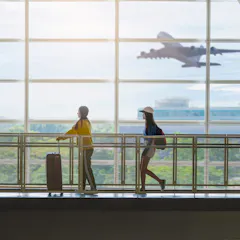
Our current quarantine capacity would take six months to handle the return of 150,000 existing students, but 70,000 new students every six months would also be needed to halt the fall in enrolments.

Students from other countries found the US less attractive during the Trump administration. Will things be any different under President Biden?

Open-educational resources are critical for increasing global learners’ access to education during COVID-19 and beyond. Blockchain technology can address concerns about plagiarism in resources.
Universities can expect at least a A$3 billion reduction in international student revenue this year compared to 2019.

The first batch of returning international students are due to fly in this weekend, but Australia has a lot of work to do to maintain its pre-COVID share of the global education market.

An effort by the Trump administration to put stricter limits on students and scholars from certain countries may cost a lot and accomplish little, an international education expert argues.
Top contributors
-

Professor and Director, Mitchell Institute, Victoria University
-
Vice Provost for Global Engagement, University of Maryland, Baltimore County
-
Director, Centre for the Study of Higher Education, The University of Melbourne
-
Professor, School of Education, Deakin University
-
Professor of Higher Education Policy, Monash University
-
Adjunct Professor, Department of Leadership, Higher and Adult Education, OISE, University of Toronto
-
Honorary Lecturer, College of Arts and Social Sciences, Australian National University
-
Senior Lecturer in Population Geography, Adelaide University
-
Professor of Spanish and Chair of the Department of Languages, Literatures & Cultures, University of Delaware
-
Deputy Vice-Chancellor Student and University Experience, University of Tasmania
-
Professor of Religious and Philosophical Education and Director of the European Centre for Advanced Studies, University of Glasgow
-
Honorary Fellow, The University of Melbourne
-
Professor in the School of Media and Communication, RMIT University
-
Senior Research and Development Fellow, University of Oxford
-
Bioinformatician and Data Analyst., King's College London