
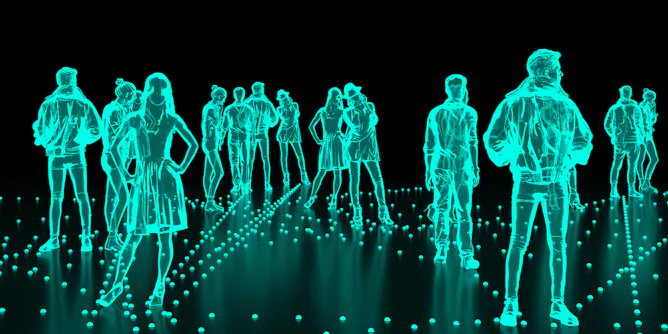
It could be the first steps towards a Star Trek-style holodeck.
Articles on Interdisciplinary research
Displaying 61 - 80 of 133 articles

Interviewees describe ‘scrimping and saving’ to make ends meet.
The mind is a powerful thing – it can generate both symptoms of illness and symptoms of healing. Here’s what this could tell us about consciousness.
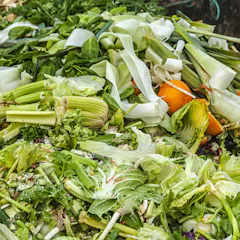
Food waste is responsible for 3 billion tonnes of carbon dioxide emissions.

Addressing serious disconnects between Labour and its ‘traditional’ constituencies remains a key challenge for Keir Starmer’s party.

Account of the murders written by Thomas More was based more in fact than fiction.

Plus, why sarcasm is so difficult for children to understand – and how to help them. Listen to episode 23 of The Conversation Weekly podcast.

The course offers a model for teaching about complex problems, and underlines the critical role of university learning, research and outreach in understanding and addressing them.

Military lawyers told me how they must make split-second decisions that weigh military variables against real human lives.
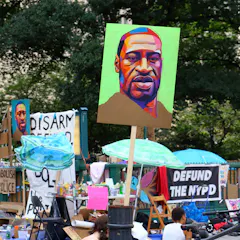
Colonial police organisations used similar arguments to uphold their power as were heard in the trial of George Floyd’s murderer.
We studied people’s brains while they held tools correctly and incorrectly.

Our study found that the longer it took a person to conceive, the poorer their health was in later life.

A missing girl, a sensational trial, and the troubled history of anti-trafficking.

Or have we reached peak human intelligence?
Our study shows that higher levels of mental wellbeing is associated with less money being spent on health and social care.
Countries cannot be expected to all tread the same path to net zero emissions.

If you are shipwrecked on a desert island with no hope of being rescued, you may not be morally obligated to stay alive.

What the famous physician of ancient Greece, Hippocrates, can teach us about post-pandemic architecture.

Tracking species over their lifetimes can reveal their climate adaptation secrets.

Legumes have a superpower: they can convert nitrogen in the air into a form plants can use to grow.
Top contributors
-

Senior Lecturer in Psychology, Leeds Beckett University
-
Professor of Law, University College Cork; Independent Social Research Foundation
-
Professor of Technology Management and Circular Economy, Kingston University
-
Mental Health Researcher, University of Southern Denmark
-
Professor and Head of the Department of Psychology, University of Copenhagen
-
Senior Lecturer in Political Geography, Department of Geography, Newcastle University
-
Principal Lecturer in Psychology, University of Brighton
-
Chair of Public Health, University of Warwick
-
Professor of Astrophysics, University of Sussex
-
Researcher, Griffith Institute for Drug Discovery, Griffith University
-
Marie-Curie Research Fellow, Institut Català de Recerca de l'Aigua (ICRA)
-
Research Fellow, The Open University
-
Associate Professor of Psychology, Olin College of Engineering
-
Docteure en Ergonomie cognitive, experte de la charge mentale au travail, Université de Lorraine
-
Research Fellow, Brunel University of London