
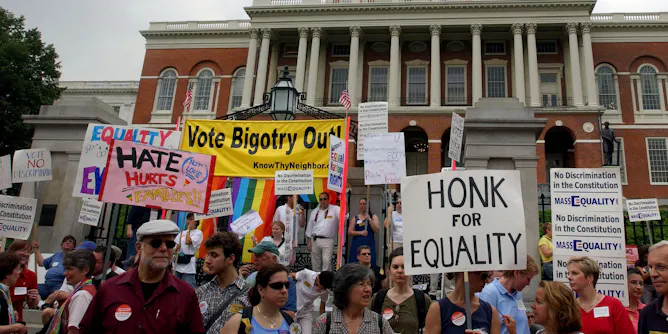
Inventors in states with more socially liberal laws on the books end up with more diverse collaborators – and more higher-impact patents.
Articles on Innovation and Invention
Displaying 61 - 80 of 92 articles
Nanoparticles dressed up in cell membranes snag SARS-CoV-2 virus particles before they reach human cells.
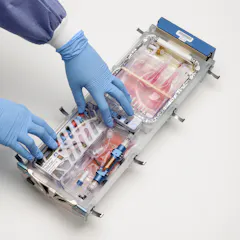
Why are scientists trying to grow organs at the International Space Station? People live on Earth not in zero-gravity. A stem cell expert explains why it is useful to do these experiments in space.
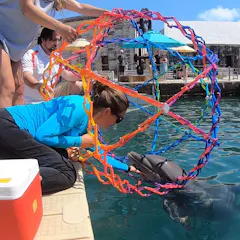
Wild dolphins are fast, smart and hard to study, but it is important to understand how human actions affect their health. So we are building a drone to sample hormones from the blowholes of dolphins.
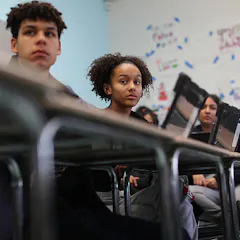
If a high school doesn’t offer advanced coursework, having students take such a class remotely offers a promising alternative.
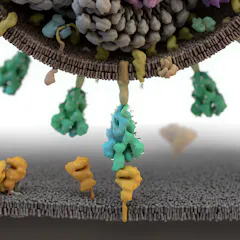
Scanning through billions of chemicals to find a few potential drugs for treating COVID-19 requires computers that harness together thousands of processors.
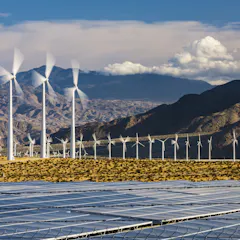
Generating energy usually means wasted heat. Semiconductors let the electrons flow with zero waste – but so far scientists only know how to get them to work at ultra-low temperatures.

Computerized systems that automatically determine whether a pitch is a ball or strike promise to make umpiring more accurate, but at what price?
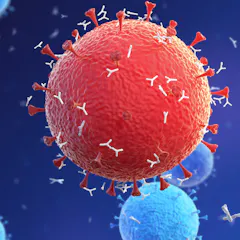
An antigen test was given emergency use authorization by the FDA in early May. A biochemist explains how COVID-19 antigen tests work.

Net zero energy buildings produce at least as much energy as they use. Designing whole net zero campuses and communities takes the energy and climate benefits to a higher level.
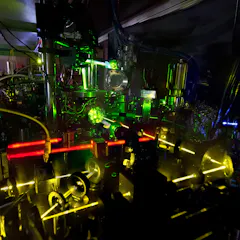
Researchers have made some of the most accurate clocks imaginable in recent years, but the trick is harnessing those clocks to electronics. Using lasers to tune microwaves bridges the gap.
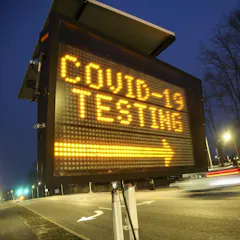
Testing for coronavirus has been a fiasco in the US. But now companies are developing super fast tests, including ones that might eventually be as simple as at home pregnancy tests.

The aviation industry was already expecting a severe pilot shortage over the coming years. The pandemic could make it even worse.
A high-tech twist on an old idea – running on springs – could give human-powered movement its biggest boost in more than a century.
Researchers from New York University are designing AI algorithms to help predict COVID-19 outcomes.
The scientific community is churning out vast quantities of research about the coronavirus pandemic – far too much for researchers to absorb. An AI system aims to do the heavy lifting for them.
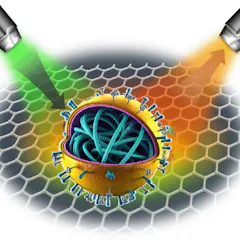
A team of physicists, virologists and computer scientists are seeking to develop a coronavirus diagnostic tool that could deliver rapid results.
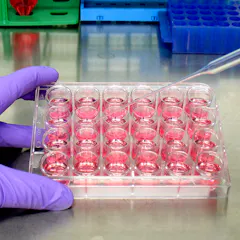
Researchers at the University of California, San Francisco, identified nine existing drugs that show promise to treat COVID-19. The proteins they target haven’t been tried before.
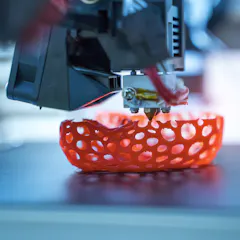
The rush to make personal protective equipment like facemasks and face shields using 3D printers shows that the technology can help circumvent global supply chain disruptions.
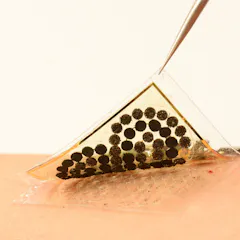
Lightweight, flexible materials can be used to make health-monitoring wearable devices, but powering the devices is a challenge. Using fuel cells instead of batteries could make the difference.
Top contributors
-

Professor and Director of Quantitative Biosciences Institute & Senior Investigator at the Gladstone Institutes, University of California, San Francisco
-
Professor of Chemistry, Connecticut College
-
John M. Thompson Chair in Information Technology and Innovation and Professor, Western University
-
Professor of Biomedical Engineering, University at Buffalo
-
Professor of Law, Boston University
-
Founder and CTO, Adaptive Machines LLC, Vanderbilt University
-
Professor of Environmental Engineering and the Mortenson Professor in Sustainable Development, University of Colorado Boulder
-
Professor of Computer Science, New York University
-
University Distinguished Professor of Astronomy, University of Arizona
-
Executive Director of Texas Engineering Executive Education, The University of Texas at Austin
-
Associate Professor in Law, UNSW
-
Statistical Consultant, The University of Melbourne
-
Professor of Pediatrics and Cellular and Molecular Medicine, University of California, San Diego
-
Research Scientist and Adjunct Professor, University of Denver
-
Professor of Public Policy, George Mason University